

Your song doesn’t need universal approval to deserve a release. If the fear of releasing my music is holding you back, remember that sharing a finished track isn’t a test of your worth as an artist. It’s a chance to connect the music with the people it was made for.
That fear is real: listeners may judge the song, overlook it, or hear it differently than you imagined. You can’t control every reaction, but you can choose how you prepare, what you count as success, and when you decide a track is ready to leave the studio.
These four approaches can help you handle judgment, trust finished songs, recognize the courage it takes to release, and take practical steps when fear gets loud. The goal isn’t to feel completely fearless. It’s to make room for nerves, then move forward with intention.
Key Takeaways
- Accept that a song can matter deeply to you without appealing to every listener; focus on reaching the audience it’s meant for.
- Mark the act of releasing as an achievement, not just the response it receives.
- Use thoughtful feedback from a trusted collaborator to help you decide when a track is ready.
- Make a manageable release plan, set a clear goal, and let each launch teach you something for the next one.
1. Accepting that not everyone will like your music
An anxious artist can treat every listener’s reaction as a verdict on the song. It isn’t. With 8 billion people in the world, no single track will match every taste, mood, or listening habit. A sparse acoustic recording may move one listener while another prefers dense production and heavy drums. That difference doesn’t make either response the final measure of your work.
Think about your intended audience, not the entire public. Before release, write down who the song is for: perhaps fans of intimate vocals, independent hip-hop, or experimental electronic music. Then choose platforms and promotional messages that can help you reach those listeners. A focused plan gives you something useful to do instead of imagining what every stranger might think.
If a release gets little attention, independent artists can review their promotion, adjust the plan, and try reaching the intended audience through different platforms or messages. Treat the response as information about the release’s reach, not proof that the song has no value.
Attention is also different from approval. Spotify receives 60,000 new songs each day, so a quiet launch can reflect the crowded listening environment rather than a flaw in your recording. Set a goal you can influence, such as sharing the track with a defined audience or inviting listeners to a release event. You can’t dictate who responds, but you can make deliberate choices about how the music reaches people.
Try this boundary: after reading feedback, sort comments into useful, subjective, and unkind. A note about muddy vocals may point to a production issue; “this isn’t my style” describes preference. If you’re afraid of releasing your music because of criticism, decide in advance which feedback deserves attention. Keep the song’s purpose in view, and let different tastes coexist with your decision to share it.
Anxiety can focus on how listeners will receive a release, whether it will succeed, and whether it will meet fan expectations. Those worries may feel compelling, but they can’t predict anyone’s response. Release your work knowing some people may not like it; allowing for that possibility is part of choosing to share music.
2. Celebrating the courage to release music
Finishing a release takes more than creative vision. You also have to let other people hear it, knowing their responses are beyond your control. Recognize that decision as an achievement in its own right. A release-day ritual can make the milestone tangible: save a copy of the final artwork, share the track with a trusted collaborator, or write down what you learned during production.
Russ has spoken about releasing one song every week for about two and a half years as part of his career strategy. That pace isn’t a prescription for every artist. It does show how repeated releases can become practice: each one offers experience with finishing, sharing, and learning. Choose a release rhythm that suits your music and capacity, then celebrate completing each step.
To protect your work before a U.S. release, keep organized copies of your lyrics, session files, final audio, and written agreements with collaborators. Record who contributed and what each person agreed to. This creates a clear project record, but it isn’t a substitute for legal advice about copyright.
Independent distribution can give you more direct control over timing, presentation, and communication with listeners. It also means handling more of the planning and follow-through yourself. For a digital distributor, prepare the final audio and artwork, enter the release details and contributor credits, select the platforms and release date, then review the submission before delivery. Keep a copy of the information you submit.
Distribution costs depend on the distributor’s pricing structure and selected services, so compare the terms that apply to your release before choosing one. Don’t let the admin erase the creative milestone. If a polished final master would help you feel ready to share your work, explore release-ready sound as part of your preparation.
Doubting the quality of finished songs
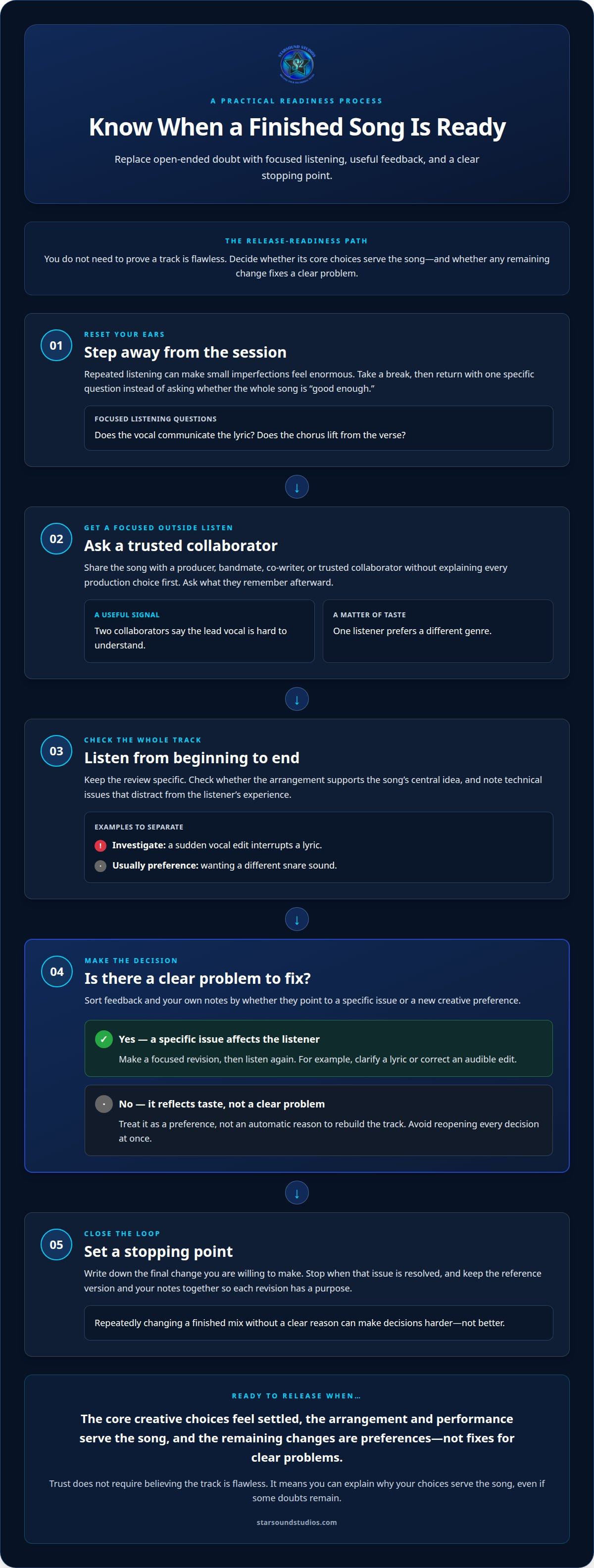
A finished track can sound unfamiliar after repeated listening, making small imperfections feel enormous. Step away from the session, then return with a specific question: does the vocal communicate the lyric, or does the chorus lift from the verse? Focused questions give your next listen a purpose instead of starting another round of general self-doubt.
Ask a producer, bandmate, co-writer, or trusted collaborator for a focused listen. Share the song without explaining every production choice first, then ask what they remember afterward. If two collaborators say the lead vocal is hard to understand, investigate that detail. If one person simply prefers a different genre, treat that as a matter of taste, not an automatic reason to rebuild the track.
Do a brief readiness check before deciding. Listen from beginning to end, check that the arrangement supports the song’s central idea, and note any technical issue that distracts from it. For example, a sudden vocal edit that interrupts a lyric may need attention; a preference for a different snare sound may not. Separate problems that affect the listener’s experience from changes that reflect a new creative preference.
A song is ready to release when its core creative choices feel settled and the remaining changes are preferences, not fixes for clear problems. If feedback identifies a specific issue, make a focused revision and listen again. Avoid reopening every decision at once.
Then set a stopping point. Write down the final change you’re willing to make, such as correcting an audible edit or clarifying a lyric, and stop when that issue is resolved. Repeatedly changing a finished mix without a clear reason can make decisions harder, not better. Keep the reference version and your notes together so each revision has a purpose.
Trust doesn’t require believing the track is flawless. It means you can explain why the arrangement, performance, and final balance serve the song, while accepting that another artist might choose differently. A clear review process lets you release with intention, even if some doubts remain.
4. Overcoming fear of releasing music
A release makes your work public, and you can’t take it back once it’s out. If the fear of releasing my music is stopping you, name the specific worry: criticism, low attention, or a mistake in the final file. Each concern calls for a different response. Naming it turns a vague threat into something you can address.
Perfectionism often keeps moving the finish line. Set a clear stopping rule: fix errors that distract from the song, but don’t revise just because another version is possible. For example, correct a clipped vocal edit, then leave a preferred reverb change for another project. This separates craft decisions from anxiety-driven polishing.
Before release day, choose a realistic goal tied to your intentions. You might aim to share the track with a defined audience, invite listeners to a show, or learn which promotional message resonates. Decide what you hope the song achieves and how you want listeners to feel. Those measures give the release meaning beyond streams or sales.
Make room for nerves without giving them control. Write down what you’re feeling, then choose a grounding action, such as taking a walk before checking reactions. A practical response to the fear of releasing my music can also include deciding in advance how you’ll handle unkind comments. Respond kindly or block the commenter; you don’t owe every stranger an argument.
After the release, record what happened. Note which post started a conversation, which message confused listeners, and what you’d change next time. A release that misses its original goal can still teach you how to refine your next plan. Progress includes the skills you gain by finishing and sharing the work.
Choose one manageable next step today: set a release date, finish your promotional plan, or get support preparing your finished track. A clear action turns an open-ended worry into a decision you can make.
Artists may spend months or even years working on a piece of music before releasing it, so excitement, anxiety, and fear can all be part of the moment. Allow those feelings without letting them overwhelm you, and treat what promotion teaches you, what worked and what didn’t, as progress.
Starsound Studios
Starsound Studios helps artists prepare recordings for release through focused audio production and engineering. If uncertainty about the sound is holding you back, professional feedback and a considered final mix or master can help you hear the track with fresh perspective. The right next step depends on your project: recording can support a song still taking shape, while stereo mixing, mastering, or Dolby Atmos Mixing (9.1.4) can help bring a finished production toward its intended presentation.
You don’t need to wait until every doubt disappears before sharing your work. Bring a clear creative direction and the questions you want resolved, then make your next decision with a stronger understanding of your recording.
For a collaborative next step in preparing your music, contact Starsound Studios.
Give your next song a clear path forward
A release doesn’t need to resolve every uncertainty about your future as an artist. Let it be one deliberate step: choose what you want this song to express, decide when you’re ready to share it, and make space for the next idea to grow. The fear of releasing my music can feel personal, but it doesn’t have to make every creative decision for you.
If you want a focused, professional perspective as you prepare your track, Starsound Studios can support the next stage of your project. Contact Starsound Studios to discuss your music and what you’re working toward. Your sound is yours to shape. Take the next step when you’re ready, and let the music move beyond the session.
Frequently Asked Questions
How can musicians overcome fear of judgment and rejection?
Give each release a purpose that doesn’t depend on universal approval. Before sharing, write one sentence about what you want the song to communicate, then use it as an anchor when reactions arrive. You can also choose a smaller, relevant listening community for your first public share, rather than treating every online response as a verdict on your music.
How can I release music gradually to reduce pressure and anxiety?
Start with one standalone track rather than building pressure around a full album rollout. Treat each stage as a manageable task: finalize the song, prepare its artwork and release details, then plan how to introduce it to listeners. Once the process feels familiar, decide whether a later single or larger project suits your goals. A gradual approach lets you build release experience at your own pace.


