

An album budget needs to cover more than studio time. To decide how to fund an album recording, compare four routes: grants, crowdfunding, advances, and loans. The right mix depends on your project scope, timeline, and comfort with repayment or offering rewards to backers.
It’s easy to focus on recording sessions and overlook the surrounding costs. A workable plan accounts for production, engineering, session musicians, mixing, mastering, equipment, and distribution, so the finished album has a clear path to release. This guide explains how funding options differ, where U.S. artists can look for grants, and which expenses to include in a budget. Use it to match your funding plan to the music before committing to recording.
Key Takeaways
- Match your funding route to your timeline and whether you can take on repayment or offer backer rewards.
- Explore national, state, and regional arts grants, and plan around each program’s application window.
- Build a budget that accounts for production, studio time, engineering, mixing, and distribution, not just recording sessions.
- Understand how recording, stereo mixing, mastering, and immersive audio can shape the production plan for your album.
1. Comparing grants with crowdfunding, advances, and loans
Independent artists can combine grants, crowdfunding, preorders, merchandise, and live-show income to build an album fund. Crowdfunding follows the pace of your campaign, but it takes active promotion, not just publishing a page. Match each option to your timeline and the commitments you’re willing to take on.
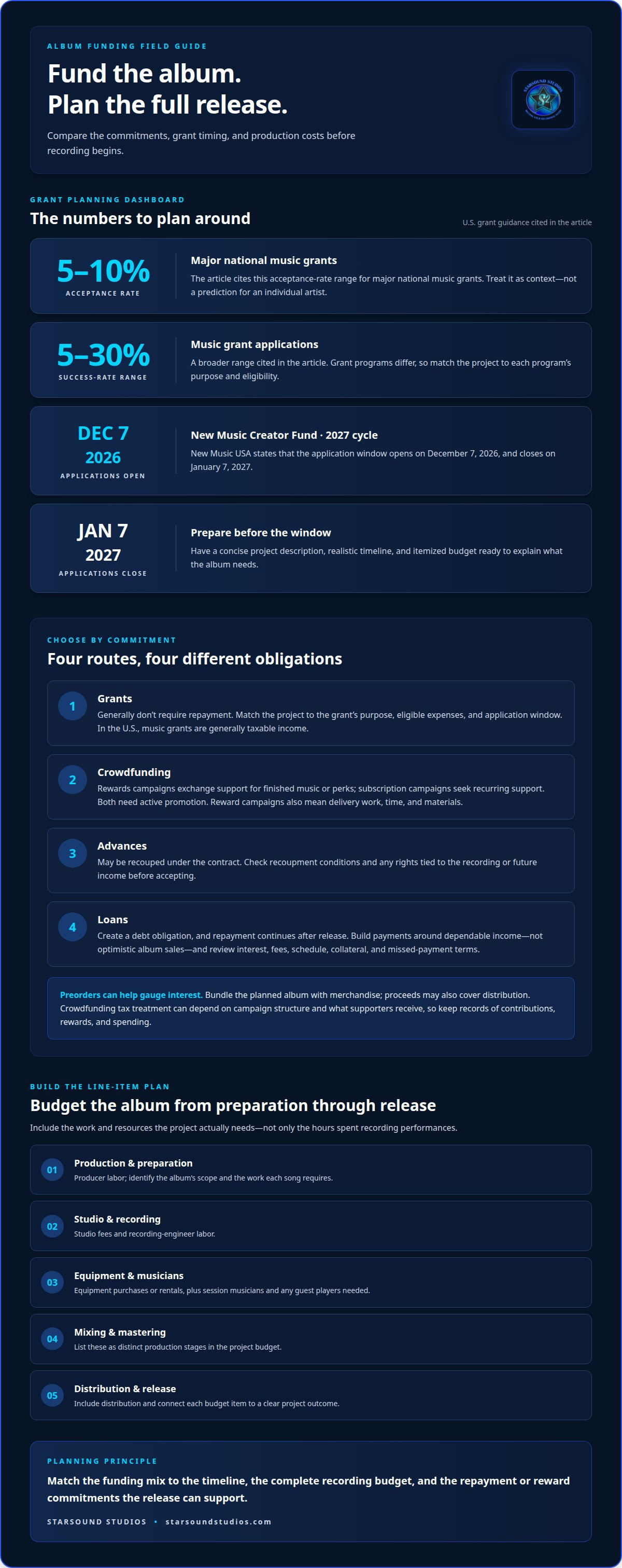
Grants generally don’t require repayment, while loans create a debt obligation and advances may be recouped under their contract terms. Rewards-based crowdfunding asks backers to support a defined project in exchange for the finished music or other perks. Subscription campaigns seek recurring support, often in return for merchandise, exclusive content, or early releases. Compare the terms and commitments before choosing how to fund an album recording.
Preorders can gauge interest and help estimate how much to invest; proceeds may also cover distribution. Bundle the planned album with merchandise, then promote the offer at live shows and direct interested listeners to it. A clear release plan, specific rewards, and regular updates give supporters a concrete reason to contribute.
In the United States, music grants are generally taxable income. Crowdfunding’s tax treatment can depend on the campaign structure and what supporters receive, so keep records of contributions, rewards, and spending. Reward campaigns also bring delivery obligations: describe each perk clearly and budget the time and materials needed to fulfill it.
Before accepting an advance or borrowing, read the agreement for repayment terms, recoupment conditions, and any rights tied to the recording or future income. A loan remains debt even if album sales disappoint; an advance can reduce later earnings if the contract allows recoupment. Compare the amount you need with realistic project expenses, then choose a funding mix that won’t leave the release with obligations it can’t support.
2. Small business loans for musicians
A small-business loan can cover recording expenses before album income arrives, but repayment continues after release. It may suit artists with a defined budget, a realistic repayment plan, and income beyond uncertain early sales. Treat borrowing as a financing decision, not an advance against guaranteed success.
The Small Business Alliance’s Community Advantage Loan for the Arts and Entertainment Industry is one option. That maximum is not a typical loan amount or an assurance of approval. Borrow only in line with documented project needs and your ability to repay.
Start with a line-item recording budget. Separate studio time, equipment, producer and engineer labor, session musicians, mixing, mastering, and distribution. Identify which expenses the loan would cover and which could wait. A smaller, focused recording plan may reduce the amount borrowed while preserving essential production work.
Before applying, organize records showing your income, existing obligations, and the project’s expected cash flow. Map repayments against dependable income, not optimistic album projections. For example, if gig income is irregular, account for quiet periods before committing to fixed payments. Review the agreement’s interest, fees, repayment schedule, collateral terms, and consequences of missed payments. These details determine the loan’s cost and risk.
Borrowing may make sense when repayments remain manageable without strong sales. It may be a poor fit if you need uncertain revenue to cover installments. Compare a loan with grants or supporter funding, which don’t create the same debt obligation, and consider whether a smaller recording scope could close the gap. A clear budget keeps creative ambition connected to a workable financial plan.
3. U.S. national, state, and regional grant sources
In the U.S., start by matching the project to the grant’s stated purpose. A recording-focused application should explain how the album’s creative goals, production plan, and intended audience fit. National programs may reach artists across the country, while state and regional opportunities may serve a more defined community.
These ranges describe different programs, not a guaranteed award. Compare the grant’s focus and eligible expenses with your project budget before investing time in an application.
New Music USA states that applications for the 2027 New Music Creator Fund cycle will be open from December 7, 2026, to January 7, 2027. Put that window on your planning calendar, then prepare materials before applications open. A concise project description, realistic timeline, and itemized budget can help reviewers understand what the album needs and how the funding supports its completion.
Competition makes fit and preparation essential. Major national music grants have acceptance rates of 5-10%, while music grant success rates range between 5-30%. Treat those figures as a reason to build a focused application, not as a prediction for an individual artist. Explain the album’s artistic direction, identify the specific work the grant would support, and connect each budget item to a project outcome. Keep a record of deadlines and application requirements across national, state, and regional programs. A targeted application is stronger than sending the same general pitch to every fund.
4. Album recording and production costs
A useful album budget follows the music from preparation through release. List equipment purchases or rentals, studio fees, distribution, and labor for session musicians, recording engineers, and producers. Separate cost categories so funding supports the complete production, not just the hours spent recording performances. Include the tasks your album needs, then remove items that don’t serve its sound or release plan.
Break broad categories into specific work. Note which songs need guest players, what equipment must be rented, and whether production requires a dedicated engineer. Track counts and arrangement complexity can affect the work required at each stage. Keep assumptions visible so changes to the album’s scope lead to clear budget updates, not surprise expenses.
Compare the grant amount with your itemized needs, then identify which essential expenses it can cover. If it won’t cover everything, prioritize the work needed to protect recording quality and completion, and plan how to cover the remaining costs.
To create a budget and fundraising timeline, list each production stage, estimate its cost, and set target dates for funding, recording, and release. Work backward from the intended release date, allowing time for applications, recording sessions, revisions, and distribution preparation. A spreadsheet can connect each expense to a milestone, funding source, and payment date, making it easier to spot a shortfall before it disrupts a session.
Keep a contingency line for changes such as an added session musician or equipment rental. Update the budget when a track’s arrangement or production plan changes, and record actual spending alongside estimates. For a project that needs a dedicated recording environment, plan your album recording with Starsound Studios as you shape the production schedule.
Starsound Studios: Recording
Starsound Studios can help turn a funded album plan into a focused recording and production process. Bring your song list, creative direction, and budget priorities to recording sessions, then shape the captured performances through stereo mixing and mastering. For artists pursuing an immersive release, Dolby Atmos Mixing (9.1.4) offers another production path.
Consider involving the studio as you move from budgeting into scheduling, especially when you want recording and post-production to align with the album’s sound. Starsound Studios is Ohio’s first and only Dolby-certified Atmos mixing studio, offering 9.1.4 immersive audio mixing.
Have a project in mind? Contact Starsound Studios to discuss your album recording.
Shape Your Funding Plan Around the Sound
Funding is most useful when it supports the album you want to make, rather than a version shaped only by available money. As you decide how to fund an album recording, connect your financial plan to the sound, production choices, and release experience you want listeners to remember. A clear creative direction helps keep decisions focused from the first takes to the final masters.
Starsound Studios can support that next stage with stereo mixing, mastering, and Dolby Atmos Mixing (9.1.4). The right production path depends on your artistic vision and how you want the finished album to be heard. Thoughtful planning gives your recordings space to become a cohesive release, with each track serving the larger work.
Contact Starsound Studios about your album to discuss the recording and production direction that fits your project. Your next step can bring the music you imagined closer to the finished sound.
Frequently Asked Questions
What Costs Do You Need to Cover?
Budget for the full path from recording to release, including equipment purchases or rentals, studio fees, producers, engineers, session musicians, mixing, mastering, and distribution. Add album artwork as a separate line so visual production doesn’t get lost in audio expenses. For example, separate recording labor from post-production tasks, then link each expense to a project milestone. This makes it easier to see which costs need funding first.
How much does it cost to record an album in the United States?
There’s no single cost for recording an album in the United States; the total depends on the project’s scope. Track count, arrangement complexity, studio time, producer and engineer involvement, session musicians, and post-production all affect the budget. Start with a defined song list and production plan, assign an estimated cost to each task, and update the total as arrangements or needs change.
What are typical costs for studio time, mixing, mastering, musicians, and album artwork?
Costs vary with the work involved, so estimate studio sessions, mixing, mastering, musician contributions, and artwork separately. A song with guest performers or additional recording setup may need different resources from a simple live-band take. Artwork has its own scope, such as the visual assets needed for release. Itemizing each category helps you adjust the project without losing sight of its full production needs.
What grants and music funding programs are available to U.S. independent artists?
U.S. artists can explore National Endowment for the Arts grants, state arts council programs, ASCAP and BMI Foundations grants, and regional opportunities. New Music USA says applications for the 2027 New Music Creator Fund cycle will be open from December 7, 2026, to January 7, 2027. Program focus and eligible expenses differ.
How can musicians apply for recording grants and what eligibility rules apply?
Start by choosing a grant whose purpose fits your album, then prepare a project narrative, timeline, budget, and supporting materials requested by that program. Eligibility rules vary, so read each fund’s guidelines for applicant requirements and permitted expenses. Plan applications 6-12 months before funding is needed; review can take 2-6 months, with extra time for disbursement. A clear budget should connect every requested expense to the project.
How do record-label advances, music loans, and artist financing compare?
A record-label advance provides upfront money under a contract, while a loan creates repayment obligations. Artist financing can also include personal funds, supporter contributions, or preorder income, each with different commitments. Before signing or borrowing, compare repayment and recoupment terms, rights involving the recording, and expected cash flow. For example, loan payments may remain due if release income is delayed, so assess repayment against dependable income.


