
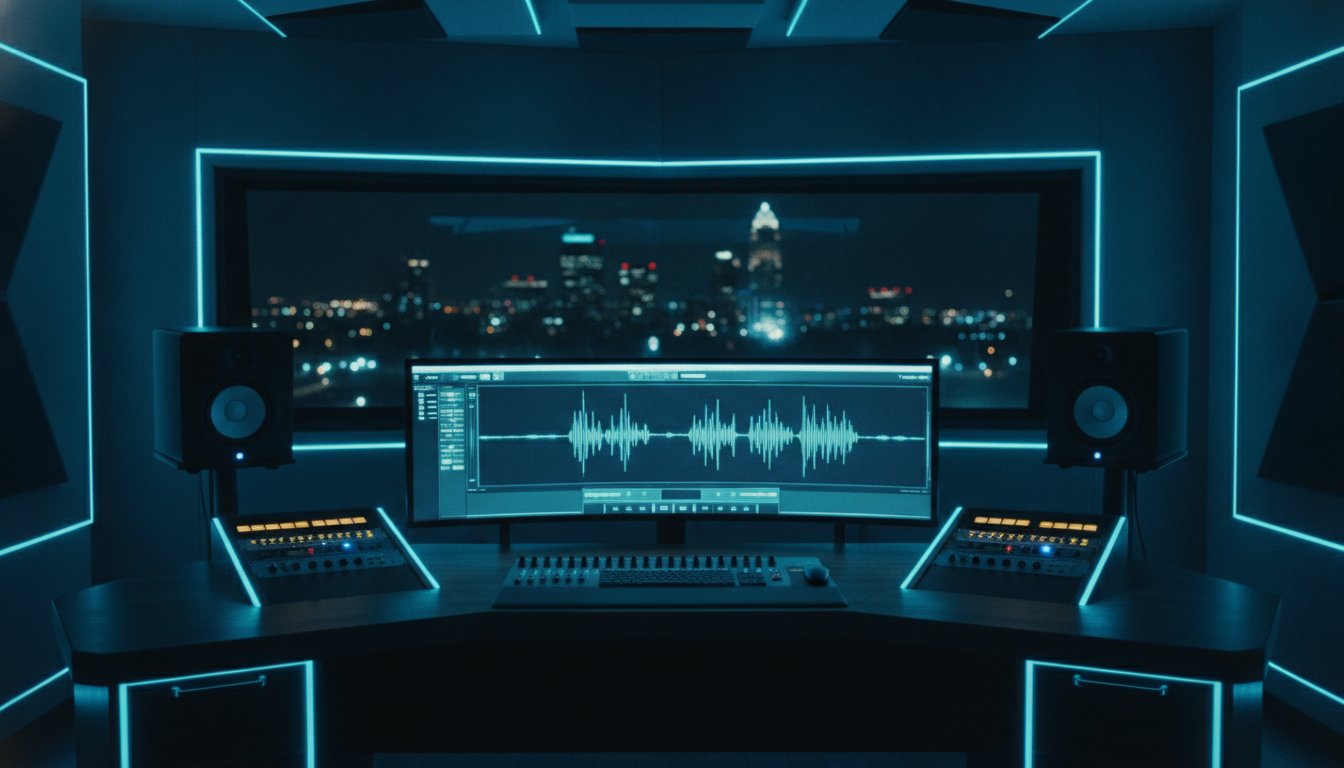
What if the secret to a radio-ready, high-energy master isn't actually found in the mastering suite at all? It's a frustrating reality for many creators; you pour your soul into a production only to find it sounds quiet, thin, or cluttered compared to the hits on your favorite playlists. Many of the most common mastering mistakes artists make start long before the final file is exported. These errors often stem from the tempting but dangerous "fix it in the master" mentality, which treats the final stage of production as a repair shop rather than a sophisticated polish.
We understand that your music is more than just data; it's an extension of your artistic identity that deserves absolute technical precision. You've likely felt the sting of a track losing its rhythmic punch or sounding inconsistent across different speakers. This guide will show you exactly how to avoid those pitfalls and prepare your sessions for a master that translates perfectly everywhere. We'll dive into the critical balance of headroom, the truth about loudness targets like -14 LUFS, and the essential steps to ensure your sonic vision reaches its highest potential.
Key Takeaways
- Understand the distinction between repairing a mix and polishing a master to ensure your music is technically prepared for global distribution.
- Identify the technical blunders, such as lack of headroom and master bus processing, that constitute the most common mastering mistakes artists make.
- Learn to preserve your track's "phantom center" and rhythmic transients by avoiding excessive stereo widening and over-limiting.
- Discover how to use genre-accurate reference tracks and professional monitoring to eliminate acoustic bias from your creative process.
- Explore why the nuanced, mentorship-led approach of a human engineer outshines AI for achieving true emotional impact and sonic depth.
The Mastering Myth: Why It Is Not a "Fix-All" for Your Music
Mastering is often shrouded in a sense of mystery, appearing to some as a magical process that can turn a bedroom demo into a stadium anthem. While it is the final, essential step in music production, it is not a cure for fundamental flaws. To understand the process, we should look at what audio mastering is at its core: the bridge between the creative sanctuary of the studio and the unpredictable reality of the listener's environment. It is about refinement, consistency, and technical preparation for distribution.
One of the most common mastering mistakes artists make is adopting the "fix it in the master" mentality. This psychological trap suggests that a muddy low end, a harsh vocal, or a lack of balance can be resolved during the final stage. In reality, mastering is a game of millimeters. If the mix is "sick," the master can only be a slightly louder version of that same illness. The creative heavy lifting, the emotional balance, and the instrumental separation must be finalized in the mixing stage. By the time a track reaches a mastering engineer, it should already sound 90 to 95% "finished."
As we move through 2026, the priority for artists has shifted. The "Loudness Wars" have largely been replaced by the "Translation Era." With streaming platforms like Spotify and Apple Music utilizing loudness normalization, raw volume is no longer the metric of success. Today, a master’s value lies in its ability to maintain its character and impact across a fragmented playback landscape.
Mastering as a Translation Tool
The primary goal of a professional master is to ensure your artistic vision survives the journey from the studio to the real world. A track might sound incredible on your high-end monitors, but does it lose its soul on a set of AirPods or a car stereo? A professional mastering engineer provides a fresh set of ears in a precision-tuned environment. This objective perspective identifies frequency build-ups or phase issues that your room acoustics might have hidden, protecting your intent so that the energy of the club remains intact even on a smartphone speaker.
The Limits of Post-Production Processing
There are hard technical boundaries to what can be achieved after a mix is flattened into a stereo file. Consider these limitations:
- EQ Conflicts: Boosting the high-end to brighten a dull vocal will also brighten the cymbals, guitars, and everything else in that range.
- Baked-in Distortion: If your mix is clipping or overly compressed, a mastering engineer cannot "undo" that digital grit.
- Transient Loss: If the punch of the kick drum is buried in the mix, limiting the master will only bury it further.
Fixing these issues at the source is the only way to achieve a world-class result. Mastering is the final polish on a diamond; it cannot turn a piece of coal into one.
Technical Trap: Common Mix-Preparation Blunders
The transition from the mixing desk to the mastering suite is a delicate handoff where technical precision meets creative vision. Even the most inspired performances can be undermined by a few overlooked settings in your DAW. One of the most common mastering mistakes artists make involves sending files that are technically "choked" before the mastering process even begins. If your export is compromised by digital clipping or improper bit depth, even the most sophisticated analog chain won't be able to restore that lost fidelity. High-end production requires a clean slate.
Beyond the obvious levels, subtle phase issues often hide in the shadows of a dense mix. While these might seem negligible during playback in a treated room, they become glaringly obvious once a mastering limiter is applied. This stage magnifies the "smearing" effect of out-of-phase low-end elements, leading to a loss of that visceral, center-focused punch that defines a professional release. Ensuring your file exports match your project’s native sample rate and utilizing a 32-bit float bit depth are non-negotiable steps for maintaining sonic integrity in 2026.
The Headroom Headache
Maintaining a peak level of -6dB remains the industry gold standard for mix delivery. This isn't just an arbitrary number; it provides the essential "air" required for a mastering engineer to apply surgical EQ and harmonic enhancement without hitting a digital ceiling. Many artists confuse perceived loudness with peak level. They push their faders until the master meter turns red, thinking they're making the track "competitive." In reality, they're just destroying the transients. When you provide a file with zero headroom, you've already made the final dynamic decisions, leaving no room for the nuanced translation that a professional Remote Mastering service provides.
The Master Bus Sabotage
Mixing "into" a heavy limiter is a dangerous habit that masks poor balance decisions. While it's tempting to keep your favorite "glue" compressor active on the master fader, it often does more harm than good for the final product. If the processing is purely for character or "flavor," it might be worth keeping. However, if you're using it to achieve volume, you're likely creating a "Loudness War" hangover that strips the life from your percussion. A better approach is to provide two versions to your engineer: one with your bus processing for reference, and a "clean" version that allows for absolute precision during the final polish.

Creative Missteps: When Loudness and Width Backfire
Creative ambition is the heartbeat of every great record. You want your music to feel expansive, powerful, and emotionally resonant. However, without a grounded understanding of how these creative choices translate to the final file, that ambition can lead to some of the most common mastering mistakes artists make. It is a delicate balance. You want impact, but you don't want to sacrifice the core of the song. When creative decisions are made in a vacuum, the mastering stage often reveals harsh truths about the mix’s stability and longevity.
One frequent creative pitfall involves the low-end, specifically the 200Hz to 400Hz range. Artists often perceive this area as "warmth" and "body," but too much build-up here creates a thick "mud" that suffocates the master. If this isn't addressed in the mix, a mastering engineer is forced to apply broad cuts that can make the entire production feel hollow or thin. Similarly, failing to consider the cohesive sonic identity of an album or EP can result in a jarring listener experience. Each track should feel like a chapter in the same book, sharing a consistent tonal balance and dynamic range even if the tempos vary.
The Stereo Image Illusion
Modern production tools make it incredibly easy to create a massive, wide soundstage. While this feels impressive on studio monitors, excessive width is a double-edged sword. When you over-widen elements like guitars or synths, you risk losing the "phantom center." This is the central point where the kick, snare, and lead vocal live. If the center is weak, the track loses its drive and focus. More importantly, extreme width often leads to phase cancellation. On mono devices like many smartphone speakers or club systems, those wide elements can literally disappear or sound thin and hollow. Professional mastering requires keeping the foundation locked in the center while using mid-side processing to add air and space without compromising the track's structural integrity.
Sacrificing Transients for Volume
The "squashed" sound is a relic of a previous era. Many artists still believe that a louder master is a better master, but pushing for maximum decibels almost always comes at the cost of transients. Transients are the initial "hits" of your drums and the "pluck" of your strings; they provide the rhythmic energy that makes a listener want to move. When you over-compress to achieve volume, you flatten these peaks, leaving the track sounding lifeless and fatiguing. With Spotify and Apple Music now normalizing tracks to -14 LUFS, the "loudness" you fought for is simply turned down by the platform’s algorithm. You're left with a track that is the same volume as the competition but has significantly less punch and dynamic life.
The Reference Reality Check: Avoiding Bias in the Studio
What you hear isn't always what you get. Your brain is a master of adaptation, which is why your perception of a mix shifts drastically after hours of intense listening. One of the most common mastering mistakes artists make is relying on a skewed perspective during the final hours of a project. Decision-making is only as good as the information you receive. If your ears are exhausted or your monitors are lying to you, the resulting master will suffer from fundamental imbalances that no amount of digital processing can fix. Reliability in the studio is built on a foundation of objectivity.
Ear fatigue is a silent killer of great music. Pushing through a session at 2 AM might feel like a badge of honor, but your high-frequency sensitivity drops significantly as the night goes on. You'll likely end up overcompensating with aggressive EQ boosts that sound harsh and brittle when you listen with fresh ears the next morning. Similarly, neglecting the "Car Test" or failing to check your track on a smartphone speaker leaves you blind to how the music actually lives in the real world. A master must sound world-class in a treated room, but it must also remain emotive and clear on a set of cheap earbuds.
Choosing the Right North Star
Selecting a reference isn't about copying another artist's soul; it's about calibrating your technical compass. Pick 2-3 tracks that share your song’s specific instrumentation and energy level. If you're working on a sparse acoustic ballad, referencing a wall-of-sound EDM track will lead to disastrous tonal decisions. Crucially, you must level-match your references. Because our brains perceive "louder" as "better," an uncompensated reference will trick you into over-processing your own mix just to match the perceived weight of a commercially mastered hit. A reference track serves as a technical anchor, not a creative blueprint.
The Monitoring Environment Trap
Most untreated home studios suffer from massive bass build-up in the corners, leading to a "muddy" perception of the low end. To compensate, artists often cut too much bass from their mix, resulting in a master that sounds thin and weak on professional systems. This is why professional studios in Cleveland like Starsound invest heavily in acoustic treatment and precision monitoring. We eliminate the guesswork by providing a neutral, high-fidelity environment where every frequency is represented honestly. Testing your work on multiple systems is a start, but having a trusted, neutral environment is the only way to ensure total translation. If you're ready to see how your music sounds without the bias of an untreated room, our professional Mastering services provide the clarity your project deserves.
Elevating Your Sound: The Professional Mastering Advantage
The journey from a raw demo to a world-class release is a marathon of creative decisions. After investing countless hours into recording and mixing, the final master serves as the ultimate validation of your hard work. It is the victory lap. While the previous sections highlighted the common mastering mistakes artists make during preparation, the final stage is where those technical corrections transform into pure artistic impact. A professional master doesn't just make a song louder; it justifies every dollar and hour you've already spent in the studio by ensuring your vision is heard exactly as intended.
Choosing a professional engineer over an automated service is a choice to prioritize your artistic identity. In an era where AI mastering is increasingly accessible, the value of a human ear has never been higher. Algorithms operate on averages and mathematical probability, but music lives in the nuances of emotion and genre-specific energy. A human engineer understands when a vocal needs to feel "intimate" rather than just "present," and they possess the critical intuition to catch subtle technical anomalies that software often ignores.
The Human Element in 2026
Precision matters. But feeling matters more. AI tools frequently fail to identify phase anomalies or microscopic clicks that can ruin a high-fidelity listening experience. At Starsound, our approach is built on a foundation of collaborative mentorship. Led by Steve 'The Mix,' our mastering process begins with a conversation. If we spot an issue in your mix that would compromise the final master, we tell you. This feedback loop is something no plugin can provide. We've seen this transformation firsthand with local Cleveland artists; a track that felt "stuck" in the speakers suddenly breathes and moves with a professional, three-dimensional energy after a human touch.
Dolby Atmos and Immersive Readiness
The landscape of music consumption is shifting toward total immersion. As Ohio’s only certified Dolby Atmos facility, Starsound is uniquely equipped to prepare your music for the future. Mastering for a 9.1.4 immersive environment is a vastly different discipline than traditional stereo work. It requires a holistic understanding of how sound moves through space, ensuring that your artistic intent remains cohesive whether the listener is in a high-end home theater or using spatial audio on headphones. This is the new standard of excellence. Ready to give your music the final polish it deserves? Contact Starsound Studios today.
The Future of Your Sonic Identity
Your music is a legacy. It's the culmination of every late-night session and every creative spark you've captured. By shifting your focus from "fixing" to "finalizing," you ensure that your tracks reach their highest potential. We've explored how identifying the common mastering mistakes artists make, from squashing transients to ignoring room bias, can transform your production workflow. It's about respecting the craft enough to provide the necessary headroom and technical clarity before the final polish begins. When you prioritize the integrity of your mix, the mastering stage becomes a celebration of your sound rather than a rescue mission.
Achieving a world-class result requires more than just a plugin; it requires a partnership. At Starsound Studios, we combine 10+ years of expertise led by Steve 'The Mix' with cutting-edge technology to bring your vision to life. As Ohio's only Dolby-certified Atmos mixing studio, our 9.1.4 immersive audio capabilities offer a level of depth and clarity that traditional stereo simply cannot match. Don't let technical hurdles stand in the way of your breakthrough. Elevate your sound with professional mastering at Starsound Studios. Your masterpiece is ready to be heard by the world exactly as you imagined it.
Frequently Asked Questions
What is the #1 mistake artists make when sending songs for mastering?
The most frequent error is submitting a mix that is already maximized for volume. When you send a file that is "red-lining" or squashed by a heavy limiter, you strip the mastering engineer of the ability to apply surgical EQ or harmonic enhancement. This lack of headroom is one of the common mastering mistakes artists make because it forces us to work with a "choked" signal that lacks the dynamic life needed for world-class translation.
How much headroom should I leave in my mix for a mastering engineer?
Aim for -6dB of peak headroom as your gold standard. This doesn't mean just turning down the master fader; it means managing your individual tracks so the final stereo bus has enough "air" to breathe. This safety margin allows for high-end analog processing and precision limiting without introducing digital clipping. It gives your project the structural integrity required for a polished, professional result across all streaming platforms.
Should I remove my limiter before exporting my mix for mastering?
Yes, you should generally remove any peak limiting from your master bus before export. Limiting is a destructive process that "flattens" your transients to achieve volume. If you provide a limited file, we can't recover that lost punch or rhythmic energy. If you love the sound of your limiter, feel free to send a "processed" version as a reference, but always provide a "clean" version with at least -6dB headroom for the actual session.
Can mastering fix a bad vocal recording or a muddy mix?
Mastering cannot repair fundamental recording flaws or a cluttered mix. While we can use surgical EQ to slightly mitigate "mud" in the 200Hz to 400Hz range, broad changes will affect the entire track. A harsh vocal recording will only become more apparent once the track is brought up to commercial levels. We always recommend refining your mix until it's 95% finished before moving to the final mastering stage.
Why does my master sound different on Spotify than it does in my DAW?
Spotify utilizes loudness normalization, typically targeting -14 LUFS, which automatically adjusts the playback volume of every track. If your master is excessively loud, the algorithm simply turns it down, often leaving it sounding small and flat compared to more dynamic tracks. Additionally, the conversion to lossy formats can introduce artifacts if your true peak levels are too high. We master specifically to ensure your sound survives these platform-specific processes.
Is AI mastering as good as a professional mastering engineer in 2026?
AI mastering remains a tool for averages rather than a sanctuary for art. While algorithms can match frequency curves, they lack the human intuition to understand genre nuance or emotional intent. AI can't identify a subtle phase issue in your low end or give you collaborative feedback on your mix. A professional engineer provides a mentorship-led experience that ensures your unique identity isn't lost in a sea of standardized presets.
What files do I need to provide for a professional mastering session?
Please provide high-resolution WAV or AIFF files at the native sample rate of your project. We recommend 24-bit or 32-bit float files to preserve the highest possible dynamic resolution. Ensure all "master bus" processing is removed unless it's purely for creative character. Including a reference track that represents your sonic "North Star" is also helpful for calibrating the technical direction of the session to your specific vision.
Does Starsound Studios offer remote mastering services for artists outside of Cleveland?
We provide Remote Mastering services for creators across the globe. You don't need to be in our Cleveland facility to benefit from our high-end technical environment and Steve 'The Mix's' expertise. Through our secure file-sharing process, we maintain the same collaborative, artist-centric approach that we offer in person. This ensures your project receives world-class treatment and absolute precision, regardless of your physical location.


