

A strong album is more than a set of finished songs: it’s a unified listening experience. A full album production service in Cleveland can guide a project from recorded performances through editing and mixing, building consistency across tracks while preserving each song’s character. The process brings creative and technical decisions into focus, from refining performances to shaping the final mixes.
You already know that every track needs care, and that the album must still feel like one complete artistic statement. The right production path helps connect those goals. This article explains what full-album production can involve, how editing and mixing shape the record, what affects the workflow, and how additional production services can support the sound you’re aiming for. You’ll have a clearer picture of the steps ahead, and of how to prepare your material so the music remains at the center of every decision.
Key Takeaways
- Plan recording sessions around the song, performance needs, and preparation so studio time supports the music rather than rushing it.
- Shape an album’s identity by aligning arrangement, sound choices, and production direction across its tracks.
- Use editing to refine performances and mixing to balance the elements while keeping the artist’s intent at the center.
- Find a producer whose genre experience and creative approach suit the sound you want to make.
- Build a realistic production schedule by accounting for recording, revisions, editing, mixing, and the number of songs involved.
Studio recording
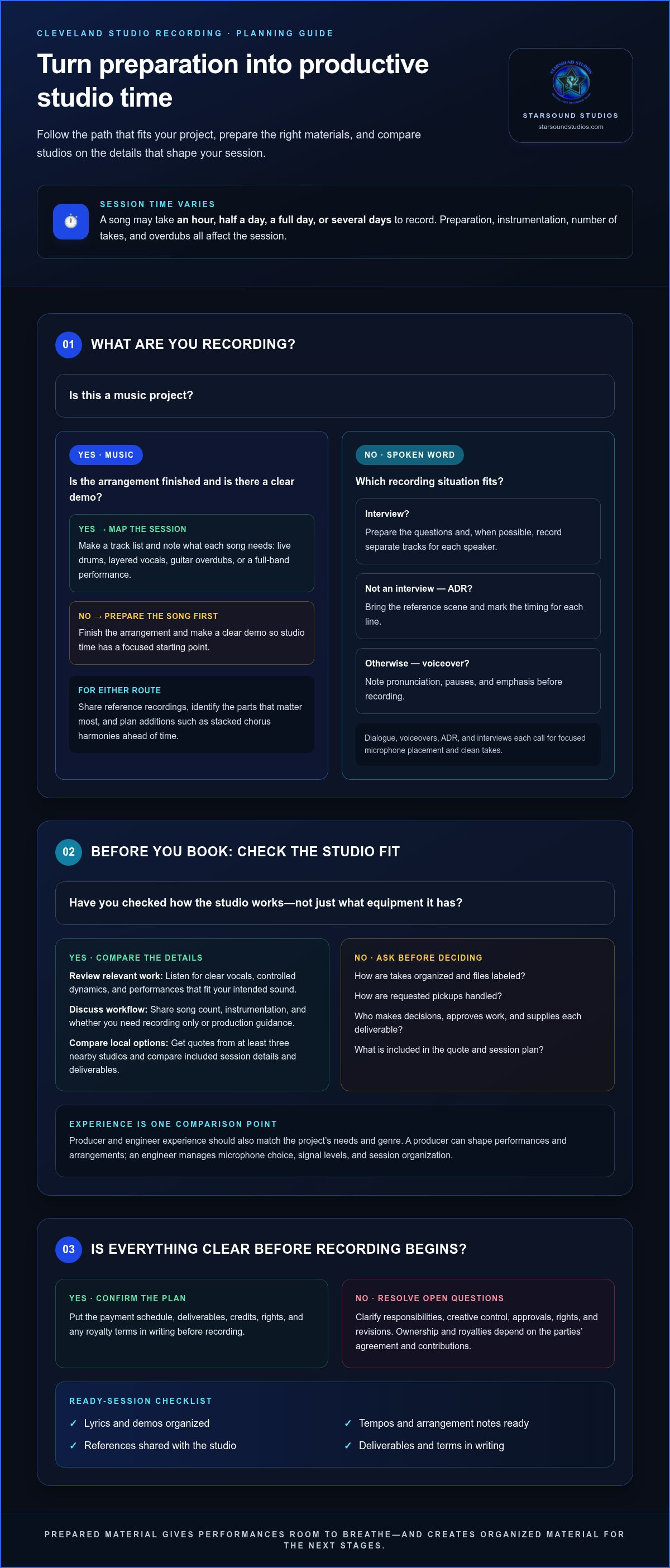
Studio recording captures a song’s arrangement as performances that can be edited and mixed. In Cleveland, session time depends on preparation, instrumentation, the number of takes, and whether overdubs are needed. A song may take an hour, half a day, a full day, or several days to record. A finished arrangement and clear demo help make studio time productive.
Before booking, make a track list and note what each song needs, such as live drums, layered vocals, guitar overdubs, or a full-band performance. Share reference recordings and identify the parts that matter most. If a chorus needs stacked harmonies, for example, plan those vocal layers instead of leaving them as a last-minute addition. The studio can then prepare the session around the music.
Cleveland recording and music production services can also support spoken-word projects. Dialogue, voiceovers, ADR, and interviews each call for focused microphone placement and clean takes. For an interview, prepare the questions and record separate speaker tracks when possible. For ADR, bring the reference scene and mark each line’s timing. For a voiceover, note pronunciation, pauses, and emphasis before recording.
Producer and engineer experience matters in practical ways. A producer can help shape performances and arrangements, while an engineer manages microphone choice, signal levels, and session organization. Cleveland engineer and keyboardist Pete Tokar reports 35 years in the recording industry. That figure offers one specific point of comparison, but experience should also match the project’s needs and genre.
- Review relevant work: Listen for clear vocals, controlled dynamics, and performances that fit your intended sound.
- Discuss the workflow: Share the song count, instrumentation, and whether you need recording only or production guidance.
- Compare local options: Get quotes from at least three nearby studios, then compare the included session details and deliverables.
- Prepare your material: Organize lyrics, demos, tempos, and arrangement notes before the first session.
Put the agreed payment schedule, deliverables, credits, rights, and any royalty terms in writing before recording begins. Ownership and royalties depend on the parties’ agreement and contributions, so make those terms clear in the contract.
A full-service production company can simplify coordination, but a single workflow may not suit every artist. Potential challenges include unclear responsibilities, limited creative control, or misunderstandings about rights and revisions. Define decision-making, approvals, and deliverables before committing.
Compare Cleveland recording professionals based on fit, not just equipment. Ask how the engineer organizes takes, labels files, and handles requested pickups. A well-prepared session gives performances room to breathe and creates organized material for the next stages of production.
Music production
Music production gives an album its creative direction, from early arrangement choices to the final sequence. For a Cleveland project, begin by defining the sound and emotional arc you want across the record. Review demos, lyrics, tempos, and instrumentation together. A stripped-back verse may need space for the vocal, while a dense chorus may call for layered parts. Those choices guide recording and help each track contribute to a coherent album.
Producing an album from pre-production to release can involve developing arrangements, recording performances, editing and mixing tracks, mastering the finished audio, and preparing release assets and a schedule. Feedback and approvals at each stage help keep the sound aligned with the artist’s vision.
A practical production sequence can keep creative decisions clear:
- Set direction: Choose reference tracks and describe the album’s sound in plain terms, such as intimate vocals or forceful drums.
- Shape arrangements: Identify where a song needs an intro, a quieter bridge, or another instrumental layer.
- Build tracks: Record core performances, then add details that strengthen the song instead of crowding it.
- Review the album: Compare songs in sequence and flag changes that improve flow or consistency.
Eric Carlyle Wilson Jr.’s musical background includes writing rap lyrics beginning in 1985. While attending Advanced Individual Training at Fort Gordon, Georgia, he won eleven rap battles. At times, Wilson produced between three and ten beats a day, and he has created thousands of beats over his career. These milestones illustrate how writing, performance, and beat-making can inform a producer’s approach. For an artist, the useful question is how a producer’s experience connects to the sound and working style of the project.
Music video production is a separate visual discipline, not an automatic part of audio production. If videos are part of the release strategy, plan their audio needs alongside the songs. A director may need a clean mix, an instrumental version, or a timed edit for a scene. Agreeing on those needs early can help prevent last-minute changes to the finished track.
Keep the album’s creative decisions organized. A shared document can track song versions, arrangement notes, lyric changes, and approval status. For example, label a demo as the current reference before requesting a new vocal take. This helps the producer, artist, and engineer work from the same version. As tracks near completion, listen to the sequence as a whole: transitions, energy, and contrast all shape the record.
For a Cleveland project moving into recorded performances, recording sessions can turn a production plan into captured material. Clear references and arrangement notes give those sessions a focused starting point.
Editing and mixing
Editing prepares recorded takes for mixing; mixing balances performances into a cohesive song. Start by organizing each session with clear track names, song titles, and version notes. Select the strongest takes, align timing where needed, and remove distracting noise without stripping away the feel. A vocal edit, for example, can combine the best phrases from several takes while preserving natural breaths and expressive timing.
Editing should serve the performance, not make every instrument sound mechanically perfect. Tightening a drum part may focus the groove, but excessive correction can flatten its energy. For guitars, comping the cleanest sections can resolve inconsistent notes while retaining the player’s touch. Before finalizing edits, listen to the full song and compare it with the original recording to ensure the performance still feels authentic.
Mixing starts with the song’s priorities. If the lyric carries the story, bring the lead vocal forward and create space around it. If the track depends on a strong rhythm section, shape the kick, bass, and guitars so they remain distinct. The engineer balances levels, stereo placement, tone, dynamics, and effects, checking how those choices work together. Each move should support the arrangement, not compete with it.
- Organize: Keep track names, takes, and mix versions consistent across the album.
- Edit: Choose strong performances and make focused timing or noise adjustments.
- Balance: Set levels and spatial placement around the song’s central elements.
- Review: Listen to the mix on different playback systems and note specific changes.
Album consistency comes from comparing tracks, not forcing identical settings. A vocal may sound close and intimate on a ballad, then cut through a dense arrangement on an uptempo song. Create a reference mix for the album’s overall tone and use it to evaluate later songs. A note such as “keep the vocal warmth from track one” gives the engineer clear creative direction.
Stereo mixing places the album’s elements across a left-right sound field. Dolby Atmos Mixing (9.1.4) creates an immersive mix using a different spatial format, so the intended listening experience should guide the choice. Remote Mixing can also support a project when files and feedback are exchanged outside the studio. In either workflow, provide organized session files, reference tracks, and one consolidated set of notes for each revision.
Before approving a final mix, review every song in sequence. Listen for abrupt changes in vocal level, low-end weight, ambience, or perceived loudness. Note the song title and the moment that needs attention, then describe the issue plainly, such as “the backing vocal masks the lead in the last chorus.” Clear notes keep revisions focused while preserving the album’s character.
Which Cleveland album producers specialize in my genre?
Genre fit shows in a producer’s choices, not just a label on a profile. For a Cleveland artist, compare finished recordings in a similar style and listen for arrangement, vocal treatment, rhythm, and overall energy. A hip-hop track may rely on beat detail and vocal presence; an acoustic folk song may need space, natural dynamics, and clear storytelling. The key question is whether the producer’s work supports your sound.
Listen to complete songs rather than relying on short clips. A polished chorus can impress, but the verse, bridge, and transitions reveal how a producer shapes an arrangement. Compare a few relevant examples, noting what stays consistent and what changes. If every song sounds identical, ask how the producer adapts to each artist rather than relying on one approach.
Genre experience can also come through musical background. Dylan of SANTIS says he began playing piano at age 7 and described it as 20 years since he started playing. That detail shows sustained musicianship, but an instrument background alone doesn’t establish a fit for every style. Pair it with examples of completed work that match your genre and the sound you want for the album.
Use a focused listening checklist when reviewing credits or a producer’s portfolio:
- Performance: Does the vocal delivery suit the genre, whether intimate, forceful, or rhythmically precise?
- Arrangement: Do drums, bass, guitars, keys, and vocals leave space for the song’s central idea?
- Album identity: Can the producer create variety across tracks while keeping a recognizable artistic thread?
- Communication: Can you describe a reference track and receive a clear discussion of what makes its sound work?
Bring two reference tracks to an initial creative discussion, then explain what you want to borrow from each. You might want the dry vocal presence of one recording and the wide instrumental image of another. Naming those elements gives the producer a practical starting point without asking for a copy. For a full album, also discuss how genre conventions should serve your own identity across the track sequence.
Local credits can indicate experience, but they need context. Find out whether the producer handled performance direction, arrangement, recording, or another role. Ask what decisions they made on a track similar to yours, such as choosing a sparse beat or preserving a loose live feel. Those specifics show how their judgment might apply to your project.
Choose based on evidence and collaboration: relevant finished work, thoughtful questions, and a shared understanding of your creative goals. Genre is only a starting point. The right Cleveland producer should be able to explain how they’ll shape your songs while keeping your voice and musical identity intact.
How long does full album production typically take in Cleveland?
Album production has no fixed calendar length because each project moves through distinct stages. Recording a song may take an hour, half a day, a full day, or several days. Arrangement, number of performers, preparation, and the need for overdubs all affect studio time. An album with finished demos and settled parts may move differently from one whose arrangements are still developing.
Plan the schedule around the work, not just the number of tracks. Pre-production establishes arrangements, tempos, references, and session priorities. Recording captures performances; editing organizes and refines the takes. Mixing shapes each song’s balance, and mastering prepares the final audio. The release stage may involve approving versions, sequencing tracks, and delivering the agreed files. Each handoff depends on decisions and feedback from the previous stage.
A band arriving with complete arrangements, for example, can use recording sessions to capture planned performances. If a chorus needs new harmonies or a guitar part needs rewriting, that creative work must happen before the mix can be settled. A vocalist comparing several lead takes also needs time to review them. Preparation helps sessions stay focused; unresolved creative decisions can extend the process.
Revision pace matters, too. One consolidated set of notes gives the engineer clear direction, such as adjusting the vocal level in the final chorus. Separate or changing feedback can lead to repeated revisions. For an album, approving songs in a consistent sequence helps maintain tone and continuity. Keep versions and decisions organized so no one reviews an outdated mix.
- Before sessions: Finish demos, lyrics, arrangements, and reference notes.
- During recording: Prioritize performances and planned overdubs for each song.
- After tracking: Allow editing, mix review, and clear revision feedback.
- Before release: Approve the final sequence and required audio deliveries.
To map a workable timeline, list the songs and outstanding decisions first. Mark which arrangements are ready, which performances need recording, and which tracks need additional parts. Then schedule review points for edits and mixes. A ballad needing only a lead vocal differs from a layered production with multiple overdubs, so stage-by-stage planning is more useful than assuming every song takes the same time.
Share your song list, current demos, and production goals to plan your album recording sessions. A clear starting picture helps connect the creative stages and set priorities for the work ahead.
Because recording a studio song may take an hour, half a day, a full day, or several days, plan the album around each track’s needs rather than relying on one fixed estimate.
Starsound Studios: Stereo Mixing
For artists seeking a full album production service in Cleveland, Starsound Studios can help bring recorded tracks into focus with Stereo Mixing. It’s a useful next step when your songs are ready for mix decisions and need a cohesive sound across the album. Mastering prepares approved mixes for release, while Dolby Atmos Mixing (9.1.4) offers an immersive format for projects designed for spatial listening.
If you’re comparing a full album production service in Cleveland, consider which stage your project needs next. Recording can support projects still building their tracks. Share your demos, files, references, and creative priorities to set a clear starting point. Contact Starsound Studios to discuss your album.
Give Your Album Its Next Chapter
A finished record should carry its identity into every listening environment. As you decide how listeners should experience the music, keep the album’s character at the center, whether intimate, expansive, raw, or finely detailed. A full album production service in Cleveland can help translate that creative intention into considered final mixes while preserving the choices that make the project yours.
Starsound Studios offers Stereo Mixing for a focused two-channel presentation, Mastering for finished mixes, and Dolby Atmos Mixing (9.1.4) for immersive audio. The right next step depends on your material and the way you want it presented. Bring your artistic direction into the conversation, whether you’re refining an album already recorded or shaping its final sound.
Contact Starsound Studios about your album and take the next step toward sharing work that sounds unmistakably yours.
Frequently Asked Questions
Which Cleveland studios offer full album production services?
Starsound Studios is a Cleveland-area option for artists seeking recording and audio post-production. Located in North Royalton, Ohio, it offers Recording, Stereo Mixing, Mastering, and Dolby Atmos Mixing (9.1.4). Starsound Studios is the first and only Dolby-certified Atmos mixing studio in Ohio. For remote projects, artists can also use its remote mixing and mastering services. Match the studio’s specific offerings to the stages your album still needs.
What is included in full album production in Cleveland?
Full album production can cover the work needed to move songs from prepared demos to approved release audio. A project may include arrangement development, recording, editing, mixing, and mastering, but the agreed scope determines which stages are included. An artist with finished multitracks, for example, may need mixing and mastering rather than new recording. Clarify song versions, mix revisions, final file formats, and who approves each stage before work begins.
How do Cleveland album production studios compare by equipment, services, and reviews?
Compare how a studio’s equipment and workflow fit your recording needs rather than judging gear lists alone. Starsound Studios lists high-definition converters, clean microphone preamps, analog EQ and compression on every channel, an acoustically treated room and vocal booth, and high-end speakers. Consider how those features relate to the services you need, and look for specific feedback about communication, session organization, and finished sound. Relevant examples are more useful than broad praise.
What should I ask before hiring an album producer or recording studio in Cleveland?
Ask who will make production decisions, how feedback is collected, and what deliverables you’ll receive at each stage. Clarify whether the final handoff includes stereo mixes, instrumental versions, or session files, and how revision requests are handled. Put ownership, credits, and any royalty terms in writing. Share reference tracks and explain your intended sound so the producer can understand your goals before the project begins.


