

A singer-songwriter recording package in Ohio can take a song from recording and engineer guidance through mixing and mastering. The goal is a finished track that preserves the character of the performance while giving it a polished, cohesive sound. Each stage has a distinct role, from capturing vocals and instruments to shaping the final mix.
It’s natural to want to know what happens in the studio and how recording supports the song you hear in your head. This guide explains what recording packages can include, how recording, mixing, and mastering fit together, and which project details shape the process. You’ll come away with a clearer picture of the creative and technical steps, so you can plan your next session with confidence.
Key Takeaways
- Understand how recording, mixing, and post-production contribute to a finished singer-songwriter track.
- Learn how clear creative goals and thoughtful preparation can make studio guidance more useful.
- See where an engineer can help capture a performance while preserving its natural character.
- Compare what matters when looking for a studio suited to acoustic vocals and songwriting demos.
- Discover how stereo mixing, mastering, and immersive mixing can shape the next stage of a recorded song.
What do you get with the Recording Artist Packages?
The clearest way to understand a recording package is to trace a song from preparation to final files. For a singer-songwriter, that can mean planning the arrangement, recording vocals and instruments, editing takes, mixing, and preparing a mastered version. Package contents vary, so compare the deliverables rather than relying on the word “package.” Find out whether recording, engineering, editing, mixing, and final formats are included. A defined scope helps you plan around the song instead of making assumptions.
Are hourly rates or bundled recording packages better for singer-songwriters in Ohio? Hourly recording suits a specific task, such as tracking a vocal or adding a guitar overdub. A package can be a better fit when a project combines stages such as recording, mixing, and mastering. Compare the included work and session terms with your arrangement and production goals before deciding.
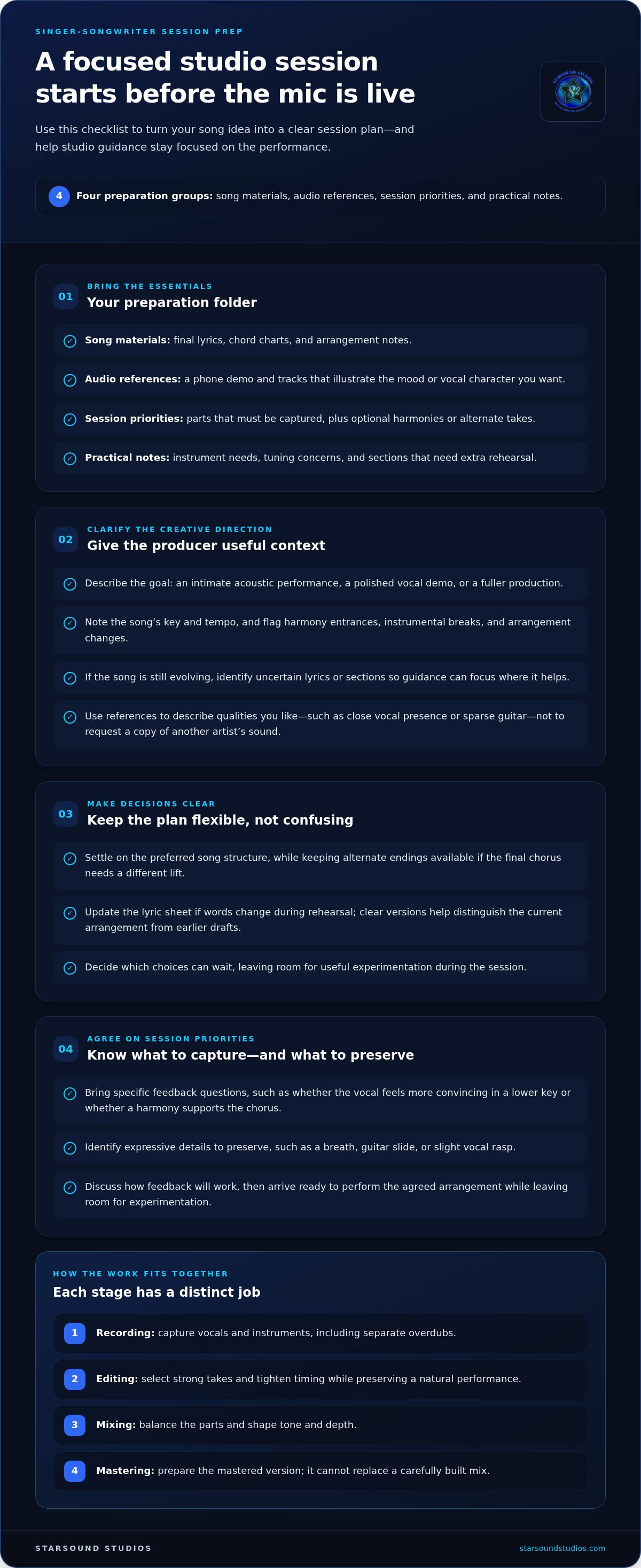
Studio work often begins before the microphone is live. Bring a lyric sheet, reference tracks, and a clear arrangement map. Mark changes in the song, harmony entrances, and sections that need instrumental space. During tracking, an engineer can capture a lead vocal and acoustic guitar, then record separate overdubs. Editing selects strong takes and tightens timing while preserving a natural performance. Mixing balances the parts and shapes tone and depth before mastering. Each stage addresses a different need, and mastering cannot replace a carefully built mix.
How do singer-songwriters compare recording studios in Columbus, Cleveland, Cincinnati, and other Ohio cities? Compare the same details in each city: recording environment, engineer involvement, editing, mix deliverables, and travel. A Columbus artist might weigh a nearby studio against a Cleveland session, while a Cincinnati songwriter considers travel alongside the workflow. The city name alone won’t show whether a package suits your song.
North Canton is another location to consider when planning studio access across Ohio. For a session involving live instruments, plan the arrangement and musician roles before booking. Look for a producer whose recording and mixing experience relates to your project. For an acoustic demo, consider how the workflow supports vocal clarity and guitar balance. For a fuller production, think about how layered parts and transitions will be handled. Specific examples are more useful than broad claims about studio experience.
What are typical deposit, cancellation, and revision policies at Ohio recording studios? Policies vary, so review the written terms for reserving time, changing a session, and requesting mix revisions. Deposit terms explain how a session is held, cancellation terms cover rescheduling, and revision terms outline feedback and scope.
Do Ohio recording studios offer remote production or online mixing packages? Remote mixing can suit songs already recorded at home. Organize and clearly label vocal and instrument files, then share reference tracks and feedback. This lets the mix develop without an in-person tracking session. If the song still needs microphones, room sound, or hands-on recording guidance, an in-studio session may be a better fit. Starsound Studios offers remote mixing and mastering for clients who have recorded their tracks.
Recording guidance and consultations
Before booking studio time in Ohio, prepare a demo, lyrics, and a clear description of your goal. Bring reference tracks, note the song’s key and tempo, and identify sections that need harmonies, instrumental breaks, or arrangement changes. If the song is still evolving, flag uncertain lyrics or sections so the producer can focus guidance where it will help.
A useful consultation turns a broad idea into a workable session plan. Explain whether you want an intimate acoustic performance, a polished vocal demo, or a fuller production. A guitar-and-vocal song may call for focused vocal tracking, while a layered arrangement may need separate passes for each instrument. This conversation helps clarify what to record, what to prepare, and which creative decisions are still open.
Organize your materials so the engineer can follow your intentions without interrupting the performance. A simple preparation folder can include:
- Song materials: final lyrics, chord charts, and any arrangement notes.
- Audio references: a phone demo and tracks that illustrate the mood or vocal character you want.
- Session priorities: the parts that must be captured, plus optional harmonies or alternate takes.
- Practical notes: instrument needs, tuning concerns, and any sections that require extra rehearsal.
Use references to communicate qualities, not to request a copy of another artist’s sound. You might point to the close vocal presence in one track and the sparse guitar arrangement in another. Explain what you like about each example. This gives the producer useful direction while keeping your own songwriting identity at the center.
Preparation also means deciding which choices can wait. Settle on the preferred song structure, but keep alternate endings available if the final chorus needs a different lift. If lyrics change during rehearsal, update the lyric sheet before tracking. Clear versions prevent confusion between takes and distinguish the current arrangement from earlier drafts.
During a consultation, discuss how feedback will work. Bring specific questions, such as whether the vocal feels more convincing in a lower key or whether a harmony supports the chorus. Focused questions give the producer something concrete to evaluate. You can also identify details to preserve: a breath, guitar slide, or slight vocal rasp may carry the emotion.
Finish by agreeing on the session’s creative priorities and the materials you’ll bring. For recording, arrive ready to perform the arrangement you discussed, while leaving room for useful experimentation. Preparation doesn’t make a session rigid. It gives the song a clear starting point and lets you focus on the performance.
Recording, mixing, and mastering
A finished song moves through distinct stages, and each stage solves a different production problem. In Cleveland, the recording session takes place on a single day. That makes preparation especially useful: arrive with the arrangement, lyrics, and instruments ready, so studio time can focus on capturing performances.
Recording captures the source performances. A singer-songwriter might record lead vocal and acoustic guitar together, then add separate harmony or instrumental takes. Tracking together can preserve the natural interplay between voice and guitar. Recording parts separately offers more control over balance and editing. The right approach depends on the song’s dynamics and the artist’s strongest performance.
After tracking, review takes with the song’s emotional center in mind. Choose vocal phrases that communicate the lyric clearly, rather than selecting only the most technically flawless pass. A softer verse may call for a more intimate take, while a final chorus may need stronger delivery. Editing can combine those choices and tidy transitions without flattening the performance’s character.
Mixing shapes how the recorded parts work together. The engineer balances vocals and instruments, adjusts tone, and creates a sense of space. In an acoustic arrangement, the vocal needs to remain intelligible while the guitar supports the lyric. If a harmony masks a key word, its level or placement can be adjusted. If the guitar feels too prominent, its tone and balance can be refined.
- Balance: Set relative levels so the lead vocal and accompaniment each have a clear role.
- Tone: Shape frequencies to reduce masking and preserve the song’s warmth or brightness.
- Depth: Use effects and placement to create space without obscuring the lyric.
- Review: Listen from start to finish and note specific changes by section.
Mastering follows the approved mix. It prepares the track as a cohesive final file, with attention to tonal balance, overall level, and consistency. It cannot repair every mix issue, so address an unclear vocal balance or distracting guitar part before moving forward. A mix that already communicates the song clearly gives mastering a stronger foundation.
When comparing singer-songwriter recording packages in Ohio, clarify the stages and deliverables before the session. Find out whether the project includes recorded tracks, an approved stereo mix, and a mastered file. If you need a particular listening format, discuss that before production choices are finalized. A clear sequence of recording, editing, mixing, and mastering keeps decisions organized and each stage focused on the song.
Recording engineer assistance
A recording engineer manages the technical details so the artist can focus on performing. Before tracking, the engineer checks the microphone, signal path, headphone mix, and recording level. For a quiet acoustic vocal, microphone placement can capture detail without emphasizing room reflections. For a louder chorus, monitoring input levels helps preserve clean peaks. These choices shape the sound before mixing begins.
Communication matters as much as equipment. Tell the engineer what you want to hear in your headphones, such as a stronger guitar reference or less reverb on your vocal. If the cue mix distracts you, explain what is wrong. The engineer can adjust the balance between takes, letting you return to the lyric instead of struggling with the monitor sound.
During a session, an engineer can help organize takes without dictating the performance. If the first verse feels intimate but the chorus needs more energy, they might suggest recording those sections separately. They can also mark a strong phrase for later comping. The artist chooses the emotional direction; engineering support makes it easier to capture and review those choices.
Useful engineer assistance often includes practical steps such as:
- Signal checks: Confirm the microphone and instrument input are recording cleanly.
- Performance cues: Set headphone levels that support timing and confident delivery.
- Session organization: Label takes and tracks so the strongest performances are easy to find.
- Playback review: Listen for clicks, clipping, missed entries, or distracting noises between takes.
A guitar pick click, for example, may occur only during a quiet verse. The engineer can flag its location and help decide whether another take or careful editing is appropriate. A vocal breath might sound natural and expressive, so removing it automatically could weaken the phrase. Clear playback makes these decisions collaborative rather than guesswork.
Engineers also help maintain continuity throughout a session. They can keep microphone placement consistent between vocal takes, note instrument settings, and identify the track with the preferred performance. If the artist takes a break, these notes help resume work without losing the sound already established. Consistency is useful when a song has contrasting sections or layered overdubs.
Before tracking, agree on how the engineer should offer feedback. Some artists prefer immediate technical notes, while others want uninterrupted passes followed by playback. A simple cue, such as “pause after the chorus,” can prevent repeated stops. A good workflow gives the performer room to stay present while making technical issues visible at the right moment.
When choosing recording support, match the engineer’s role to your needs. A solo vocal session may call for careful microphone and headphone adjustments; a multi-instrument arrangement may require clear track labeling and coordination. Clear expectations help the engineer protect the performance and keep the session organized, while leaving the song’s identity in the artist’s hands.
Which Ohio recording studios specialize in acoustic vocals and songwriting demos?
For acoustic vocals and songwriting demos, look for a studio workflow centered on voice, instrument, and lyric clarity. A session can capture a singer and guitar together, then record separate takes if the arrangement needs more control. Ask how the engineer approaches room sound, headphone balance, and quiet passages. Fingerpicked guitar, for example, needs enough definition to support the vocal without covering the words.
Match the session to the demo’s purpose. A private songwriting reference may need a clean, expressive vocal and balanced guitar. A pitch demo for collaborators may benefit from tighter editing, harmony layers, or a more developed arrangement. Before booking, explain how you’ll use the recording. That context helps shape the session and keeps production choices focused on the song’s next step.
Location can matter when comparing studios in Cleveland, Columbus, Cincinnati, and elsewhere in Ohio. Consider travel alongside the work itself. A nearby studio may make it easier to bring your instrument, while a longer trip may suit you if the studio’s approach matches your needs. Compare the same details for each option: engineer involvement, acoustic recording experience, editing, mix scope, and final files.
Listen closely to examples of acoustic work. Focus on the vocal’s natural tone, clear consonants, guitar detail, and the balance between them. A polished demo should still sound like a real performance. If the vocal feels buried or the guitar loses its dynamics, ask how recording and mixing address those qualities. Listening notes can turn a general preference into practical direction.
- For an intimate demo: Prioritize vocal expression, clear lyrics, and a supportive instrument balance.
- For a layered arrangement: Ask how harmonies and overdubs are captured and organized.
- For a live-feeling performance: Discuss recording voice and instrument together, including the trade-off between natural interaction and separate control.
- For remote collaboration: Clarify how recorded files and feedback move between the artist and engineer.
A focused studio conversation should cover your song’s structure, reference tracks, performance preferences, and intended use. Bring an up-to-date lyric sheet and a rough recording, then point to a specific moment, such as a quiet verse that needs intimacy or a chorus that should open up. Those examples help the engineer understand your priorities without imposing another artist’s sound.
Choose the studio that can explain how its process serves your acoustic performance, not simply one that uses the right label. If you’re ready to shape an acoustic song into a clear studio recording, plan your recording session.
Ohio session guitarist Matthew Owen says he has 15+ years of studio experience. When considering a session, ask how that experience applies to acoustic vocals and songwriting demos, and what guidance you can expect. Use the conversation to confirm the engineer understands the song’s priorities and can keep the performance at its center.
Starsound Studios: Stereo Mixing
Starsound Studios in North Royalton, Cleveland, is a practical next step when your recording is ready for a focused stereo mix. Stereo mixing shapes the balance, tone, and space between vocals and instruments, helping an acoustic performance feel cohesive without losing its character. Mastering can then prepare the approved mix as a polished final track.
If you’re exploring an immersive presentation, Starsound Studios also offers Dolby Atmos Mixing (9.1.4). The studio is Ohio’s first and only Dolby-certified Atmos mixing studio. Artists can also turn to its Recording service when a song still needs to be captured in the studio.
Bring your creative direction and project files to the conversation, especially if you have reference tracks or a particular sound in mind. To discuss recording, stereo mixing, or mastering with Starsound Studios, contact the studio.
Give Your Next Song a Clear Direction
Start by deciding what the song needs to communicate and what listening experience will support it. The right singer-songwriter recording package in Ohio connects your creative goal to the production work, rather than adding polish for its own sake. Consider whether the track needs a focused stereo image, mastering, or an immersive presentation.
Starsound Studios offers Stereo Mixing, Mastering, and Dolby Atmos Mixing (9.1.4). Each option serves a different production direction, so bring your priorities into the conversation: the sound you want to preserve, the elements that need attention, and how you envision listeners experiencing the song. A thoughtful next step can turn a strong performance into a finished work that feels distinctly yours.
Share your project with Starsound Studios and take the next step toward the sound you’re ready to make.
Frequently Asked Questions
What recording packages do Ohio studios offer for singer-songwriters?
Ohio studios may offer recording, mixing, mastering, or combinations of these services. The useful comparison is project scope: a vocal-and-guitar demo needs different work from a layered single with harmonies and overdubs. In North Royalton, Cleveland, Starsound Studios offers recording, stereo mixing, mastering, and remote mixing and mastering. Identify the production stages you need and the final files that will support your next release or collaboration.
What is included in Ohio studio packages for tracking, mixing, and mastering?
Package contents vary by studio and project. Recording captures performances, mixing shapes the relationship between recorded parts, and mastering prepares the final mix. For a smooth handoff, organize song versions, label tracks clearly, and share notes about the intended sound. Starsound Studios in Cleveland offers recording, stereo mixing, and mastering. A clear scope separates recording tasks from post-production, especially when some tracks are already finished.
Which Ohio studios offer packages for solo acoustic recordings and full-band arrangements?
In Cleveland, Starsound Studios offers recording for artists developing solo acoustic songs or fuller arrangements. The session plan should suit the format: a solo performance centers on vocal and instrument clarity, while a band arrangement needs each part identified and coordinated. Prepare a current arrangement and note which instruments play together. This gives the recording process a useful starting point without assuming every project follows the same workflow.


