
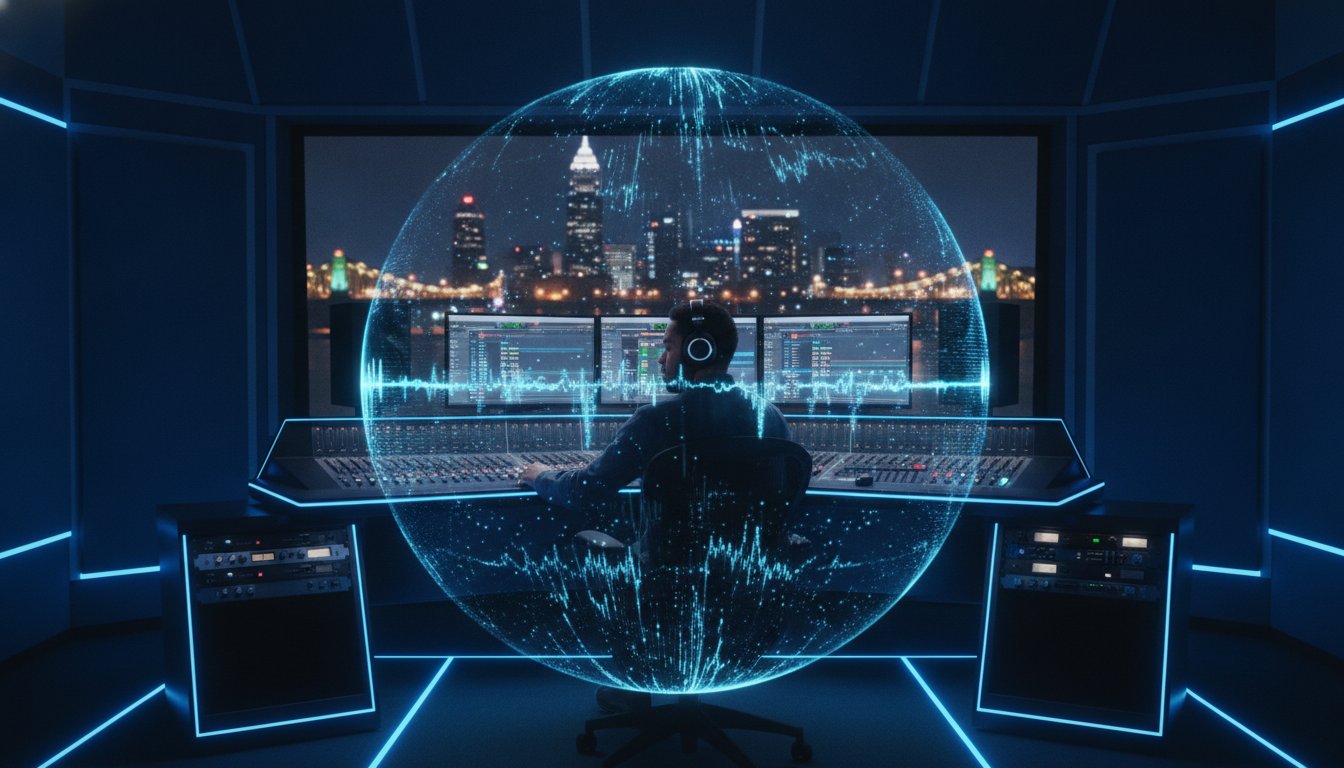
Did you know that as of 2026, an estimated 65% to 75% of all Apple Music plays are now happening in Dolby Atmos? You've likely felt the shift in the air. Immersive audio isn't just a luxury for major label stars anymore; it's the new standard for how fans experience sound. Yet, figuring out how to get your music on Apple Spatial Audio often feels like trying to decode a secret language. You want that expansive depth, but the technical hurdles of ADM BWF exports and the need for certified 9.1.4 environments can feel like a wall between your art and your audience.
We understand that your music deserves to be heard in its most vibrant, three-dimensional form without the technical overwhelm. This guide simplifies the complexity, providing a clear roadmap to transform your stereo stems into a world-class immersive release. We'll break down the specific distribution requirements, explain the vital difference between binaural renders and true Dolby Atmos, and show you how to find a certified studio that honors your creative vision while handling the technical heavy lifting with absolute precision. Your journey from a stereo mix to a live Spatial Audio release starts here.
Key Takeaways
- Learn why the Spatial Audio badge is triggered specifically by a Dolby Atmos ADM BWF file rather than a standard stereo master.
- Discover the technical superiority of object-based audio and how a certified 9.1.4 environment creates a true "Sphere of Sound" for your listeners.
- Understand the precise technical roadmap for how to get your music on Apple Spatial Audio, including choosing the right distribution partners.
- Explore the creative benefits of increased dynamic range and detail that allow your arrangements to breathe in an immersive landscape.
- See how professional engineering expertise bridges the gap between your artistic vision and the strict delivery requirements of modern streaming platforms.
What is Apple Spatial Audio for Artists?
The "Spatial Audio" badge on Apple Music isn't just a vanity metric. It's the new benchmark for sonic excellence. For artists, seeing that badge next to a track signifies that the music has been crafted for a three-dimensional field rather than a flat, two-channel stereo plane. Understanding how to get your music on Apple Spatial Audio starts with realizing it isn't an automated process or a simple toggle switch in your distributor's dashboard. It requires a specific, high-resolution deliverable known as an ADM BWF (Audio Definition Model Broadcast Wave Format) file. This file contains the metadata instructions that tell Apple's playback engine exactly where to place every sound in the room around the listener.
This shift represents a fundamental move from channel-based audio to object-based immersive audio. In a traditional stereo mix, you're limited to a left-to-right horizontal line. If you're wondering how to get your music on Apple Spatial Audio, the journey begins by stepping into a 3D environment where sound can move above, behind, and all around the listener. It's the difference between looking at a photograph and walking through a physical space.
The Technology: Dolby Atmos vs. Spatial Audio
It's helpful to distinguish between the tool and the destination. Dolby Atmos technology is the professional production format used in the studio. It moves away from traditional mixing where sounds are hard-coded to specific speakers. Instead, it utilizes object-based audio. Imagine every vocal track, synth pad, or drum hit as a physical object that can be placed at specific coordinates in a 3D space. Spatial Audio is simply Apple’s proprietary playback ecosystem. It renders these Atmos objects for the listener, whether they're using AirPods or a full home theater setup, ensuring the mix translates perfectly to the device they're using.
Why Indie Artists are Moving to Immersive
Indie artists are pivoting to immersive audio for more than just the "cool factor." Apple Music curators actively prioritize Spatial Audio tracks for their high-profile editorial playlists. It's a strategic move for visibility. Beyond the algorithms, immersive mixing offers an emotional depth that stereo simply can't match. It pulls the listener inside the song. You aren't just playing music at them; you're inviting them to stand in the middle of your creative world. It's about future-proofing your art. As playback hardware evolves, your Atmos masters will continue to sound modern and expansive for decades.
While most fans will hear your mix through binaural headphone renders, a true Atmos mix is built in a multi-speaker environment. This ensures the fold-down to headphones sounds natural and powerful. The Spatial Audio badge is often called the new "Gold Record." It signals to the industry and your fans that you're operating at the highest technical level available today.
The Technical Requirements: How It’s Made
Creating an immersive masterpiece requires more than just creative vision. It demands a rigorous technical foundation. If you are researching how to get your music on Apple Spatial Audio, you've likely realized that a standard stereo bounce won't cut it. The process begins in a specialized production environment where sound isn't just panned left or right; it's sculpted in a three-dimensional container. Precision is everything. To ensure your art translates from the studio to the listener's AirPods, you need a workflow built on professional-grade software and calibrated hardware.
The 9.1.4 Monitoring Environment
While some suggest you can "fake" an immersive mix using only headphones, true spatial depth requires a physical 9.1.4 speaker array for accurate translation. This configuration consists of nine speakers at ear level, one dedicated subwoofer for low-frequency effects, and four overhead height speakers. This setup allows an engineer to hear exactly how sounds move through the air. For creators in the Midwest, accessing this level of technology is vital. Starsound Studios offers the only certified 9.1.4 suite in Ohio, providing a world-class sanctuary where technical accuracy meets artistic passion. Mixing in a room like this ensures that when your fans hit play on their home theater or mobile device, the "Sphere of Sound" remains intact and impactful.
Object-Based Mixing Workflow
The transition from stereo to Atmos involves moving from a channel-based mindset to an object-based one. In a traditional session, sounds are burned into a fixed stereo bus. In an Atmos session, we use "Beds" for foundational elements and "Objects" for everything else. Objects are independent sound sources that can be placed anywhere in the room. To manage this, we utilize Pro Tools Ultimate paired with the Dolby Atmos Renderer. To meet Dolby's technical requirements for Atmos, your production environment must be precisely calibrated to handle this metadata-heavy workflow. Object Metadata consists of the precise instructions that tell the speakers where to place sound within the three-dimensional field.
Preparation is key to a successful session. Before the immersive work begins, you'll need to export clean, organized stems from your finished stereo mix. These stems serve as the building blocks for the new 3D landscape. During the process, we also carefully manage binaural metadata settings. This step is critical because it dictates how the immersive mix is folded down for headphone listeners. It's about maintaining the emotional core of your song while expanding its physical boundaries. If you're ready to elevate your sound, our Dolby Atmos mixing services provide the expertise needed to navigate these technical waters with ease. We handle the engineering hurdles so you can focus entirely on the spirit of your music.
Stereo vs. Spatial: A Creative Comparison
Traditional stereo mixing is often described as building a "Wall of Sound." It's a powerful, two-dimensional punch that hits you from the front. However, when you explore how to get your music on Apple Spatial Audio, you're transitioning from that wall to a "Sphere of Sound." This new philosophy allows every instrument to occupy its own physical coordinate. Instead of fighting for space in a crowded frequency spectrum, your arrangements can finally breathe. You can place a haunting vocal reverb in the rear corners or let a shimmering synth lead soar through the height channels. This isn't just about positioning; it's about emotional immersion.
One of the first things artists notice is that Atmos mixes often feel "quieter" than their stereo counterparts. This is intentional. Because we aren't crushing the audio with aggressive limiters to win a loudness war, the transients remain intact. Your drums crack with more life. Your vocals retain their natural dynamics. It's a more detailed, nuanced experience that rewards the listener for paying attention. The goal is to avoid the "gimmick" trap. Just because you can swirl a guitar around the listener's head doesn't mean you should. We focus on keeping the emotional core of your song front and center, using the 3D space to enhance the story you're telling.
Headroom and Loudness Standards
The technical standard for Dolby Atmos delivery is a strict -18 LUFS integrated target. Unlike stereo masters, where "louder is better" often dictates the workflow, Atmos requires significant headroom. You can't simply slap a limiter on the master bus to boost the volume. If you do, the Dolby Atmos Renderer will reject the file. This standard ensures a consistent listening experience across the entire Apple Music platform. We also carefully manage the binaural fold-down. This ensures that while the 9.1.4 mix is expansive, the version your fans hear on standard headphones still feels cohesive and powerful.
Preparing Your Stems for Immersive Mixing
Moving from a stereo session to an immersive one requires thoughtful preparation. To ensure a seamless transition, we need consolidated stems that are clearly labeled. When you're looking into how to get your music on Apple Spatial Audio, remember that professional engineers usually prefer "dry" stems. This allows us to use specialized immersive reverbs and delays to place your sounds in the 3D field without being restricted by baked-in stereo effects. Here is what we typically need to begin:
- Consolidated audio files starting at bar one, beat one.
- Dry tracks (no reverb or delay) whenever possible.
- A high-quality stereo reference mix for artistic context.
- A clear track list detailing your creative vision for the 3D space.
By organizing your session this way, you allow the engineer to focus on the art of the placement rather than the logistics of the file management. It's the first step toward turning your vision into a world-class Spatial Audio release.

The Distribution Pipeline: Getting the Badge
Navigating the final stretch of the release cycle is where many artists feel the most pressure. Once your immersive mix is polished, the next hurdle is delivery. If you're wondering how to get your music on Apple Spatial Audio, the distribution phase is where your technical precision meets the public eye. Apple Music doesn't accept standard WAV files for its immersive tier. Instead, you must provide an ADM BWF (Audio Definition Model Broadcast Wave Format) export. This specific file acts as the bridge between our studio's 9.1.4 environment and your fan's listening device.
Choosing the right partner is crucial. As of 2026, several major distributors fully support Dolby Atmos delivery, including DistroKid, TuneCore, CD Baby, AWAL, and Amuse. Each platform has a dedicated portal for immersive assets. It's vital that your metadata matches exactly across both your stereo and Atmos versions. If the track titles, artist names, or ISRC codes differ even slightly, Apple's system may fail to link the files. This results in the "Spatial Audio" badge failing to appear on your release page. Precision in the paperwork is just as important as precision in the pan pots.
Step-by-Step Distribution Guide
Success in the distribution pipeline requires a methodical approach. First, finalize your Stereo Master. Apple Music requires a stereo version to accompany every Atmos release to ensure compatibility for all users. Once the stereo version is locked, upload the ADM BWF file to your distributor’s specific Atmos portal. The ADM BWF serves as a unified container that holds both the high-resolution audio data and the spatial metadata required to map sounds in 3D. Finally, use the Apple Music for Artists app to monitor your release status and pitch your track for editorial consideration. Remember, pitching is a one-shot opportunity, so ensure your immersive credentials are highlighted.
Common Distribution Errors to Avoid
Technical rejections can delay your release by weeks. The most frequent culprit is a sample rate mismatch. While stereo masters are often 44.1kHz, 48kHz is the non-negotiable standard for Atmos. Anything else will trigger an immediate error. Additionally, your Atmos mix and Stereo mix must be sample-accurate in their length. If the files don't start and end at the exact same millisecond, the seamless switching feature on Apple Music will glitch. We handle these rigorous checks for you to ensure a flawless delivery. If you want to avoid the headache of technical rejections, our Dolby Atmos mixing and mastering services include full delivery support to get your music live without the stress.
Why Starsound Studios is Ohio’s Immersive Authority
Starsound Studios stands as a beacon for creators who refuse to settle for "good enough." We are proud to be the first and only Dolby-certified 9.1.4 mixing suite in Ohio. This certification is more than just a title. It represents a rigorous commitment to absolute acoustic accuracy. When you are determining how to get your music on Apple Spatial Audio, the environment where your mix is born matters. Home studios and uncalibrated rooms often rely on guesswork. We rely on science. Our space is designed to ensure that every object placement and every height transition translates perfectly to the listener's world.
At the heart of our facility is Steve "The Mix." With decades of deep industry experience, Steve bridges the vital gap between complex audio engineering and pure artistic expression. He doesn't just process files; he serves as a collaborative mentor. We believe in empowering artists. We help you understand the immersive format so you can use it as a new creative instrument. Whether you are working with us in person or utilizing our remote mixing services from across the globe, you receive the same high-level attention. Your unique identity is always the priority.
Our Cleveland Audio Sanctuary
Located in North Royalton, our studio is a welcoming retreat for the Cleveland music community. It is a place where the air feels different and the creative energy is palpable. The precision of our 9.1.4 calibrated room removes the veil between you and your music. We invite local artists to book a tour of the facility. Come in. Sit in the sweet spot. Hear your music in 3D before you even commit to a mix. Experience the depth, the height, and the clarity that only a professional immersive environment can provide. It is an aspirational experience that often changes how artists think about their arrangements forever.
Start Your Spatial Journey Today
We offer flexible pricing for both stereo and immersive mixing packages to suit the needs of independent creators and established labels alike. The Starsound promise is simple: precision engineering delivered with an artistic heart. We handle the technical heavy lifting of ADM BWF exports and loudness standards. This allows you to stay focused on the inspiration. When you are ready to learn how to get your music on Apple Spatial Audio with a mix that truly stands out, we are here to guide the way. Your music is ready for the next dimension. Elevate your sound with a professional Dolby Atmos mix at Starsound Studios and claim your place in the future of streaming.
Step Into the Future of Sound
The transition from stereo to immersive is a defining moment in your creative career. You now have the roadmap. From preparing dry stems to navigating the complex ADM BWF export, every technical detail serves a single purpose: your artistic vision. Understanding how to get your music on Apple Spatial Audio isn't just about meeting a streaming requirement. It's about offering your audience a seat inside your creative world. It's about depth, emotion, and future-proofing your legacy.
Starsound Studios provides the sanctuary you need to make this leap with confidence. As Ohio’s first Dolby-certified 9.1.4 studio, we combine a state-of-the-art immersive post-production facility with the collaborative expertise of Steve "The Mix." We handle the engineering complexities and distribution hurdles so your spirit remains the focus of every session. Your work deserves to be heard in its most vibrant, three-dimensional form.
Transform your music into an immersive experience—Book your Dolby Atmos session now
The next dimension of your sound is waiting. We are ready to help you reach your highest potential and share your vision with the world.
Frequently Asked Questions
Do I need a separate master for Apple Spatial Audio?
Yes, you absolutely need a dedicated immersive master to unlock this feature. Apple Music requires both a standard stereo master and a separate Dolby Atmos ADM BWF file for a single release. This ensures that listeners on older hardware still hear your stereo version while those with Spatial-enabled devices get the immersive experience. It's a dual-delivery process that covers all possible listening environments.
Can I get the Spatial Audio badge if I only have a stereo mix?
No, a standard stereo mix cannot trigger the Spatial Audio badge. The badge is a technical indicator that an ADM BWF file has been delivered and validated by the platform. If you're looking for how to get your music on Apple Spatial Audio, you must undergo the specific immersive mixing and mastering process to generate the necessary object-based metadata. Apple's system does not "upscale" stereo files to create a Spatial badge.
What is an ADM BWF file and why is it required?
An ADM BWF (Audio Definition Model Broadcast Wave Format) file is the industry-standard container for immersive audio. Unlike a stereo file that just holds two channels of sound, the ADM BWF holds the audio tracks plus the metadata instructions. These instructions tell the playback system exactly where to place and move sound "objects" in a three-dimensional space. It is the only file format Apple Music accepts for immersive delivery.
Will my music sound different on Spotify if I upload a Spatial mix to Apple?
Your music will remain unchanged on Spotify and other platforms that don't currently support Dolby Atmos. When you distribute a release with an immersive component, you're providing two separate versions to your distributor. Spotify will continue to play your high-quality stereo master. Apple Music will serve the Spatial mix to compatible listeners while defaulting to the stereo version for everyone else.
How much does it cost to get a song mixed in Dolby Atmos?
The investment for an immersive mix depends on the complexity of your session and the certification level of the studio. While prices vary across the industry, it's important to prioritize rooms with official Dolby certification to ensure your mix translates accurately to the listener. We recommend discussing your specific project needs with a qualified engineer to get an accurate estimate that honors the creative depth of your work.
Do listeners need special headphones to hear my Spatial Audio mix?
Listeners don't need proprietary headphones to experience the basic immersive effect, though certain hardware offers a premium version. Any pair of headphones can play a Spatial Audio mix through binaural rendering. However, Apple devices like AirPods Pro or Max enable dynamic head tracking. This makes the "Sphere of Sound" feel even more realistic as the audio field stays fixed in space even when the listener moves their head.
What is the difference between 7.1.4 and 9.1.4 mixing suites?
The primary difference is the number of speakers at ear level, with 9.1.4 offering a more seamless horizontal soundstage. A 7.1.4 system uses seven ear-level speakers, while a 9.1.4 system adds two "wide" speakers. These extra channels fill the gap between the fronts and the surrounds. This provides the most accurate translation possible for complex immersive arrangements, ensuring no "dead zones" exist in the 360-degree field.
Is Spatial Audio available for independent artists or just major labels?
Spatial Audio is fully available to independent artists and is no longer exclusive to major labels. Modern distributors like DistroKid and TuneCore have simplified how to get your music on Apple Spatial Audio for everyone. With Apple Music offering an approximate 10% royalty bonus for Atmos streams as of 2026, there is a significant financial and promotional incentive for indie creators to adopt the format early and future-proof their catalogs.


