
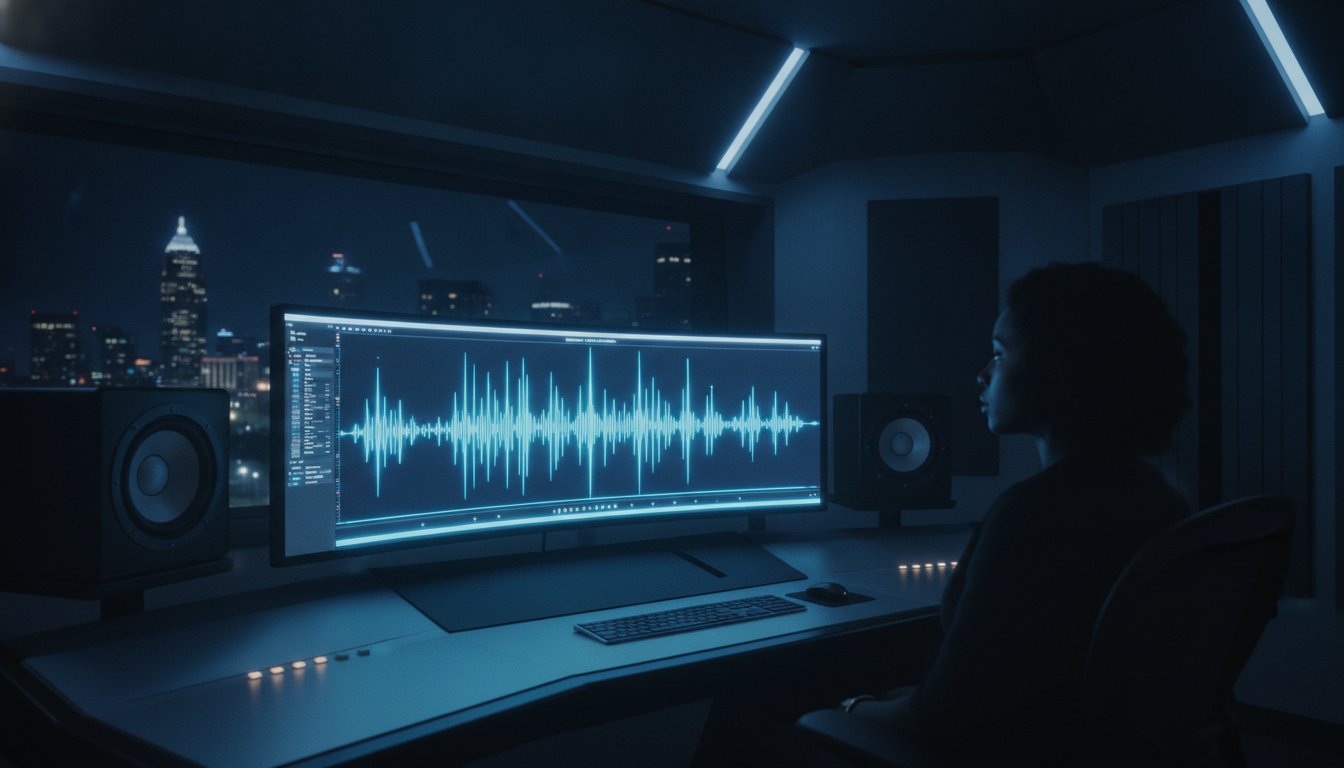
Did you know that 82% of independent producers rely on gut feeling alone when mastering, often leaving their tracks sounding thin or buried compared to the heavy hitters? It's the most common frustration in the studio. You've poured your soul into a mix, yet you're still wondering how to make my song louder for streaming without it sounding like a flat, distorted mess. You want that competitive edge and the commercial knock that defines modern hits, but the fear of squashing your transients or triggering aggressive platform normalization is very real.
We understand the delicate balance between raw energy and technical precision. This guide reveals the professional secrets to achieving massive, radio-ready loudness while keeping the punch and emotion of your music intact. You'll learn the exact 2026 specifications for platforms like Spotify and Apple Music. We'll demystify integrated LUFS and True Peak limits; showing you how to manage frequency real estate so your masters translate perfectly on every device. It's time to stop guessing and start creating high-level output that commands attention.
Key Takeaways
- Understand the vital difference between raw volume and perceptual loudness, focusing on how harmonic density creates a fuller, more professional sound.
- Master the 2026 streaming targets like -14 LUFS and -1.0 dBTP to learn exactly how to make my song louder for streaming without triggering destructive platform normalization.
- Discover why massive loudness is actually won in the mix by carving out headroom and using high-pass filters to eliminate energy-draining low-end mud.
- Explore a professional mastering chain that utilizes strategic saturation and limiting to add meat to your track while preserving its vital dynamic punch.
- Identify why a collaborative, human ear provides a level of artistic nuance and technical precision that one-click AI mastering tools simply cannot replicate.
Loudness vs. Volume: Understanding Perceptual Energy in 2026
Volume is a measurement of electrical voltage or air pressure, but loudness is an experience. In the studio, the quest of how to make my song louder for streaming often leads artists to push their faders into the red, only to find their music sounds small, distorted, and exhausting. True loudness is subjective. It’s the way your brain interprets the density and frequency balance of a signal rather than just the peak level on a meter. When you understand this distinction, you stop fighting against your software and start working with the physics of sound.
Think about a solo acoustic guitar versus a distorted wall of synthesizers. Even if they both peak at 0 dB, the synths will feel exponentially more powerful. This is due to harmonic density. By adding subtle saturation and controlled distortion, you fill the sonic gaps in your waveform, creating a sense of "weight" that doesn't require more headroom. Effective energy management in your DAW is about making every bit of digital real estate work for you. LUFS, or Loudness Units Full Scale, is the industry-standard measurement used to calculate this integrated loudness over the duration of your entire track.
The Role of Normalization on Spotify and Apple Music
Streaming platforms don't want listeners constantly reaching for the volume knob. To solve this, Spotify and Apple Music use normalization to bring every song to a consistent level. If your master is too quiet, they’ll turn it up; if it’s too loud, they’ll turn it down. By 2026, these algorithms have become incredibly transparent, but the physics remains the same. If you try to force loudness by slamming a limiter, the platform will simply lower your track’s gain. You’re left with a song that has the same volume as the hits but lacks the impact, punch, and life of a dynamic master.
Why The Loudness War Changed but Didn’t End
Decades ago, the goal was to be the loudest CD in the multi-disc changer. This era, known as The Loudness War, prioritized sheer volume over everything else. Today, the battleground has shifted. Because normalization effectively caps how loud a song can actually play back, the focus has returned to the relationship between average levels and peak transients. You can choose to master "hot" for a specific genre aesthetic, like EDM or aggressive Pop, but it's now a creative decision. Sacrificing your drum transients for a few extra decimals of loudness is a trade-off that often results in a "squashed" sound that lacks the emotional breath of a world-class production.
The Technical Specs: Mastering for Streaming Platforms in 2026
Precision is the hallmark of a world-class master. You aren't just guessing how to make my song louder for streaming; you're navigating a specific set of technical benchmarks that ensure your music translates from high-end studio monitors to consumer earbuds. These measurements are governed by the ITU-R BS.1770 recommendation, which provides the global algorithm for measuring perceived loudness and true-peak levels. In 2026, the standard target for Spotify remains -14 LUFS integrated, while Apple Music leans toward a more dynamic -16 LUFS.
While Integrated LUFS gives you the average loudness of the entire track, your Short-term LUFS readings are equally vital. These measure loudness over a three-second window, allowing you to see if your choruses have the necessary "jump" compared to your verses. Genre plays a massive role here. An aggressive EDM or Pop track might hit between -7 and -9 LUFS to maintain a competitive edge in club environments, even if streaming platforms apply gain reduction. Conversely, Jazz or Classical projects often sit at -16 to -18 LUFS to preserve the delicate nuances of the performance. If these numbers feel daunting, our experts at Starsound Studios can handle the technical heavy lifting while you focus on the art.
Mastering for Dolby Atmos and Immersive Audio
Immersive audio has rewritten the rules of energy management. The standard target for a Dolby Atmos mix is -18 LUFS, which is significantly quieter than stereo on paper. However, because sound is distributed across a 9.1.4 space, the perceived loudness is often greater. Our work in Atmos at Starsound shows that you can achieve incredible impact with far less compression, allowing the mix to breathe in three dimensions without hitting a digital ceiling.
True Peak Limiting and Inter-Sample Clipping
The biggest mistake in mastering is pushing your ceiling to 0.0 dB. When platforms convert your high-resolution WAV files into lossy formats like Ogg Vorbis or AAC, the reconstruction of the waveform can create "inter-sample peaks" that exceed 0 dB, causing nasty digital distortion. To prevent this, we always recommend a True Peak ceiling of -1.0 dBTP. This provides a safety buffer for the encoding process, ensuring your quest for how to make my song louder for streaming doesn't end in a clipped, unlistenable mess for your fans.
Loudness Starts in the Mix: 5 Techniques for Headroom
Loudness isn't a final coat of paint you slap on at the end of a project. It's built into the very foundation of your production. When producers ask how to make my song louder for streaming, they often look for a magic limiter setting, but the real secret lies in headroom. Headroom is the digital space between your highest peak and the 0 dB ceiling. If your mix is cluttered with unnecessary low-end rumble or competing frequencies, your limiter will work too hard on the wrong elements. This results in a master that sounds small, exhausted, and devoid of life.
High-pass filtering is your most powerful tool for energy reclamation. Most instruments contain sub-harmonic information below 100Hz that adds nothing to the musicality but consumes massive amounts of digital energy. By aggressively filtering out this "mud," you give your limiter more room to push the frequencies that actually matter. Similarly, a lean arrangement often sounds "larger" than a dense one. When you have fewer elements competing for attention, each sound can be wider, deeper, and more impactful. Frequency masking occurs when two sounds occupy the same spectral space, forcing them to fight for dominance and effectively capping the overall loudness your song can achieve without distortion.
Frequency Slotting and EQ Carving
To achieve professional polish, you must give every element its own "zip code" in the frequency spectrum. This is especially true for the relationship between the kick drum and bass guitar. If they both peak at 50Hz, they will cause phase cancellation and eat up your headroom. Carving a small notch in the bass to let the kick's fundamental frequency through creates a solid foundation. Likewise, gently dipping the mid-range of your guitars or synths allows the vocal to sit on top without needing more volume. Using stereo width to move melodic elements away from the center also clears "center-lane" space for the kick, snare, and lead vocal to hit harder.
Serial Compression and Parallel Processing
Dynamic control is the bridge between a raw mix and a loud master. Instead of slamming a single compressor, try serial compression. Using two light compressors in a row, each doing only 1 to 2 dB of gain reduction, results in a much more transparent and "expensive" sound. For drums, parallel processing is the gold standard. By blending a heavily compressed version of your drum bus with the dry signal, you maintain the sharp "snap" of the transients while significantly increasing the "body" and average energy of the kit. This technique is essential for anyone figuring out how to make my song louder for streaming while keeping the groove alive.

Professional Mastering Steps for Maximum Impact
Mastering is the definitive bridge between a creative mix and a commercial release. It’s where your artistic intent is solidified into a world-class format. A logical mastering chain usually begins with surgical EQ to remove resonances, followed by gentle bus compression for "glue," before moving into saturation and final limiting. This sequence ensures that when you're looking at how to make my song louder for streaming, you're processing a clean, balanced signal rather than fighting against mix errors. Each step in this flow is designed to incrementally build energy while protecting the delicate transients that give your music its life.
For aggressive genres like Phonk, Trap, or Dubstep, a soft clipper is often the weapon of choice before the final limiter. While a limiter uses gain reduction to pull peaks down, a clipper simply "shaves" them off. This preserves the perceived "knock" of your drums without the audible pumping or "choking" that occurs when a limiter is pushed too hard. It’s a bold technique that requires a steady hand, but when executed correctly, it provides a level of grit and presence that defines the modern soundscape.
Harmonic Saturation: The Secret Sauce
Saturation adds harmonic complexity, filling in the microscopic gaps in the frequency spectrum. This makes the track feel "thicker" and perceptually louder without actually increasing the peak level. Tape emulation provides a smooth, vintage warmth, while tube saturation offers a more aggressive, forward energy. Multiband saturation is particularly effective for controlling energy pockets, such as adding "air" to the highs or "growl" to the low-mids. If you want your track to possess that elusive professional weight, our Remote Mastering team specializes in applying these boutique textures with surgical precision.
The Final Limiter: Pushing Without Breaking
The final limiter is your gatekeeper. Setting a slightly slower attack time allows transients to poke through, maintaining the "snap" of the snare, while a fast release can help the song feel more energetic and urgent. Look-ahead settings are also crucial; they allow the limiter to "see" incoming peaks and react before they happen, which maintains transparency. However, there is always a point of diminishing returns. If the waveform starts to look like a solid block of salt, you’ve likely crossed the line where the music begins to "choke" and lose its emotional impact.
The final check is the most grounding part of the process. A master might sound incredible on high-end studio monitors but fall apart on a pair of standard AirPods or in a car. We recommend testing your master at low volumes to ensure the vocal still cuts through and at high volumes to check for harshness in the upper-mids. This real-world translation is what separates a bedroom demo from a chart-topping hit.
Why a Professional Ear Beats the "Loudness" Button
One-click solutions are tempting. They offer speed. They offer convenience. But they lack the emotional intelligence that makes a listener hit repeat. AI mastering tools and "make it loud" plugins see your music as a collection of data points rather than an artistic arc. They might hit a target LUFS, but they can't tell if your snare hit should feel "angry" or "pillowy." When you're trying to figure out how to make my song louder for streaming, you aren't just looking for gain; you're looking for the nuance of a final polish that respects your vision. At Starsound Studios, we treat every project as a collaborative mentorship where your unique identity is the priority.
Our facility in Cleveland offers a distinct technical advantage with our 9.1.4 Dolby Atmos Mixing environment. This high-end technical sanctuary allows us to hear the microscopic details that typical bedroom setups or basic algorithms miss entirely. Professional Stereo Mixing and Mastering ensure that your track translates perfectly across every environment, from the club’s massive sound system to a pair of standard earbuds. We balance the science of audio fidelity with the spirit of creation, giving you the grounded assurance that your work is in both capable and passionate hands.
Remote Mastering Services at Starsound
Distance shouldn't be a barrier to world-class quality. Our Remote Mastering process brings the seasoned expertise of Steve "The Mix" directly to your creative space, no matter where you're located. Steve brings decades of engineering experience to the table, providing a level of reliability and high standards that one-click software simply cannot replicate. We focus on delivering a "radio-ready" sound that stands shoulder-to-shoulder with major label releases. It’s about more than just volume; it’s about achieving that polished, sophisticated energy that defines modern hits.
Take the Next Step: Professional Audio Education
If you feel inspired to master the craft yourself, we offer specialized Audio Engineering Classes right here in Cleveland. You can move beyond basic tutorials and learn the professional workflows of Pro Tools and Logic Pro within a world-class studio environment. We believe in empowering creators to reach their highest potential by providing the technical specs and creative strategies used by the pros. Whether you want us to handle the final master or you want to learn how to make my song louder for streaming on your own terms, we are here to help. Book a session or class at Starsound Studios today and let's bring your creative vision to life with absolute precision.
Ready to Command the Airwaves?
Mastering isn't just about gain; it's about managing energy and protecting the emotional core of your music. We've explored how frequency slotting and harmonic saturation create that elusive professional weight while maintaining the punch of your drums. You now understand that 2026 streaming standards require a delicate touch to avoid the crushing effect of platform normalization. Learning how to make my song louder for streaming is a journey that starts in the mix and ends with a precise, high-fidelity master.
At Starsound Studios, we provide the ultimate creative sanctuary to finalize your vision with absolute authority. As Ohio’s only Dolby-certified Atmos mixing studio, our 9.1.4 immersive audio suite offers a level of technical precision that AI algorithms simply can't reach. With decades of experience, Steve "The Mix" ensures your track translates perfectly from massive club stacks to standard smartphone speakers. Your music deserves a world-class finish that honors its soul and artistic intent. Elevate your sound with professional Stereo and Dolby Atmos Mastering at Starsound Studios. Let's make your next release undeniable.
Frequently Asked Questions
What is the best LUFS level for Spotify in 2026?
The standard recommendation for Spotify is -14 LUFS integrated with a -1.0 dBTP ceiling. However, the "best" level depends heavily on your genre. Aggressive styles like EDM or Trap often target -7 to -9 LUFS to maintain a competitive energy profile, while acoustic projects might sit closer to -16 LUFS. The key is ensuring your track feels consistent with other hits in your specific niche.
Can I make my song loud without a professional mastering engineer?
You can certainly use digital limiters and clippers to increase gain, but you risk losing the nuance that defines a professional release. Professional engineers bring an objective ear and a treated acoustic environment to the process. They identify where energy is being wasted, allowing them to push for loudness while preserving the punch and clarity that software presets often destroy during the final stage.
Does a louder song always sound better to listeners?
Our brains are wired to perceive louder sounds as "better" initially, but over-compressed music causes listener fatigue. If a track lacks dynamic range, it becomes exhausting to hear over long periods. The most successful masters find a balance where the track feels powerful and modern but still has enough "breath" to keep the listener emotionally engaged from the first note to the last.
What is the difference between peak volume and LUFS?
Peak volume measures the absolute highest point of a waveform, while LUFS measures perceived loudness over time. Think of peak as the "ceiling" and LUFS as the "average weight." Understanding this distinction is vital when learning how to make my song louder for streaming, as platforms use the LUFS value to normalize your music so every track on a playlist has a consistent average level.
How does Dolby Atmos affect the loudness of my song?
Dolby Atmos operates under a different set of rules, typically targeting -18 LUFS. While this number is lower than stereo targets, the immersive 9.1.4 environment makes the music feel significantly larger and more powerful. Because the sound is distributed across a three dimensional space, you don't need to rely on heavy compression to create a sense of scale, resulting in a more dynamic listening experience.
Will my song sound quieter if I don’t hit -14 LUFS?
Spotify will actually apply positive gain to your track if it is quieter than -14 LUFS, provided you have enough peak headroom. However, if your song is mastered significantly quieter, it may sound less "energetic" than tracks with higher harmonic density. Aiming for the platform target ensures your music translates as intended without triggering the platform’s internal limiting, which can sometimes lead to unpredictable results.
Why do my drums disappear when I try to make my song louder?
Your drums disappear because the limiter is squashing the transients to reduce the peak level. The "snap" of a snare and the "thump" of a kick are the first elements to hit the digital ceiling. To prevent this, you must manage your headroom in the mix stage. By using clippers and saturation on individual tracks, you can reduce peaks before they ever reach the master limiter.
Should I use a limiter on my master bus while mixing?
Mixing into a heavy limiter is generally discouraged because it creates a false sense of balance. It masks frequency conflicts and dynamic issues that need to be solved at the track level. While a "safety" limiter at -1.0 dB is acceptable to prevent clipping, relying on it for volume makes it much harder to understand how to make my song louder for streaming during the actual mastering phase.


