
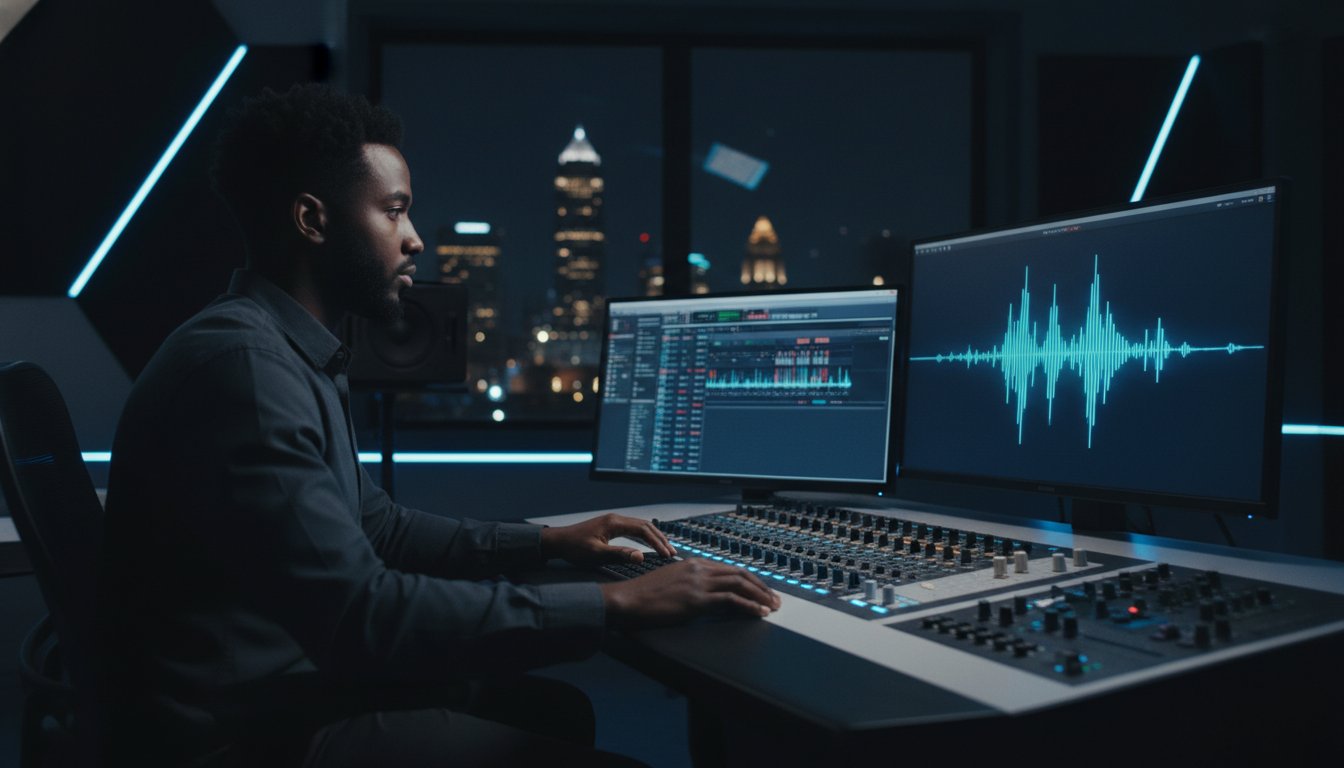
Chasing the red line doesn't make your music powerful; it often makes it exhausting. You've likely spent 40 hours or more perfecting every transient in your mix, only to hear the energy collapse the moment you push for commercial loudness. It's a common heartbreak for Cleveland artists to hear their sonic vision lose its soul just to compete on a digital playlist. You deserve a sound that breathes. You want that professional vibe where the low end hits with authority and the vocals sit in a pristine signal path without sounding squashed, thin, or brittle.
We agree that your creative vision shouldn't be a casualty of the loudness war. This guide reveals how to achieve radio-ready impact while keeping your dynamic range intact through expert volume mastering. You'll discover how to navigate the technical precision required to meet the -14 LUFS streaming standard while maintaining peak sonic excellence. We're diving into the specific techniques that bridge the gap between a raw mix and a polished, world-class master that radiates pure magic on any sound system.
Key Takeaways
- Distinguish between peak levels and perceived loudness to ensure your mix translates with power and clarity on any sound system.
- Navigate the 2026 streaming landscape with precision LUFS targets that prevent Spotify and Apple Music from compromising your dynamic range.
- Implement professional volume mastering strategies to achieve a competitive edge while preserving the "soul" and rhythmic energy of your performance.
- Apply a streamlined 5-step workflow to clean up low-end clutter and use subtle bus compression to "glue" your tracks into a cohesive masterpiece.
- Learn how partnering with a Dolby-certified facility in Cleveland can elevate your project through the philosophy of "The Artist is the Star."
Volume Mastering vs. Perceived Loudness: Why Your Mix Sounds Quiet
You’ve spent 40 hours tweaking the kick drum and layering synths in your Cleveland home studio. It sounds massive in your headphones. But when you play it next to a Top 40 track on Spotify, your song feels small, thin, and strangely quiet. Volume mastering is the optimization of sonic energy for distribution. It isn't just about making things loud; it's about making them feel powerful. Many artists confuse peak volume with perceived loudness, leading to frustrated car tests where the mix simply doesn't hold up.
Peak volume is the absolute highest voltage point of your waveform, but it tells us very little about how loud a song feels. Perceived loudness, measured in LUFS (Loudness Units Full Scale) or RMS (Root Mean Square), represents the average energy over time. For decades, the industry was consumed by the loudness war, a period where engineers sacrificed dynamic range to ensure their tracks were the loudest on the radio. Today, streaming platforms use normalization to level the playing field, making the quality of your volume mastering more critical than ever.
Cracking the volume knob in your car isn't a substitute for a professional master. Doing so only amplifies the imbalances in your mix. At Starsound Studios, we act as your creative partner. We don't just slap a limiter on your master bus. We analyze the harmonic content to ensure your music carries the same weight and "soul" whether it's playing on a smartphone or a massive club system in downtown Cleveland.
The Science of Perceived Loudness
The human ear is a complex, biological instrument. It doesn't hear all frequencies equally. This phenomenon was first quantified in 1933 through the Fletcher-Munson curve, which shows that our hearing is significantly more sensitive to mid-range frequencies between 3 kHz and 4 kHz. This is where the human voice lives. When we approach your master, we prioritize mid-range clarity. By focusing on these specific frequencies, we can make your track sound "louder" to the listener without actually increasing the digital signal level. It's a game of psychoacoustics that requires a treated room and a refined ear.
Mastering as the Final Polish
Mastering is the bridge between a raw mix and a world-class, radio-ready record. It’s the final opportunity to create a cohesive vibe across an entire album, ensuring that track one and track ten feel like they belong in the same universe. Starsound Studios’ approach centers on a pristine signal path in our North Royalton facility. We combine high-end digital tools with the organic warmth of analog hardware to give your music that elusive "expensive" sound. We take your vision and provide the technical precision needed to turn a collection of tracks into a professional product that's ready for the world.
Loudness Standards for Streaming in 2026: Spotify, Apple, and Beyond
The days of the "Loudness War" have evolved into a more sophisticated era of normalization. In 2026, streaming platforms utilize advanced algorithms to ensure a consistent listening experience for users. Spotify and Tidal typically target -14 LUFS, while Apple Music maintains a slightly more conservative -16 LUFS. If your track arrives at -8 LUFS, the platform will simply turn it down. This is the normalization trap. Pushing your limiter too hard doesn't make your song louder on a playlist; it just eats your transients and flattens your "vibe." Mastering for digital distribution requires a strategic approach to headroom. While -14 LUFS is a widely cited benchmark, it's a guideline rather than a rigid law for every genre. A brutal death metal track and a delicate solo piano piece shouldn't share the same integrated loudness profile. Understanding how to balance perceived energy with technical constraints is the hallmark of professional volume mastering. When you get this right, your music breathes with a sense of "sonic excellence" that translates from high-end studio monitors to standard earbuds.Understanding LUFS and True Peak
Loudness Units Full Scale (LUFS) provide a more accurate measurement of human hearing than traditional peak meters. You need to monitor two specific values: Integrated LUFS, which is the average loudness of your entire track, and Short-term LUFS, which measures 3-second windows. Keep a close eye on your True Peak levels as well. We recommend a ceiling of -1.0 dBTP or even -2.0 dBTP for high-energy tracks. This prevents "inter-sample peaks" from creating nasty distortion when platforms convert your lossless files into Ogg Vorbis or AAC formats. If you are working in Pro Tools, the Avid Loudness Control or third-party tools like iZotope Insight 2 are essential. Logic Pro users can rely on the built-in Loudness Meter to track these metrics in real time. Precision here ensures your "pristine signal path" remains intact through the final digital encode.Genre-Specific Loudness Targets
Every genre has a unique "soul" that dictates its ideal volume. In the high-energy world of EDM and Hip-Hop, artists often push masters to -9 or -7 LUFS to achieve a specific saturated texture. This works because the heavy compression is part of the aesthetic. Conversely, Jazz and Acoustic projects thrive at -16 or -18 LUFS. Lowering the volume preserves the "magic" of the performance and the natural decay of the instruments. Cleveland’s local rock scene often finds a sweet spot around -11 LUFS. This provides enough competitive grit to stand out in a modern rock playlist without sacrificing the punch of the drums. Achieving this balance is easier when you treat the process as a creative partnership. If you want to ensure your next release hits these targets perfectly, you can explore our professional mastering servicesHow to Achieve Volume Without Killing the Vibe
For decades, the "Loudness War" forced engineers to crush every decibel of dynamic range, a trend that peaked around 2008 with releases that sacrificed sonic clarity for sheer impact. Today, the landscape has shifted. Since the 2010s, streaming platforms like Spotify and Apple Music have implemented loudness normalization, typically targeting -14 LUFS. This means that over-compressed tracks don't actually sound louder; they just sound flat and small. A common mistake involves over-compressing drum transients, which effectively kills the life of the performance. When you squash a snare hit too hard, you lose the "crack" that defines the groove. At Star Sound Studios, we view our facility as a creative sanctuary where world-class gear exists solely to serve the artist's vision, never to overshadow it. We focus on a sophisticated balance, utilizing analog warmth to provide soul while employing digital precision for modern volume mastering needs.
The Role of Saturation and Harmonics
Saturation is the secret weapon for creating perceived loudness without eating up your precious headroom. It adds harmonic overtones that trick the human ear into hearing a fuller, more aggressive sound even when peak levels remain unchanged. In the Starsound signal chain, we often blend the rich, non-linear textures of physical vacuum tubes with the surgical flexibility of high-end digital emulations. This dual approach adds a specific "magic" to the high-end frequencies. It results in that expensive studio sound where the vocals feel intimate and the top-end feels like silk rather than harsh digital noise. By thickening the fundamental frequencies through controlled distortion, we make your track feel massive before it even touches a limiter.
Strategic Compression and Limiting
Achieving a competitive edge requires more than just slamming a single fader. We utilize serial compression, which involves using multiple stages of subtle gain reduction. This method produces a much more natural volume boost. If one compressor handles 1 dB of reduction and another handles 1.5 dB, the result is transparent and punchy. It avoids the dreaded "pumping" effect that ruins the listener's experience. Our process relies on specific technical guardrails to ensure sonic excellence:
- Look-ahead limiters: These digital tools analyze the incoming signal milliseconds before it hits, acting as a final guardrail against distortion.
- Transient preservation: We use advanced side-chaining to ensure your kicks and snares retain their punch through the final limiting stage.
- Dynamic range targets: We aim for a Crest Factor that keeps your music feeling alive, typically maintaining 8 to 10 dB of peak-to-loudness ratio.
This strategic approach to volume mastering ensures your project stands out on a crowded playlist while retaining the emotional impact of the original performance. It is about power, not just pressure. We make sure your music breathes, hits hard, and sounds professional on every playback system from car speakers to club stacks.

5 Steps to Mastering Your Own Tracks for Competitive Volume
Achieving a professional sound requires more than just turning up the fader. It's about precision, balance, and understanding how energy translates across different playback systems. When you approach volume mastering, you're essentially performing a balancing act between sonic impact and musical dynamics. Here's how to refine your process to ensure your tracks hold their own on any playlist.
Step 1: Creating Headroom
A loud master starts with a disciplined mix. High-pass filters are your most valuable tools here. Apply them to every non-bass element, usually cutting everything below 100Hz on vocals, guitars, and synths. This removes "ghost" frequencies that eat up your dynamic range without adding any musical value. When these low-end build-ups hit a limiter, they trigger gain reduction too early, resulting in a squashed, quiet sound. By cleaning the sub-harmonic clutter, you create the necessary headroom for the kick and bass to drive the track forward with authority.
Step 2: Subtle Bus Compression
Think of this as the "glue" that binds your individual tracks into a cohesive unit. Use a high-quality bus compressor with a slow attack and a fast release. You're looking for 1 to 2 dB of gain reduction at most. This subtle movement adds a sense of "analog warmth" and rhythmic consistency that makes the song feel like a finished record rather than a collection of stems.
Step 3: Apply EQ for Clarity
Surgical EQ moves are essential for removing "mud" in the 200Hz to 400Hz range. A wide, gentle cut of 0.5 dB can often open up the entire stereo field. This isn't about changing the tone; it's about enhancing the "vibe" and ensuring every instrument has its own dedicated pocket in the frequency spectrum. Clarity is the secret precursor to perceived loudness.
Step 4: Mastering the Limiter
The limiter is your final gatekeeper for volume mastering success. Set your output ceiling to -1.0 dB rather than 0.0 dB. This 1.0 dB buffer is crucial because it prevents inter-sample peaks and clipping when streaming platforms convert your files to lossy formats like Ogg Vorbis or AAC.
- Release Times: Adjust the release to match the tempo of your track. If it's too fast, you'll hear "breathing" artifacts. If it's too slow, the transients will feel dull.
- Target LUFS: Aim for a target between -14 LUFS for streaming and -9 LUFS for a more aggressive, club-ready sound.
- Transparency: If you see more than 4 dB of gain reduction, go back to your mix. The limiter should enhance, not reconstruct.
Step 5: Reference Your Master
Take your track out of the DAW and compare it to professional releases from Cleveland legends like Bone Thugs-n-Harmony or modern heavyweights like Machine Gun Kelly. Listen on high-end monitors in an acoustically treated space to hear the truth. If your DIY master lacks the punch of these references, it’s a sign that your low-end balance or limiting stages need another pass.
Ready to take your sound to the next level? Experience the difference that world-class gear and expert ears can make by booking a session at Star Sound Studios today.
Why Cleveland Artists Choose Starsound for Sonic Excellence
Your music deserves a sanctuary. At Starsound Studios, we've built a home for your sound that bridges the gap between raw creativity and technical perfection. We are proud to be the only Dolby-certified Atmos studio in Ohio. This isn't just a badge on the wall. It represents a commitment to a pristine signal path and a listening environment that meets the highest global standards. Steve "The Mix" leads our team with a simple, unwavering philosophy: The Artist is the Star. Every decision we make during volume mastering aims to amplify your unique identity without sacrificing the soul of your performance.
Our North Royalton facility isn't just for locals. While we're rooted in the Cleveland scene, our remote mastering services bring that specific Ohio grit and polish to artists across the globe. You get the benefit of our world-class gear and seasoned ears from your home studio. We don't just process files; we build partnerships. We ensure your tracks translate perfectly from club systems to smartphone speakers, maintaining the vibe you worked so hard to capture.
The science of sound meets the art of creation here. We utilize a blend of analog warmth and digital precision to ensure your masters have the punch and clarity required for the modern market. It's about more than just being loud. It's about being heard exactly the way you intended.
Immersive Audio and the Future of Volume
Stereo has limits. It forces sounds into a narrow field where elements compete for space. Dolby Atmos changes the game by providing a 9.1.4 immersive suite that allows for incredible depth. This technology gives us more room to breathe. We can achieve competitive loudness without the traditional distortion found in "brickwall" limiting. For serious Ohio producers, immersive mixing is the next evolution. It creates an atmosphere that wraps around the listener, offering a level of engagement that standard stereo simply can't match. Experience this sonic magic firsthand at our North Royalton facility.
Book Your Professional Mastering Session
AI tools are everywhere. They're fast, but they lack a soul. An algorithm can't feel the tension in a bridge or the release of a final chorus. Choosing a human creative partner means your volume mastering is handled with intention and artistic nuance. We offer flat-rate mastering fees to ensure you get professional results without the stress of a ticking clock. This transparent approach lets us focus entirely on the music. Ready to take the leap? Elevate your sound with professional mastering at Starsound Studios and let's make your vision a reality.
Claim Your Spot on the Global Stage
Hitting the sweet spot between raw energy and technical precision is what separates a local demo from a world-class release. You've learned that volume mastering for 2026 requires more than just pushing a fader; it demands a deep understanding of integrated LUFS targets across platforms like Spotify and Apple Music. While DIY tools offer a quick fix, they often strip the soul from your track. Your music deserves a creative sanctuary where the vibe is preserved through a pristine analog and digital signal path.
At Starsound Studios, we transform your vision into sonic excellence. As Ohio’s only Dolby-certified 9.1.4 Atmos studio, we provide a level of immersion that standard setups can't touch. Led by Steve "The Mix" with 10+ years of industry experience, our team ensures your tracks meet every technical benchmark while keeping the artistic magic intact. Don't let your hard work get lost in a quiet mix. Ready for a radio-ready master? Book your session at Starsound Studios today.
The world is waiting to hear the best version of your sound. Let's make it legendary together.
Frequently Asked Questions
What is the difference between volume and mastering?
Volume is a simple gain adjustment that changes how loud a sound is, while mastering is the final technical and artistic polish that ensures sonic excellence across all playback systems. Mastering involves surgical EQ, multi-band compression, and harmonic saturation to create a cohesive sound. It's about the vibe and the energy of the track, not just moving a fader up to increase the signal strength.
How loud should my master be for Spotify in 2026?
You should target an integrated loudness of -14 LUFS with a true peak of -1.0 dBTP to align with Spotify’s 2026 normalization standards. While the platform adjusts tracks to a consistent level, maintaining these specific targets prevents unwanted distortion during the transcoding process. This technical precision ensures your soul and atmosphere remain intact when fans hit play on their mobile devices or home speakers.
Can I master my own music at home for professional results?
You can achieve high-quality results at home using modern AI-assisted tools, but reaching a world-class standard requires an acoustically treated environment and high-end monitoring. About 85 percent of independent artists now use home setups for initial drafts and demos. However, a professional studio provides the pristine signal path and seasoned ears needed to transform a good track into a polished sonic masterpiece.
What is a good LUFS level for rock music?
Competitive rock tracks typically sit between -7 and -9 LUFS to maintain the genre's characteristic punch and power. This range allows for the aggressive energy and analog warmth expected in modern rock while preserving enough dynamic range to let the drums breathe. Professional volume mastering at this level ensures your music stands up against major label releases in a high-energy playlist.
Does mastering for Dolby Atmos require different volume standards?
Yes, Dolby Atmos masters must adhere to a strict integrated loudness requirement of -18 LUFS as specified by major platforms like Apple Music. This standard is 4 LUFS quieter than traditional stereo masters to allow for the immersive, three-dimensional headroom the format offers. It creates a massive, cinematic atmosphere that surrounds the listener in a way traditional stereo cannot replicate.
Why does my song sound quiet when I upload it to YouTube?
YouTube applies its own normalization algorithm, usually targeting -14 LUFS, which turns down tracks that are mastered too aggressively. If your song has a high "Loudness Penalty" score, the platform will lower your volume to match its internal reference point. This often results in a flat, lifeless sound if the original master lacked the necessary dynamic range to survive the normalization process.
What is the best software for volume mastering at home?
iZotope Ozone 11 and FabFilter Pro-L 2 are currently the industry standards for achieving professional volume mastering in a home studio environment. These tools offer sophisticated visual feedback and precise control over transients and peaks. They help you dial in the magic of your mix while ensuring the technical specifications meet the rigorous demands of modern streaming services.
How much does professional mastering cost in Cleveland, Ohio?
Professional mastering rates in the Cleveland area typically range from $50 to $150 per song based on current market data from local creative directories. Prices vary depending on the engineer's experience and the specific analog hardware used in the signal chain. Investing in a local creative partner ensures your project receives the high-attention experience and sonic excellence it deserves.


