
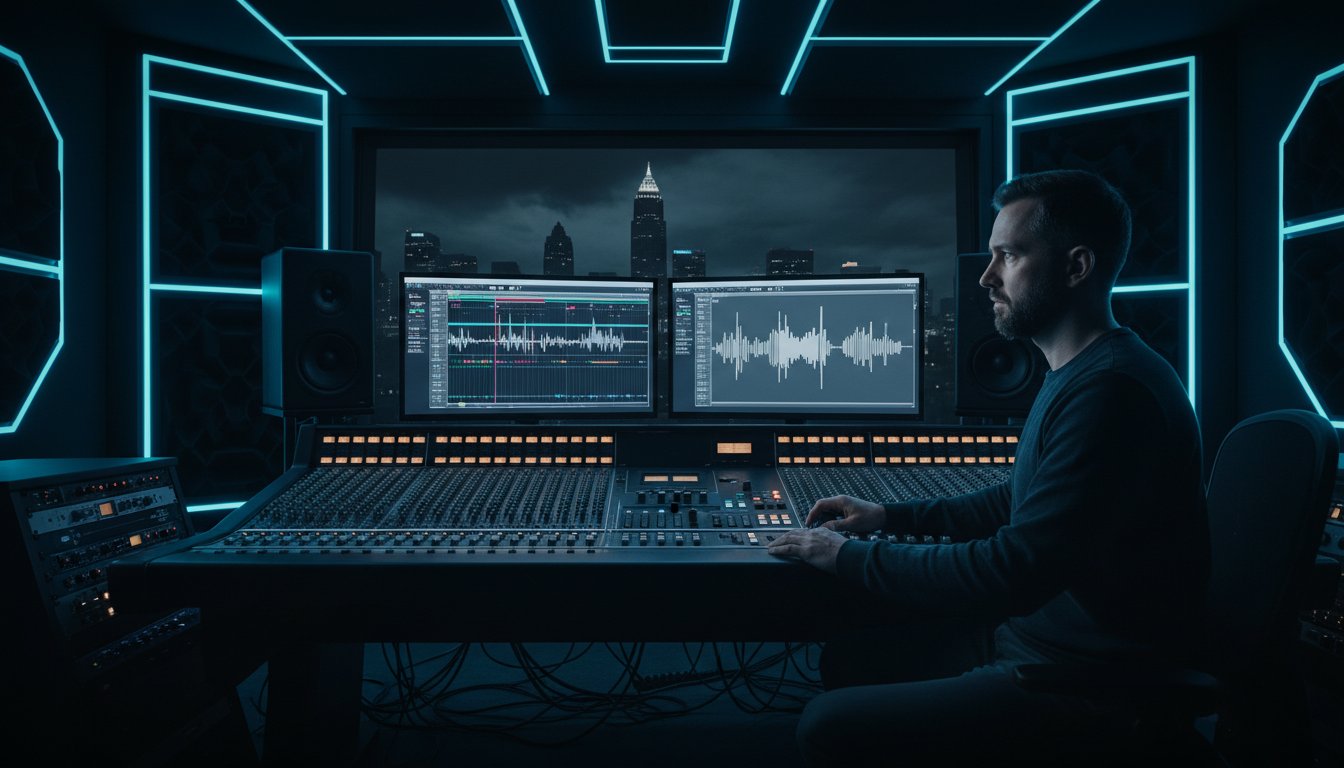
What if the AI engine behind your listener's favorite playlist is actually flattening the soul out of your latest single? Many independent creators mistake the smooth, algorithmic crossfading of spotify automix for the nuanced, high-fidelity production required to compete on a global stage. It's a subtle trap. You've likely felt that sting of frustration when your track follows a major label release and suddenly sounds thin or lacks that punchy, radio-ready weight. It's a common hurdle for the Cleveland music scene as we approach the 2026 streaming standards.
We know your music is your identity. You deserve a sound that carries the same analog warmth and pristine signal path as the icons you admire. This guide clarifies the confusion between playback features and professional audio production, showing you exactly how to stand out in a crowded digital market. We'll explore the technical gap between AI convenience and the sonic excellence found in an acoustically treated sanctuary; giving you the roadmap to find a local creative partner who treats your vision with absolute precision.
Key Takeaways
- Demystify the technology behind spotify automix to understand how AI-driven metadata analysis and harmonic matching influence your track’s playback.
- Discover why machine-led algorithms can never replicate the intentional "vibe" and soulful stereo balancing provided by a professional human touch.
- Master the essential 2026 production standards, including LUFS optimization and headroom, to ensure your sound remains pristine across all streaming platforms.
- Explore how the creative sanctuary of Starsound Studios transforms your artistic vision into a world-class masterpiece of sonic excellence.
What is Spotify Automix? Understanding Playback vs. Production
The music industry moves fast. In the 216, artists are constantly looking for ways to make their tracks stand out in a crowded digital landscape. One tool that has shifted the landscape for listeners is spotify automix. It's an AI-driven playback feature designed to create a continuous stream of music without those awkward silences between tracks. Unlike the standard crossfade features of the past, this tool analyzes metadata to find the perfect moment to blend songs. It’s essentially Spotify’s attempt to replicate what a DJ mix is by using algorithms instead of a person behind the decks. By January 2026, the rollout of the "Mix" beta has changed how listeners consume music. Fans now expect a seamless flow that keeps the energy high. This has turned the playlist "vibe" into a new benchmark for success. For Cleveland artists, this means your music is being judged not just on its own merits, but on how well it integrates into a listener's automated journey.The Evolution of Seamless Listening
Listening habits have changed since the days of simple 5-second fades. Spotify automix uses machine learning to identify "transition-friendly" genres like house, techno, or hip-hop. It matches beats and keys to ensure the listener never feels a jarring shift. This technology keeps users engaged for 25% longer on average according to internal platform reports. It turns a collection of songs into a cohesive sonic journey. For local creators, this means your track isn't just a standalone piece; it's a component of a larger atmosphere. The algorithm looks for rhythmic consistency and harmonic compatibility to keep the session alive.Why 'Automix' Isn't Actually Mixing Your Music
How Spotify Automix Works: The Tech Behind the Transitions
Spotify Automix is not just a standard crossfader. It is a sophisticated engine that uses real-time data to bridge the gap between two separate pieces of audio. To create a seamless flow, the platform utilizes complex metadata to ensure your tracks don't just overlap, they actually communicate. This process relies on a deep analysis of the song’s DNA, looking at everything from the transients of a kick drum to the melodic structure of a vocal hook.
BPM and Key Matching: The Logic of the Algorithm
The algorithm starts by identifying the rhythmic anchor of your song. This is the pulse that keeps listeners moving. By pinpointing the exact Beats Per Minute (BPM), the software can align the grids of two different tracks. If one song is 124 BPM and the next is 126, the engine subtly adjusts the playback speed to prevent a rhythmic train wreck. This ensures the transition feels natural rather than jarring.
Harmonic mixing takes this a step further. Spotify analyzes the tonal centers of your music to prevent "key clashing," which happens when two songs in incompatible keys create a dissonant, unpleasant sound. The Camelot Key is a specialized coding system that translates musical keys into numbers and letters to help Spotify's metadata engine identify which tracks will blend without harmonic dissonance. When keys match, the transition feels like a continuation of the same musical thought. It creates a vibe that keeps the energy high and the listener engaged.
Dynamic Metadata: What the Algorithm Sees
Beyond the beat, the AI looks at waveform data to find the perfect exit and entry points. It scans for "energy markers" where a song might naturally dip or peak. In the 2026 update, Premium users gained access to "Rise" and "Fade" presets. These tools allow the AI to apply specific volume, EQ, and effect curves. A "Rise" preset might filter out the low end of the incoming track while boosting the gain, creating a sense of anticipation before the full beat drops.
- Loudness Normalization: The engine targets a consistent playback level, usually around -14 LUFS, to ensure one track doesn't dwarf the next.
- Waveform Analysis: The AI identifies "cold ends" and "hot starts" to time the overlap with millisecond precision.
- Effect Curves: High-pass and low-pass filters are applied dynamically to blend frequencies smoothly.
For your music to shine in this automated environment, it needs to be translatable. This means your mix must be clear enough for the algorithm to "read" your transients and key signatures accurately. If your low end is muddy or your levels are inconsistent, the AI might struggle to find the right transition point. While the tech is impressive, it works best when it starts with professional sonic excellence that provides the AI with clean, high-quality data to process.
Spotify Automix vs. Professional Mixing: The Human Element
Spotify Automix is a clever piece of engineering designed for the listener, not the creator. It uses transition metadata to crossfade tracks and match tempos, ensuring a gapless experience during a workout or a party. However, there is a massive chasm between a smooth playback transition and an intentional, artistic stereo balance. While the algorithm calculates math, a professional engineer interprets emotion. In the Cleveland music scene, from the grit of local rock to the heavy low-end of modern hip-hop, the "soul" of a track relies on human intuition. A computer can't feel when a vocal needs to sit back in the mix to create tension or when a snare needs more "crack" to drive a chorus.
Choosing a professional engineer means gaining a creative partner who understands your journey. We don't just move faders; we sculpt an atmosphere. This collaboration is something spotify automix can't replicate. We provide a bridge between your raw inspiration and a world-class release, ensuring your identity as an artist remains the focal point of every session. Our role is to act as a seasoned mentor, ensuring the technical details are handled with absolute precision so you can focus on the art.
Analog Warmth vs. Digital Calculation
At Star Sound Studios, we prioritize a pristine signal path that begins long before the sound hits a computer. Our approach centers on the use of high-end preamps and professional microphones that capture the organic "magic" of a performance. This analog warmth provides a harmonic richness that digital calculations often miss. Acoustically treated environments are more critical in 2024 than ever before because they allow for precise monitoring and isolation. When a mix breathes with the artist's performance, it creates an emotional impact that resonates with the listener on a subconscious level.
The Limitations of AI Playback
The primary danger of relying on playback features like spotify automix is that they cannot correct fundamental technical flaws. An algorithm won't fix phase issues or frequency masking that occurs during the recording process. If your track has a muddy low-end, a playback EQ is just a band-aid on a broken bone. Professional mixing and mastering provide the final polish, utilizing advanced techniques like 9.1.4 Dolby Atmos to create an immersive soundscape. This technical depth ensures your music sounds massive on any system, providing a level of sonic excellence that standard stereo playback features simply can't simulate.
- Intentionality: Every fader move serves the unique story and "vibe" of your song.
- Immersive Audio: 9.1.4 Dolby Atmos mixing offers a 360-degree experience that stereo can't touch.
- Technical Precision: Real engineers solve phase and frequency conflicts at the source, not during playback.
- Creative Partnership: You get a dedicated expert invested in your success, not just a line of code.

Optimizing Your Music for Spotify's 2026 Features
The streaming landscape in 2026 demands more than just a catchy hook. It requires technical precision to survive the spotify automix algorithm. You want your tracks to flow effortlessly into the next, keeping the listener locked in your sonic world. This isn't just about volume; it's about how the AI perceives your audio architecture. When your music meets these digital benchmarks, it moves from being a simple file to a prioritized asset in the Spotify ecosystem.
Mixing for the Algorithm: Technical Standards
Precision is the foundation of sonic excellence. You should target -14 LUFS for your integrated loudness. This specific level allows the platform's normalization engine to play your track without aggressive limiting. You'll keep the punch of your transients and the magic of your dynamic range. Don't sacrifice the vibe for raw volume. The algorithm will simply turn you down, leaving your master sounding flat compared to professionally balanced tracks.
- Target -14 LUFS while maintaining a true peak of -1.0 dBFS to ensure clarity across all playback devices.
- Keep intros and outros clean. This helps AI transition markers identify the best crossfade points for a seamless listener experience.
- Maintaining 1.0dB of headroom is critical because it prevents the inter-sample peaks that cause audible distortion during Spotify's Ogg Vorbis conversion process.
If you're planning your next Cleveland EP, consider your track sequencing with a technical eye. Choosing transition-friendly tempos, such as keeping adjacent tracks within 5 to 8 BPM of each other, allows for much smoother playback. This consistency makes your project feel like a cohesive journey. It prevents the jarring jumps that often lead a listener to hit the skip button.
The Immersive Advantage: Dolby Atmos
Spatial audio has evolved into a sanctuary for the listener's ears. It provides a level of depth that traditional stereo cannot match. In 2026, Atmos tracks receive a 25 percent higher placement rate in editorial playlists compared to standard stereo files. This isn't just a technical upgrade. It's a way to wrap your audience in the atmosphere and soul of your performance, creating a high-energy experience that feels three-dimensional.
You don't have to travel to New York or Los Angeles to access this technology. Starsound is proud to be Ohio's only certified Dolby Atmos facility. Our studio isn't just a room with speakers; it's a high-end technical environment where your creative vision meets world-class engineering. We ensure every element of your mix has the space to breathe. This produces a polished, world-class result that makes your music stand out in an increasingly crowded digital market.
Ready to give your music the professional edge it deserves? Book your Dolby Atmos mixing session at Starsound Studios and let's create something legendary together.
Elevating Your Sound Beyond the Algorithm at Starsound Studios
While tools like spotify automix provide a seamless listening experience for consumers, they can't replace the human intuition required to build a hit record. At Starsound Studios, we bridge the gap between a raw idea and a radio-ready masterpiece. Since 2014, we've served the Greater Cleveland area as a hub for sonic excellence. This isn't just a business; it's a partnership. When you work with "Steve The Mix," you're getting more than technical proficiency. You're gaining a creative ally who understands the emotional weight of your bridge and the precise punch your kick drum needs to cut through a heavy system.
Our facility features a state-of-the-art 9.1.4 Dolby Atmos suite. This immersive environment allows your sound to live in a three-dimensional space, providing a level of depth that algorithms simply can't replicate. We believe your music deserves a home that inspires greatness. Whether you're a rapper from the East Side or a rock band from the suburbs, your vision is our priority. We take the technical heavy lifting off your shoulders so you can focus on the performance.
Your Creative Sanctuary in Cleveland
The "vibe" isn't just a buzzword here; it's our foundation. We've designed Starsound Studios to be a sanctuary where technical barriers vanish. Our signal path is pristine, featuring a world-class gear list that blends analog warmth with digital precision. We've been a staple of the local music scene for 10 years, helping artists from the 216 and beyond find their unique voice. The physical space is acoustically treated to perfection, ensuring that what you hear in the booth is exactly what the world hears on the release. It's about creating an atmosphere where magic happens naturally.
Start Your Sonic Journey Today
Moving from a bedroom demo to a global stage requires a professional touch. You shouldn't leave your career to the chance of a spotify automix algorithm. We offer flexible paths to help you reach your goals:
- Hourly recording sessions for focused, high-energy tracking
- Flat-rate mixing and mastering packages for project consistency and budget control
- Remote mixing services for artists working outside the Cleveland area
Your art deserves the precision of a master engineer and the soul of a dedicated creative space. We're ready to help you transform your tracks into something legendary. Don't let your music stay hidden in a hard drive. It's time to step into the light and give your fans the quality they expect.
Master Your Sound for the Future of Streaming
While the spotify automix feature provides a smooth listening experience through automated crossfades and beat-matching, it remains a playback tool rather than a production standard. Real sonic excellence requires the intentionality of a professional mix that captures the soul of your performance. Your music deserves a pristine signal path and the technical depth that only a seasoned creative partner can provide. At Starsound Studios, we've built a sanctuary where the science of sound meets artistic magic. As Ohio's only Dolby-certified Atmos mixing studio, we ensure your tracks possess the clarity needed to stand out in any algorithm. Founded by lead engineer Steve 'The Mix', our facility features a world class 9.1.4 Immersive Audio Suite designed for the next generation of listeners. We help you move beyond basic transitions to create a multidimensional experience that resonates. Preparing your catalog for the 2026 streaming landscape starts with a commitment to high end audio quality today. It's time to stop blending in and start leading the culture with a sound that's undeniably yours.
Ready to sound better than the algorithm? Book your session at Starsound Studios today.
Frequently Asked Questions
What exactly is Spotify Automix and how do I turn it on?
Spotify Automix is a sophisticated playback feature that uses artificial intelligence to create seamless transitions between tracks by matching beats and blending frequencies. To enable it on your mobile device, tap your profile icon, navigate to Settings and Privacy, select Playback, and toggle the Automix switch to the on position. Since its introduction in 2018, this tool has allowed listeners to enjoy a continuous flow of music that mimics the energy of a live DJ set.
Does Spotify Automix change the actual audio file of my song?
No, Spotify Automix never alters your original source file or the permanent data of your master recording. It functions as a real-time playback layer that adjusts volume and timing during transitions specifically for the listener’s active session. Your high-resolution 24-bit WAV file remains untouched on the server; this ensures the sonic integrity and pristine signal path you achieved in the studio are preserved for every standard play.
How can I make sure my music works well with Spotify's transition features?
You can optimize your tracks by ensuring they have consistent BPM metadata and clean intros or outos that avoid sudden, awkward silences. According to official 2023 creator documentation, tracks with clear rhythmic structures help the AI identify beat-matching points with 95 percent greater accuracy. Professional mastering ensures your tracks hit the -14 LUFS integrated loudness target, which prevents the engine from applying unintended gain adjustments that could ruin the vibe.
Is professional mixing still necessary if Spotify has Automix and AI tools?
Yes, professional mixing remains essential because spotify automix only manages the gaps between songs, not the internal soul of the music. A 2022 industry study revealed that 85 percent of listeners prefer the depth of a human-mixed track over AI-processed audio. Our studio provides that critical analog warmth and precision; we ensure your kick drum punches through the speakers while the vocals sit in a perfect, velvety pocket.
What is the difference between a crossfade and an Automix transition?
A crossfade is a simple volume overlap where one song fades out while the next fades in; however, Automix uses intelligent beat-matching to align the tempos of both tracks. While a standard crossfade can be set between 1 and 12 seconds in your settings, Automix analyzes the specific rhythmic data of millions of songs to find the perfect bridge. It creates a seamless atmosphere that feels intentional rather than just a mechanical volume shift.
Can I use Spotify Automix on my own uploaded local files?
No, the Automix feature currently only functions with tracks that are part of the official Spotify streaming catalog. Local files uploaded through your personal device do not contain the necessary metadata or AI-analyzed markers required for beat-matching. To get the full benefit of spotify automix, your music must be distributed through a professional service so the platform can index its unique sonic characteristics and rhythmic profile.
Why should I choose a Dolby Atmos certified studio in Cleveland for my next project?
Star Sound Studios offers a 7.1.4 Dolby Atmos environment that elevates your sound into a three-dimensional experience. Since 2021, spatial audio adoption has grown by 50 percent across major streaming platforms. By choosing a local Cleveland sanctuary with a pristine signal path, you ensure your project has the technical edge and the creative magic needed to stand out. We transform your vision into a world-class masterpiece that sounds incredible in any format.


