
Explore audio engineering classes in Cleveland through studio-based instruction and music-production training. The right fit depends on how you want to learn: practicing in a professional studio, building skills in your own setup, or combining both. In each case, connect technical practice with the creative decisions behind a finished recording.
Audio instruction should offer more than a tour of terminology. Consider what you’ll learn, how you’ll practice, and which skills support your goals in recording and production. This guide covers Cleveland-area learning, practical differences between studio and remote instruction, and ways to build experience in recording, editing, mixing, and mastering. Use the guidance to choose a learning path that suits your projects and current setup.
Key Takeaways
- Compare Cleveland-area learning settings by the kind of studio access and hands-on practice you want.
- Consider remote instruction if learning from your own setup better fits your schedule and creative workflow.
- Build career-ready skills through focused practice in recording, editing, mixing, and mastering.
- Course length varies with the program’s scope and format, so match the commitment to the skills you want to develop.
Cleveland audio engineering and music production locations
Cleveland offers different learning environments, from recording studios to music-technology classrooms, each suited to different hands-on goals. Financial aid, scholarships, and payment plans are institution-specific, so compare each program’s written eligibility rules, deadlines, and billing options before enrolling.
Studio and Classroom Settings
Studio instruction can cover signal flow, microphone placement, session setup, and communication with performers. Classroom lessons may focus more on audio concepts, demonstrations, and structured assignments. Compare the actual practice involved: operating a console, recording vocals, editing a session, or reviewing mixes. A tour or sample lesson can show whether students work directly with equipment or mainly observe demonstrations.
Program and Course Options
Audio engineering and music production education can range from focused classes to broader programs. Review the topics covered, such as recording, editing, mixing, mastering, and music theory. Look for ways to demonstrate progress, such as completing a recording session or a finished mix. Ask how foundational concepts like gain staging connect to practical decisions during a session.
Production skills extend beyond the control room. Look for projects that build music-business habits, such as presenting a portfolio, communicating with collaborators, and organizing project files. Cleveland’s music community also offers opportunities to meet artists and producers through showcases, workshops, and collaborative projects. Identify a local event or project where you can practice communication while building connections.
For beat production, compare the software and workflow taught with the tools you plan to use independently. Lessons may cover arranging, sampling, MIDI programming, and exporting a finished track in a digital audio workstation. Find out whether projects involve creating a beat from an empty session or developing an existing idea. This helps you understand how much time you’ll spend making music rather than watching demonstrations.
Remote audio engineering instruction in Cleveland
Remote instruction lets Cleveland learners practice audio work from home. Lessons may cover recording, editing, and mixing in a digital audio workstation. Live instruction allows immediate questions, while recorded demonstrations make it easier to revisit topics such as signal routing and session organization. Choose the format that fits your learning style and projects.
Set a specific goal for each remote lesson. Bring a vocal recording, for example, and ask for feedback on input levels, editing, or balance. Screen sharing lets an instructor follow your session and explain changes in context. Useful feedback gives you a clear revision to test, such as reducing masking between a vocal and guitar, rather than offering only general praise.
Prepare for each session by organizing audio files and naming tracks clearly. A simple project might separate lead vocal, backing vocals, drums, and bass. Write down the issue you want to address, such as uneven vocal levels or a muddy low end. After the lesson, make the suggested changes yourself and save a new version. Repeating this process turns feedback into an independent skill.
Remote learning also lets you practice listening decisions in your own environment. Compare a mix on headphones and speakers, noting whether the vocal, kick, or bass changes in prominence. These comparisons can reveal how monitoring conditions affect your choices. Keep a project log of your goal, adjustment, and playback results to track your progress.
For structured study that supports this kind of hands-on practice, explore audio engineering classes. Pair each lesson with a project of your own, such as recording a demo or refining a beat, so technical concepts connect directly to your creative work.
Audio-industry career preparation
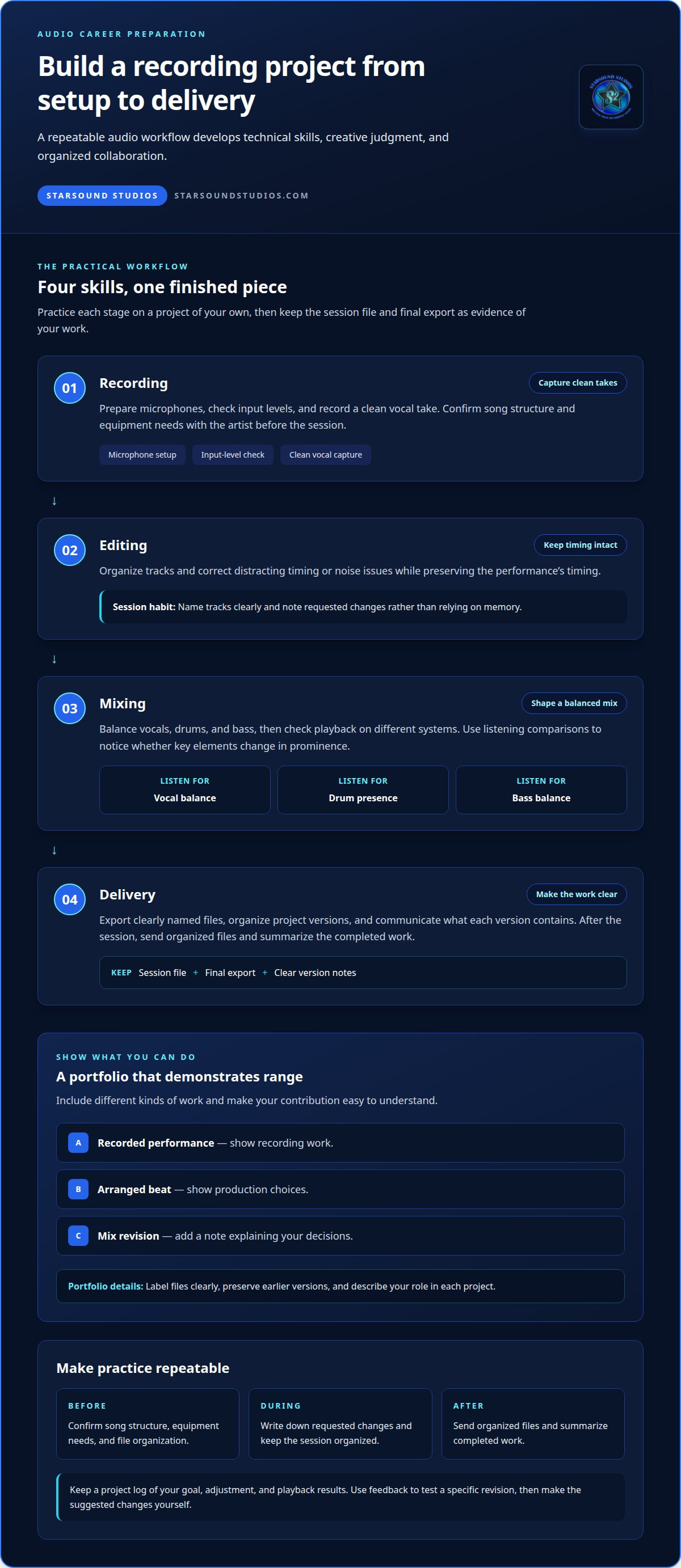
Career preparation depends on repeatable audio skills, not software familiarity alone. Practice a complete workflow: prepare a session, record clean takes, edit while preserving timing, and create a balanced mix. Finish a short vocal-and-instrumental demo, for example, and keep both the session file and final export. This demonstrates your creative judgment and technical organization.
Build a portfolio that shows different kinds of work. Include a recorded performance, an arranged beat, and a mix revision with a note explaining your decisions. Label files clearly, preserve earlier versions, and describe your role in each project. A concise portfolio helps collaborators understand your contribution, tools, and response to the artist’s direction.
- Recording: Prepare microphones, check input levels, and capture a clean vocal take.
- Editing: Organize tracks and correct distracting timing or noise issues.
- Mixing: Balance vocals, drums, and bass while checking playback on different systems.
- Delivery: Export clearly named files and communicate what each version contains.
Professional habits matter in shared sessions. Before recording, confirm the song structure, equipment needs, and file organization with the artist. During the session, note requested changes instead of relying on memory. Afterward, send organized files and summarize the completed work. These steps support smoother collaboration and help prevent missed revisions or confusing project versions.
Career paths may involve studio recording, editing, production, or mixing, each requiring different strengths. A producer may shape arrangements and sound choices, while an engineer may focus on signal flow and capture quality. Use a personal project to see which tasks suit you, then choose classes that let you practice, get feedback, and improve a finished piece.
How long do Cleveland audio engineering courses and certificate programs take?
Course length depends on the material, lesson schedule, and practice required. A focused mixing class may cover a narrower skill set than a broader program combining recording, editing, production, and mastering. Certificate programs may include structured assessments or completed projects, which also shape the study plan.
Compare curricula before calendars. A course focused on microphone placement and signal flow has a different scope from one that also teaches session editing and mix delivery. Review the topic sequence, amount of supervised practice, and work expected between lessons. These details show what the schedule is designed to accomplish.
Your pace matters, too. Regular studio access can make it easier to practice soon after class, while work and other commitments may call for a more flexible rhythm. Consider how often you can open a session, apply feedback, and revise a project. A realistic plan leaves room for practice, not just demonstrations.
Use these steps to assess the time commitment:
- List the skills you want, such as recording vocals or balancing a mix.
- Compare those goals with each course’s subject sequence and project requirements.
- Estimate when you can practice between lessons and complete assignments.
- Check how the program defines completion, including any final project or assessment.
For a certificate, examine what completion represents: course attendance, demonstrated technical ability, or a portfolio-ready project. A finished multitrack session, for example, can show how you applied recording and editing concepts. Focus on the work you’ll be able to complete, not duration alone. To build practical skills alongside your learning, explore audio engineering classes shaped around studio craft.
Starsound Studios: Stereo Mixing
Starsound Studios can help turn a completed recording into a cohesive stereo mix, balancing vocals, instruments, and dynamics while preserving the character of the performance. If your training has given you a track that’s ready for a polished listening experience, stereo mixing is a practical next step. The studio also offers recording, mastering, and Dolby Atmos Mixing (9.1.4), supporting projects at different stages of production.
Bring a clear creative direction: describe the sound you want, identify the elements that should lead, and share references that capture the mood. This gives a mix a focused starting point while keeping your artistic choices central. Starsound Studios is in North Royalton, Ohio, in the Cleveland area.
Contact Starsound Studios to discuss your stereo mixing project.
Turn your next session into a finished project
Let your next step grow from the work you want to create. Choose a song, beat, or recording challenge, then set a clear learning or project goal. A focused approach can make audio engineering classes in Cleveland part of a purposeful creative practice, with each project building on the last.
When a track is ready to move beyond practice, Starsound Studios offers stereo mixing, mastering, and Dolby Atmos mixing (9.1.4). These services can support a project as it develops toward a polished release, while keeping your artistic direction at the center of the process.
Contact Starsound Studios to discuss a project and its next step. Keep creating, stay curious, and let each session bring your sound closer to the vision you hear.
Frequently Asked Questions
What audio engineering classes are available in Cleveland, Ohio?
Cleveland learners can pursue studio-based audio education in recording and production. Starsound Studios offers hands-on instruction in Pro Tools and Logic Pro in a professional studio environment. When comparing classes, consider whether you want to start with session organization, recording workflows, or software-based production. A clear goal helps you choose instruction that fits your current projects.
Which Cleveland colleges and schools offer audio engineering or recording arts programs?
Starsound Studios offers Cleveland-area audio engineering classes with hands-on instruction in Pro Tools and Logic Pro. For a school-based route, compare certificate programs with individual classes by reviewing their curricula and intended outcomes. A course focused on a digital audio workstation may suit a different goal from broader recording arts study covering multiple stages of production.
What prerequisites or admission requirements do Cleveland audio engineering programs have?
Prerequisites vary by program, so there is no single admission rule for every Cleveland course. Before starting, consider your experience with recording software, audio files, and basic session organization. If you’re new to production, bring a simple project idea, such as recording a vocal over an instrumental. It gives you a practical starting point for learning terminology and workflow.
Do Cleveland audio engineering classes offer hands-on studio training and equipment access?
Starsound Studios provides hands-on audio education in a professional studio environment. Practical work can connect software choices with recording decisions, such as organizing tracks or capturing a vocal performance. Decide what you want to practice, then look for lessons that include active project work rather than relying only on demonstrations.
Are there part-time, evening, weekend, or online audio engineering classes in Cleveland?
Class schedules and formats depend on the course. Remote mixing and mastering are audio production services, not online instruction. If you need flexibility, consider how lesson times, independent practice, and project deadlines fit around work or school. Remote instruction is most useful when you can apply feedback to a session afterward.
What career outcomes and job placement support do Cleveland audio engineering programs provide?
Audio training can develop skills relevant to recording, editing, production, and mixing, while job-placement support varies by program. Build evidence of your abilities as you learn: save organized session files and finished mixes, and note your role in each project. A portfolio gives potential collaborators a concrete view of your workflow and creative judgment, beyond a course title alone.


