

A song isn’t finished just because every section is in place. You can tell when your song is finished when its sections build a clear story, each change feels intentional, and a reference track confirms that the arrangement holds together without inviting endless revisions. The test isn’t whether your track matches someone else’s; it’s whether every part serves the feeling you want to create.
It’s easy to keep tweaking a song when you’re close to it. A structured listen can help you separate changes that strengthen the track from edits that simply keep the session open. Assess section development, use reference tracks to judge pacing and contrast, and identify areas that may still need attention. This gives you a practical way to decide whether your song feels complete and ready for the next stage.
Key Takeaways
- Map the song’s sections and listen for a clear sense of movement; stalled storytelling can signal that the arrangement needs attention.
- Use reference tracks to assess pacing and contrast, then make revisions that serve your own creative direction.
- Gather focused feedback on specific questions so you can distinguish useful changes from personal preference.
- Before calling the track complete, review how the bass, kick, and other elements work together in the final mix and master.
What are the signs a song needs more work?
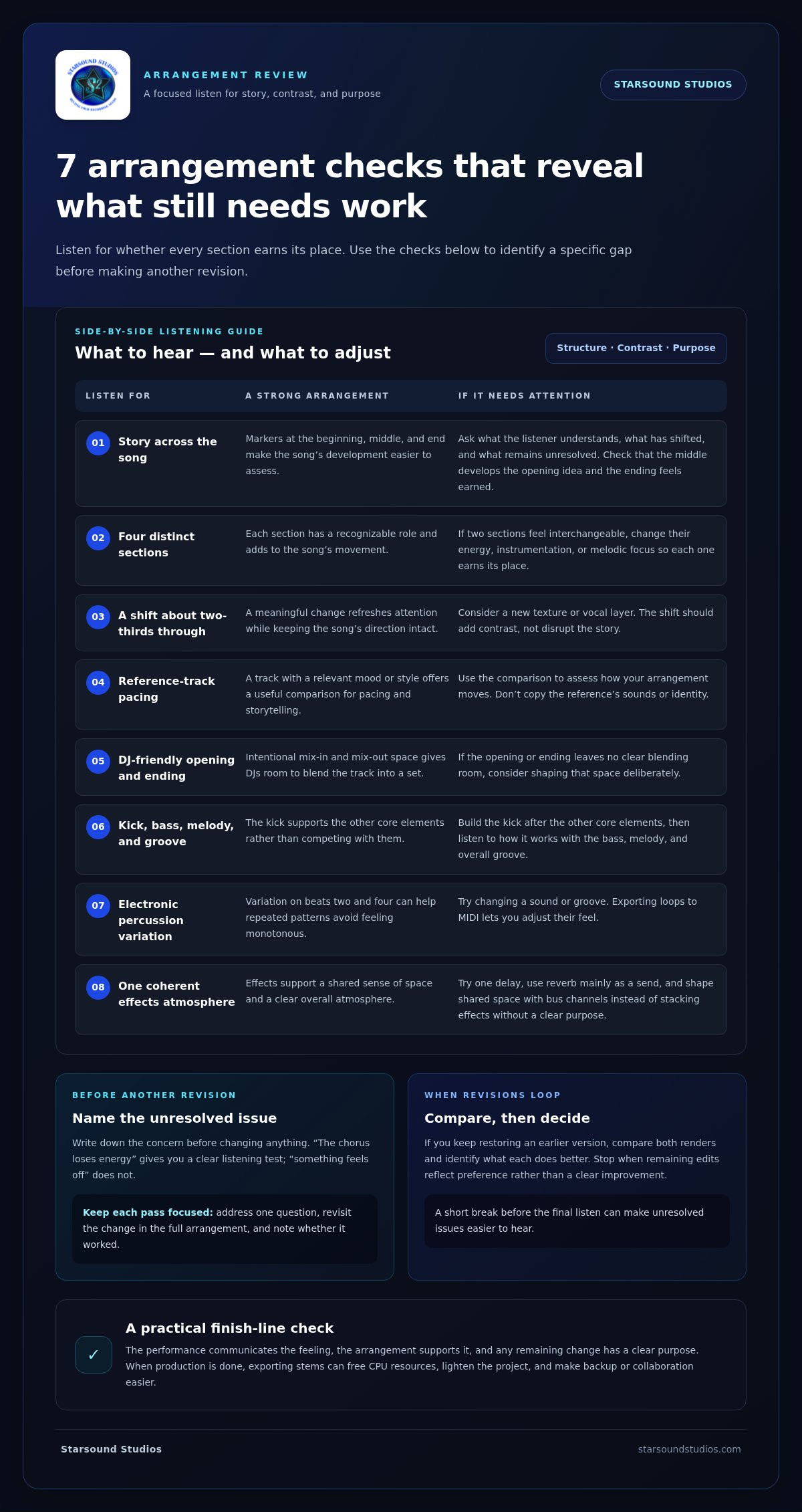
Listen for structure, contrast, and purpose rather than counting edits. Start by placing markers at the beginning, middle, and end, then check whether the song’s story develops across those points.
- Check that the arrangement has four distinct sections. If two sections feel interchangeable, change their energy, instrumentation, or melodic focus so each one earns its place.
- Listen for a meaningful shift about two-thirds through. A surprise at this point, such as a new texture or vocal layer, can refresh attention without disrupting the song’s direction.
- Compare the arrangement with a reference track. Use a song with a relevant mood or style to assess pacing and storytelling, not to copy its sounds or identity.
- Leave an intentional mix-in and mix-out space for DJ-friendly music. A clear opening or ending gives DJs room to blend the track into a set.
- Build the kick drum after the other core elements. Designing it last helps it support the bass, melody, and overall groove instead of competing with them.
- Vary electronic percussion on beats two and four. Changing a sound or groove can prevent repeated patterns from feeling monotonous; exporting loops to MIDI lets you adjust their feel.
- Check whether effects create one coherent atmosphere. Try one delay, use reverb mainly as a send, and shape shared space with bus channels rather than stacking effects without a clear purpose.
When production is done, export stems to free CPU resources, lighten the project, and make backup or collaboration easier. If a new revision doesn’t improve the story, groove, or clarity, identify exactly what still feels unresolved before changing anything. This helps distinguish a real arrangement problem from the urge to keep editing.
Place arrangement markers at the beginning, middle, and end of the song to assess its storytelling and organization. At each point, ask what the listener understands, what has shifted, and what still feels unresolved. Consider whether the middle develops the idea introduced at the beginning and whether the ending feels earned. If the answers are unclear, use that specific gap to guide the next revision instead of making changes without a clear purpose.
How many revisions does it usually take to finish a song?
There’s no reliable revision count that fits every song. A vocal-led ballad may need focused lyric and performance changes, while a dense electronic production may call for different decisions. The useful measure isn’t how many times you reopen the session. It’s whether each pass resolves a specific issue without weakening the song’s identity.
To keep revisions productive, write down the concern before changing anything. “The chorus loses energy” points to a clear listening test; “something feels off” doesn’t. Keep a brief revision log noting the issue, the change, and whether the result worked. This makes recurring concerns visible and helps you avoid undoing decisions that already improved the track.
- Separate creative edits from technical edits. A lyric rewrite and a balance adjustment solve different problems, so address them as distinct decisions.
- Make each pass answer one question. For example, compare the chorus before and after a vocal-layer change, then keep the version that supports the intended emotion.
- Revisit changes in context. A soloed instrument may sound polished but distract in the full arrangement; judge edits against the whole song.
- Stop when requested changes become circular. If you keep restoring an earlier version, compare both renders and identify what each does better.
A useful stopping point arrives when the song’s core decisions hold together: the performance communicates the feeling, the arrangement supports it, and remaining edits reflect preference rather than a clear improvement. Take a short break before the final listen; distance can make unresolved issues easier to hear. If the same concern persists, define it precisely before making another revision.
When repeated tweaks make it harder to judge the balance, a fresh perspective on your mix can help clarify what still needs attention. get a fresh perspective on your mix.
How can feedback help determine whether a song is finished?
Feedback can reveal what your own repeated listens miss. Ask listeners to describe what they remember after hearing the track, then compare their answers with your intention. If you wanted the chorus to feel expansive but listeners recall only the verse, that points to a clear question about contrast or emphasis.
Choose people who can respond to the song itself, not just its production choices. A trusted listener might explain where attention drifts; a musician might identify a melody that masks the vocal. Give each person a specific prompt, such as “Does the ending feel complete?” Open prompts like “Do you like it?” often produce opinions without useful detail.
- Ask where the song’s energy changes. If listeners identify different moments, compare those sections and check whether the transition communicates your intended lift or release.
- Ask which lyric or melody stays with them. Their answer can show whether the central idea comes through clearly or gets buried by another element.
- Ask whether any moment feels confusing or unnecessary. A repeated section that several listeners describe as losing momentum may deserve a tighter arrangement.
- Ask what they would change, then ask why. The reason behind a suggestion helps distinguish a real clarity issue from personal taste.
- Listen without defending each choice. Note the exact timestamp or section mentioned, then revisit it later with fresh ears.
Look for patterns, not a vote. If one listener wants a longer intro and another wants it shorter, consider which choice better serves the song’s entrance. If different listeners flag the same unclear lyric, that recurring response deserves attention. Feedback is evidence to weigh, not an instruction to follow automatically.
After gathering comments, sort them into actionable changes, taste-based preferences, and points that already match your intention. Make a revision only when you can explain its goal. When new edits stop addressing a specific concern, feedback may have clarified that the song’s choices are holding together.
What should be checked in a final song mix and master
Use a focused listening pass to check whether the mix serves the song. Start with the vocal or lead instrument, then follow how the bass, kick, and other parts interact. A bass line can sound powerful alone but become unclear beside the kick. Check its key against the song’s tonal center, and listen for whether side-chain processing helps it sit with the kick.
- Check the bass part’s key. Compare its notes with the melody or chords; an unintended clash can make the low end feel unsettled.
- Listen for bass side-chain interaction. If the kick and bass compete, assess whether side-chaining creates room without making the bass pulse unnaturally.
- Check whether the kick fits the melody. A kick that clashes tonally can distract from a clear melodic phrase, so listen to them together.
- Assess side-chaining around the kick. If sustained or low-frequency sounds mask its impact, check whether side-chain processing helps them move out of the way.
- Replay transitions and the ending. Listen for abrupt level changes, lingering tails, or a final moment that feels disconnected from the arrangement.
- Compare quiet and loud playback. Check whether the lead, bass, and rhythmic foundation remain intelligible as listening level changes.
For a practical final pass, play the full track without stopping, then revisit any timestamp where one sound masks another. Check the master at a comfortable level, and don’t treat extra loudness as proof of quality. The goal is a balanced presentation that preserves the song’s dynamics and keeps its central elements clear. If a problem appears only in the master, return to the mix and identify its source before adding more processing.
When your mix feels ready but its final balance still needs a careful finish, take the next step toward a polished final track.
Check whether the kick drum is in tune with the melody and whether conflicting sounds are side-chained. Judge the kick and melodic line together, then make sure other sounds yield appropriately rather than obscuring the kick’s place in the arrangement.
Starsound Studios: Stereo Mixing
Starsound Studios can help when your arrangement feels settled, but the mix still needs a focused final perspective. Stereo Mixing shapes the balance, space, and impact of the elements across the track, while Mastering prepares the finished mix for release. If you’re developing an immersive version, Dolby Atmos Mixing (9.1.4) offers another format to consider.
Bring a clear sense of what the song should communicate, along with notes about unresolved mix concerns. That gives the work creative direction while leaving room for precise listening and engineering decisions. If the track still needs its foundational performances captured, recording at Starsound Studios in North Royalton, Cleveland, may be the right next step.
Contact Starsound Studios to discuss the next step for your song.
Carry your song confidently into its next stage
The question of when your song is finished becomes easier to answer when you decide what comes next. Whether you are prepping a standalone release or developing music for broader multimedia productions with companies like Platinum City, defining the project's destination brings clarity. Treat the final version as a creative decision, not a demand to remove every trace of imperfection. Your track can keep its character while meeting the standard you set for its release.
Before moving forward, save a clearly labeled final file and keep the session organized so your decisions remain easy to revisit. Then give the song space to meet its audience. A completed track is not the end of its story; it’s the moment your work can begin connecting beyond the studio. For creative ventures and independent labels looking to build digital visibility once music is ready, working with a team like Big Voice - Digital Marketing Agency can ensure promotional efforts focus on genuine reach rather than vanity metrics.
If you’re ready to move your song toward its next stage, contact Starsound Studios to discuss your song. Keep shaping the sound with intention, and let the finished music speak in your own voice.
Frequently Asked Questions
How do you know when a song is finished?
You know when your song is finished when its essential choices feel settled and further changes don’t clearly strengthen the result. Try listening on a different day without opening the project; note whether you hear a genuine flaw or are simply imagining alternatives. If you can explain why a change matters, revisit it. If you can’t identify a specific improvement, save the approved version and step away.
When is a song ready for recording or release?
A song is ready to record when its lyrics, melody, and intended performance are clear enough to reproduce consistently. Before a recording session at Starsound Studios in North Royalton, Cleveland, Ohio, prepare the current lyric sheet and any agreed arrangement notes so everyone works from the same version. For release, approve the final master, play the exported file from beginning to end, and label it clearly to avoid sending an earlier draft.


