

You don’t need to reach a certain level before getting feedback on your mix. A fresh listener can help you hear what’s working and spot anything distracting from the song, whether you’re shaping your first track or refining an established sound. Ask focused questions and choose listeners who can offer the kind of feedback you need.
It’s natural to feel protective of a mix you’ve spent hours shaping. Still, thoughtful criticism can reveal how the vocals, low end, balance, and overall energy come across beyond your own listening setup. This guide covers practical ways to get useful feedback, from consulting experienced engineers to seeking an audience-like perspective, as well as technical issues to listen for. You’ll also learn to consider criticism without losing sight of your artistic intention and decide which suggestions can move the song forward.
Key Takeaways
- Choose a listener whose experience and musical perspective match the questions you need answered.
- Check how the mix translates across playback systems, and listen closely for balance issues that can distract from the song.
- Use feedback from friends and online communities as useful perspectives, while keeping their limitations in mind.
- Separate criticism from personal judgment, then decide which suggestions best serve the track’s artistic direction.
1. Asking professional mixing engineers for feedback
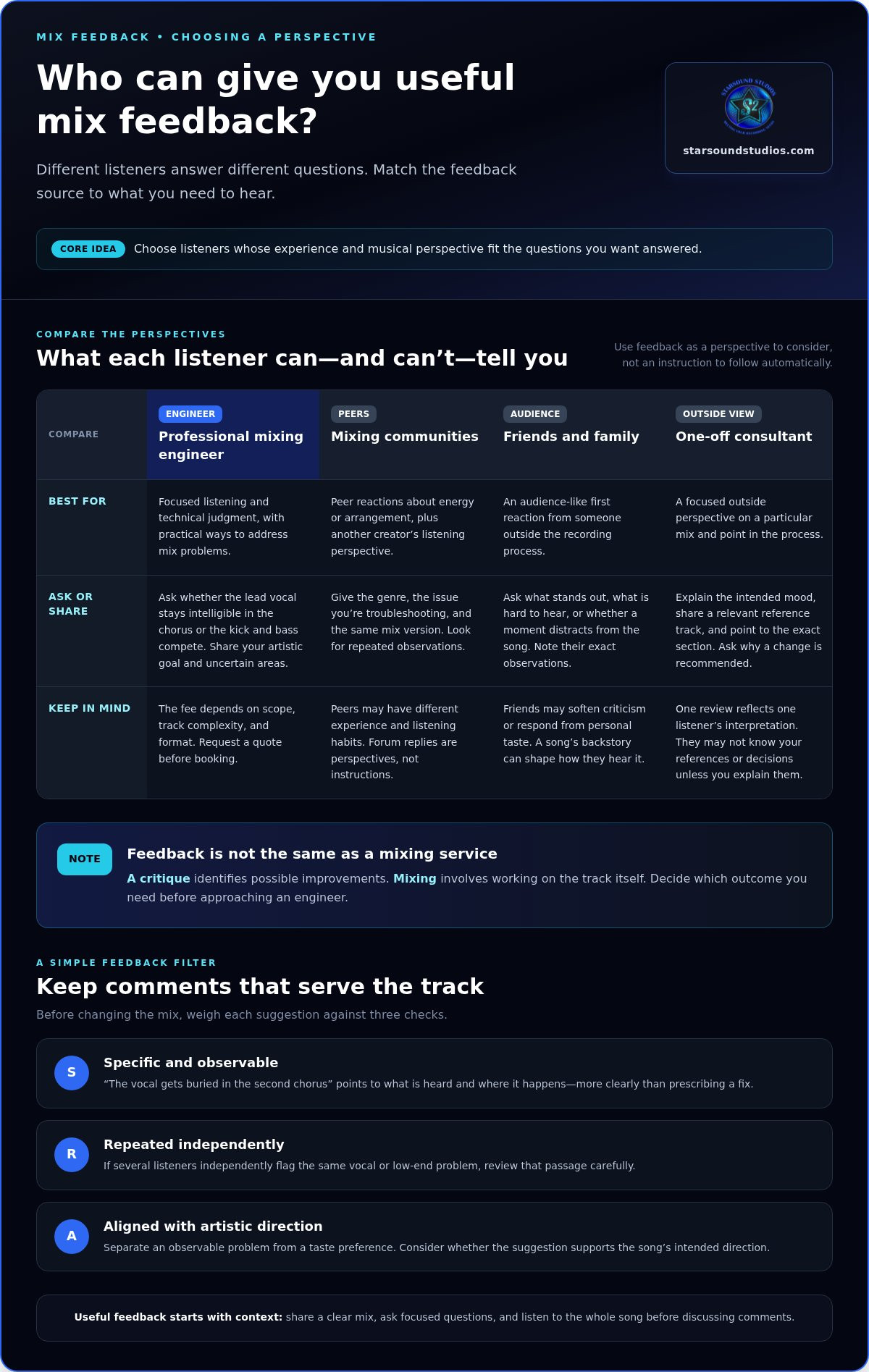
A professional mixing engineer can identify problems and explain practical ways to address them. Choose someone familiar with your genre, then share a clear mix and a short list of questions. For example, ask whether the lead vocal stays intelligible during the chorus or whether the kick and bass compete. Focused questions lead to more specific responses than asking, “What do you think?”
The fee for a professional feedback session depends on its scope, track complexity, and format, such as written notes or a live discussion. Request a quote before booking. To get useful feedback, explain your artistic goal and name the areas you’re uncertain about. Ask the listener to play the whole song without interruption, then share their comments right afterward while the details are fresh.
Mixing communities offer another option: some let members upload tracks and get comments from other engineers. Include context, such as the genre and the specific issue you’re troubleshooting, so listeners can respond to your intent. Treat forum replies as perspectives, not instructions. If several listeners independently flag the same vocal or low-end problem, review it carefully before making changes.
You can also politely ask a mixing engineer if you can observe a session. Watching someone balance instruments, shape dynamics, and make decisions in real time can show how technical choices support the song. Feedback isn’t the same as a mixing service: a critique identifies possible improvements, while mixing involves working on the track itself. Decide which outcome you need before approaching an engineer.
When mixing your own music, step away briefly before listening again with fresh ears. Write down questions as you listen, then compare your impressions with the engineer’s comments. Give constructive feedback by describing what you hear and where it happens, rather than prescribing a fix: “The vocal gets buried in the second chorus” is more useful than “Add more treble.” Take criticism just as specifically. Ask for an example or explanation, consider the suggestion, and choose changes that support the song’s direction.
2. Technical mix issues such as masking, phase, headroom, and mono compatibility
Ask listeners whether the vocals are clear, each instrument has space, and the song’s energy feels balanced. Invite them to point out moments when something becomes difficult to hear instead of asking for vague impressions. A casual listener may notice that the chorus feels crowded without knowing the term masking.
Masking happens when sounds compete for attention, often because they occupy similar frequency areas. For example, a dense guitar part may obscure vocal detail, or the kick and bass may blur together. Ask listeners to identify where clarity drops. Then solo or mute elements to find what’s competing, and thoughtfully adjust the levels, tone, or arrangement.
Phase problems can make sounds lose weight or change character when combined. Compare the mix in stereo and mono. If a guitar, backing vocal, or other layer becomes faint in mono, inspect how it relates to similar parts. Headroom matters too: listen for clipping, harsh peaks, or distortion in the loudest sections. These checks help distinguish balance concerns from technical faults.
Friends and family can offer an audience-like perspective, even without engineering vocabulary. Ask whether the lead vocal is easy to understand, whether the bass feels overpowering, and whether any moment distracts from the song. Listeners outside the recording process hear the mix without knowing the decisions behind it, which makes their reactions useful. Record their exact observations before making changes.
Keep playback levels consistent when comparing sections. Louder playback can make a version seem more exciting without improving its balance. Ask one listener what stands out first, then what they struggle to hear. Combine their reactions with your own checks across speakers and headphones. If several people independently mention buried vocals or an unclear low end, revisit that passage and test a targeted adjustment.
3. Limitations of feedback from friends, forums, and one-off consultants
Friends may know the story behind a song, which can shape how they hear it. A lyric that feels powerful to you may confuse someone hearing it for the first time. Some friends may soften criticism to protect your feelings, while others may focus on personal taste. Ask them what they noticed before explaining your intention. Their first reaction can show where the music communicates clearly and where it relies too heavily on context.
Peer mix feedback usually reflects another creator’s listening habits and experience. A professional critique applies focused listening and technical judgment to your specific mix. Peers may offer useful reactions about energy or arrangement, while an experienced engineer can explain how balance, dynamics, or processing contribute to a problem. Neither perspective replaces the other; they answer different questions.
Forums can attract varied opinions, but commenters may hear different versions, playback conditions, or genres. One person might recommend brighter vocals while another prefers a darker tone. Share the same mix version and explain your artistic direction, then look for repeated observations instead of following every suggested adjustment. Even confident technical advice should be tested against the track’s goals.
A one-off consultant can offer a focused outside perspective, but a single review captures one listener’s interpretation at a particular point in the process. They may not know your references or the decisions behind a sound unless you explain them. Share the intended mood, a relevant reference track, and the exact section you want assessed. Ask why they recommend each change, not just for a list of adjustments.
To decide which comments to use, separate observable problems from taste-based preferences. Prioritize feedback that is specific, repeated by independent listeners, and consistent with your creative direction. To reduce bias, ask listeners the same neutral questions before sharing your concerns, and include someone unfamiliar with the recording process. Compare their notes afterward. If a suggestion conflicts with the song’s purpose, test it briefly, then trust what you hear rather than the authority of the person who proposed it.
4. Setting aside pride to improve a mix
A mix can feel personal because every choice carries time, taste, and intention. That investment can make criticism sting, especially when someone questions a sound you carefully shaped. Pause before defending your decision. Write down the comment, then identify the exact moment it describes, such as a vocal disappearing beneath guitars in the final chorus. Separating the observation from your reaction gives you something practical to assess.
Listen again with the specific note in mind, but don’t assume the listener’s suggested fix is the only solution. If they say the chorus feels crowded, inspect the arrangement, levels, and effects before changing a fader. A useful critique points to a listening problem; your job is to decide how best to solve it while preserving the song’s character. Keep your artistic goal in view.
Try a controlled comparison. Save a new version, make one targeted change, and switch between the two at a consistent playback level. For example, if a listener says the vocal lacks presence, adjust its balance or competing elements, then check whether the lyric is clearer. If the change weakens the mood or draws attention away from the performance, reconsider it. Judge a suggestion by what you hear, not by who said it.
Keep a feedback log with the listener’s exact words, the section involved, and your response. Mark each note for testing, adopting, or setting aside, and add a short reason. This makes repeated concerns easier to spot without turning every opinion into a command. When several people notice the same issue, investigate it; when one person dislikes a creative choice, weigh it against your intended sound. Stay curious, not compliant. If you want an experienced perspective to help shape your next revision, take the next step with your mix.
Starsound Studios: Stereo Mixing
Starsound Studios offers Stereo Mixing for artists ready to move from outside opinions to a focused, cohesive mix. Bring the feedback you’ve gathered, including specific moments when listeners noticed unclear vocals, crowded instruments, or a balance that shifts between sections. Those observations can guide mixing decisions while keeping the song’s identity at the center.
If you’re working remotely, Remote Mixing offers a way to have your track mixed without being in the studio. For a different final format, Starsound Studios also offers Mastering and Dolby Atmos Mixing (9.1.4). The right next step depends on what your music needs: detailed work on the stereo mix, final mastering, or an immersive mix. Contact Starsound Studios to discuss your project.
Turn thoughtful feedback into your next creative step
A mix doesn’t need to satisfy every opinion. Decide what you want the song to make listeners feel, then make choices that bring that intention into focus. Keep that purpose in view as you revise. It gives each comment a useful frame and helps you recognize when another round of changes would serve the music, or simply keep you from letting it go.
A thoughtful approach to getting feedback on your mix can sharpen your perspective, but the finished track still belongs to you. Let outside ears challenge your assumptions, test ideas against the sound, and trust the decisions that strengthen the song’s identity.
If you’re ready to move from notes to a more polished result, contact Starsound Studios about your mix. Keep creating with intention, and let the music lead the way.
Frequently Asked Questions
Do I need to be at a certain level to benefit from feedback?
No, feedback can help at any stage if you bring a specific listening goal. A newer mixer might ask whether the arrangement feels clear before refining plug-in settings. Someone with more experience could ask how automation shapes the final chorus. Matching your question to your current skill keeps advice actionable and helps you avoid chasing advanced techniques before the song needs them.
What do I need to prepare before a session?
Prepare a short project brief with the song’s intended mood, your role in the production, and any decisions you don’t want changed. For example, note that a distorted guitar is a deliberate signature sound, not an accidental flaw. Put your questions in priority order so the session can address the main concern before moving to smaller details.
What files do I need to send?
For a listening critique, send a playable stereo mix rather than a full DAW project. Include an instrumental or vocal-only version only if it helps explain a specific balance question. Label files clearly so the reviewer can distinguish the current mix from earlier drafts. Keep a copy of the exact version you shared to make later comparisons more reliable.
Where can you get feedback on your mix online?
Look for genre-focused mixing communities with dedicated critique spaces and clear posting guidelines. Cleveland artists can take part online, sharing a private or community-approved audio file with a concise question. Choose a space where members discuss specific listening observations, not just equipment preferences. Read a few existing critiques first to understand the community’s style and expectations.
How do you find reliable mix feedback from producers and engineers?
Look for comments that explain the listening evidence behind a recommendation. For instance, a useful critique might identify a masking problem in the pre-chorus and explain how it affects the vocal. Consider whether the person’s work has a similar production direction and whether their reasoning is clear. Detailed explanations let you assess the advice instead of accepting it on reputation alone.
How should you prepare and share a mix for feedback?
Export a clearly named version and share it with a brief describing the track’s style and the kind of response you need. Use a filename that distinguishes the mix from demos or alternate versions, and identify any section that deserves special attention. Share the file in a format that preserves its audio for listening, and leave out unrelated project materials that could distract from the review.


