

A producer’s authority doesn’t have to take the artist’s voice out of the room. Overcoming studio anxiety starts with four practical moves: rehearse and experiment before the session, listen back without treating every flaw as a verdict, explain what helps you feel comfortable, and approach conversations with the producer and engineer as collaboration. Feeling exposed in a recording studio is understandable, especially when the music matters deeply.
Preparation can make the room feel less unfamiliar, but you don’t need to arrive with a perfect performance or know every technical term. A rough guide take, focused playback, and a simple explanation of what feels uncomfortable can give you and your collaborators a clearer way forward.
These four approaches can help you build a process that suits your voice, use recordings as useful feedback, and speak up about what you need in the moment. You’ll also find ways to handle producer interactions with more confidence, so you can focus on the performance and the sound you want to create.
Key Takeaways
- Rehearse in a low-pressure setting and try different approaches to discover what helps you feel prepared.
- Use playback to identify one specific improvement, while recognizing what’s already working in your performance.
- Tell your collaborators what feels uncomfortable, even if you don’t know the technical term for it.
- Treat producers and engineers as creative partners: share your goals, ask for a pause when you need one, and keep the conversation focused on the music.
1. Using practice and experimentation to develop an approach
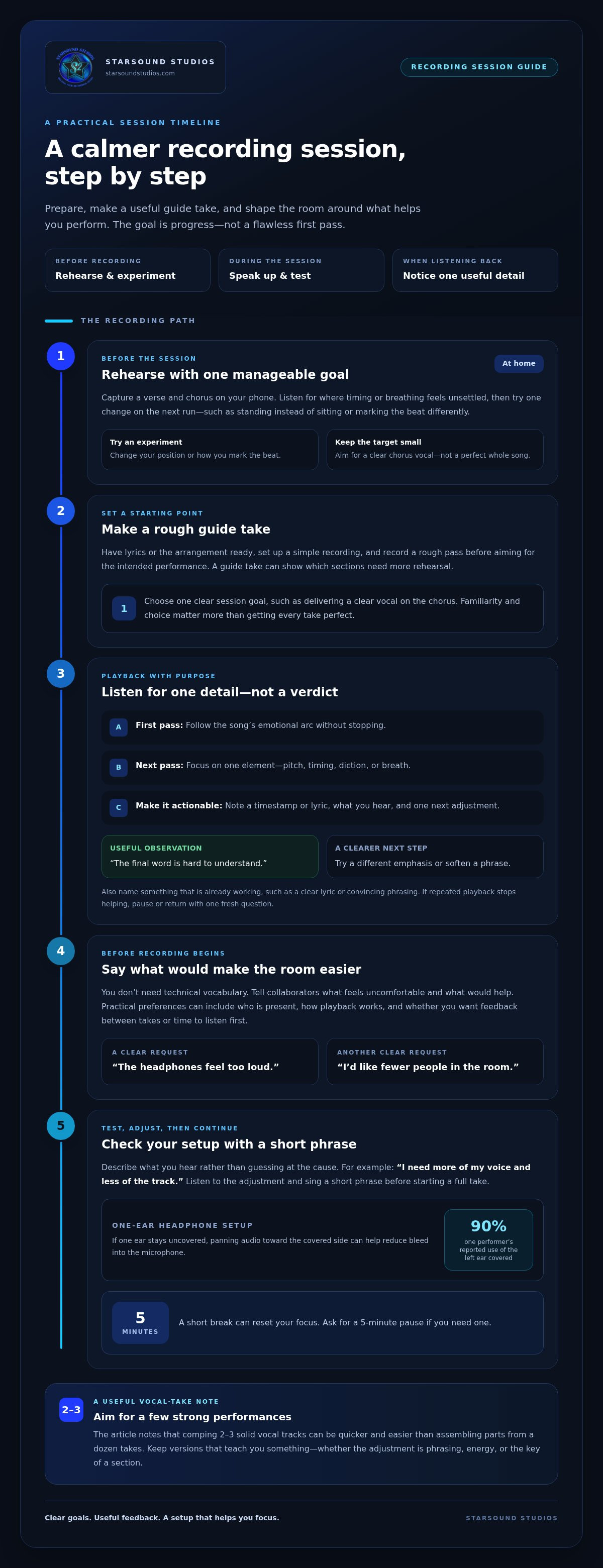
To calm studio anxiety before a session, rehearse the song, record a practice run, and choose one manageable goal. Use your phone to capture a verse and chorus at home, then note where your timing or breathing feels unsettled. Try a different approach on the next run, such as standing instead of sitting or changing how you mark the beat. The aim is to learn what helps you perform, not to make every rehearsal flawless. Small experiments can make recording feel more familiar.
Prepare for a studio session by practicing the material as you expect to record it. Set up a simple home recording, check that your lyrics or arrangement are ready, and make a rough guide take before attempting the intended performance. A guide take gives you a starting point and can reveal sections that need more rehearsal. Set a specific session goal, such as delivering a clear vocal on the chorus, rather than demanding a perfect take of the entire song. Familiarity and choice can help you overcome studio anxiety.
Listen to your practice recording for useful information, not as a verdict on your ability. Choose one detail to work on, then record again and compare. For vocals, aim to capture a few strong performances rather than chasing endless takes: comping 2-3 solid vocal tracks can be quicker and easier than assembling parts from a dozen takes. Experiments that miss the mark still show you what to adjust, whether that’s phrasing, energy, or the key of a section. Keep the versions that teach you something.
To find an anxiety-friendly recording studio near you, look for a process that allows clear communication about your needs. Consider whether you can discuss who will be present, how playback works, and what helps you feel comfortable performing. The Center for Substance Abuse Treatment identifies equipment or room availability, confidentiality concerns, and fear of critical evaluation as sources of anxiety in counseling-supervision recordings. Those concerns aren’t identical to music sessions, but they illustrate why a clear plan matters. Choose a studio setting where you can discuss expectations and feedback before recording begins.
2. Listening back to recordings constructively
Use playback to listen, not to judge your talent. Choose one pass and identify a specific detail, such as whether the chorus feels connected to the verse. Then name something that already works, like a clear lyric or convincing phrasing. Balanced feedback gives your next decision a useful direction. You’re assessing a performance, not judging your worth as an artist.
Give each listen a focus. On the first pass, follow the song’s emotional arc without stopping. On the next, attend to one musical element, such as pitch, timing, diction, or breath. If a consonant disappears in a lyric, mark that moment instead of labeling the whole vocal “bad.” A precise observation points toward an adjustment; a sweeping judgment can make it harder to hear what’s actually happening.
Keep notes short and actionable. Write down a timestamp or lyric, describe what you hear, then suggest a next step: soften a phrase, hold a note longer, or try a different emphasis. Separate technical observations from personal taste. “The final word is hard to understand” describes a listening issue; “I hate my voice” offers no clear direction for the next take. If you’re unsure, compare two versions and ask which better carries the song’s intention.
Also notice when repeated playback stops helping. After several listens, take a pause or return with one fresh question, such as whether the vocal feels intimate or forceful. That shift keeps the session focused on choices rather than imagined flaws. For artists who want to apply this kind of focused listening during a session, recording sessions can make playback part of the creative process.
3. Communicating comfort needs in the studio
Say what would make the session easier before recording starts. You don’t need technical vocabulary: “The headphones feel too loud” or “I’d like fewer people in the room” gives collaborators a clear request. If one ear covered feels distracting, explain that; one performer reports recording with only the left ear covered 90% of the time. The useful setup is the one that lets you hear the performance and stay focused.
If your headphone mix feels uncomfortable, describe what you hear rather than guessing at the cause. Try saying, “I need more of my voice and less of the track,” then listen to the adjustment. If you keep one ear uncovered, panning audio toward the covered headphone side can help reduce bleed into the microphone. Ask the engineer to make a test adjustment, then sing a short phrase before starting a full take.
Your first studio session can include discussing the song and your goals, setting up a microphone and headphone mix, recording a test or guide take, and reviewing playback. Share practical preferences early, such as whether you want feedback between takes or time to listen before comments. A short break can reset your focus; ask for a 5-minute pause if you need one. Clear requests make each step easier to navigate.
In the US, studio coaching or therapy costs depend on the provider, location, session format, and whether you’re seeking coaching or clinical care. Insurance coverage can also affect out-of-pocket costs for therapy. Consider the type of support and session arrangement that fit your needs when comparing costs.
Consider speaking with a mental health professional if anxiety persists, disrupts everyday life, or repeatedly keeps you from recording or performing. Cognitive Behavioural Therapy can help identify and replace negative thoughts, while Acceptance and Commitment Therapy uses mindfulness to bring attention back to the present moment. In the studio, you can still tell collaborators what feels uncomfortable and ask for a practical adjustment.
4. Handling intimidation by producers and engineers
Anxiety in recording or art studios can come from feeling watched, judged, or unsure what happens next. Equipment or room availability, confidentiality concerns, and fear of critical evaluation can contribute to anxiety during counseling-supervision recordings, according to the Center for Substance Abuse Treatment. In a music session, uncertainty about feedback or how to respond to a producer’s direction can also make a performance feel exposed. Naming the specific pressure helps you choose a useful next step.
Before a take, tell the producer what kind of direction works for you. For example, ask for one clear note at a time, or request a moment to process feedback before trying again. If a comment feels too broad, ask, “Could you point to the phrase you mean?” That turns an intimidating judgment into an actionable adjustment. You can also agree on a signal for pausing, so you don’t have to interrupt a performance verbally.
Remember that technical authority doesn’t make a producer the owner of your artistic choices. The author reports that 95% of the producers and engineers they’ve worked with are kind and want to be helpful and accommodating. Use that perspective to start a direct conversation, not to dismiss your own discomfort. Try saying, “I understand the note, but I want to keep this line more restrained,” then compare takes and decide which serves the song.
If a session feels tense, separate the issue from the person. Say what you need changed, such as clearer feedback, fewer listeners, or a short pause, and explain how it affects your performance. A collaborative engineer can respond to a concrete request more easily than an unspoken worry. For a recording session built around your creative goals, plan your recording session and bring those preferences into the conversation.
Starsound Studios: Stereo Mixing
Starsound Studios offers stereo mixing for artists ready to shape recorded tracks into a cohesive, balanced mix. If practice and clear communication have helped you feel more confident, working with an engineer can be the next step in refining how the parts sit together and support your artistic intent. Share your references, priorities, and anything that helps you feel comfortable collaborating.
For a finished mix that needs final polish, Mastering may suit the next stage. Artists exploring immersive sound can also consider Dolby Atmos Mixing (9.1.4). The right option depends on where your project is in its production journey and the result you’re aiming for.
To discuss your project and its next step, contact Starsound Studios.
Bring Your Next Session Into Focus
The next time you enter a studio, choose one creative intention to carry with you: a lyric you want to land, a sound you want to explore, or a performance you want to capture honestly. That intention can guide decisions without demanding perfection. Overcoming studio anxiety is less about eliminating every uncertain feeling and more about making space to create while it’s present.
If you’re ready to move a project forward, Starsound Studios can help shape its next production step. Whether you’re preparing recorded material for a polished mix or considering an immersive direction, start with the sound you want listeners to experience. A clear conversation about your goals gives the work a strong starting point.
Contact Starsound Studios to discuss your project. Your next take doesn’t need to be fearless; it just needs to be yours.
Frequently Asked Questions
How can beginners overcome studio anxiety?
Beginners can make a first session feel more manageable by learning the room’s basic workflow before recording. Ask what happens from arrival through setup, takes, and file review, then note unfamiliar terms to discuss as they come up. Bring your lyrics and song structure in an easy-to-follow format. Knowing how the session is organized can make overcoming studio anxiety feel less like facing the unknown.
How can musicians manage performance anxiety while recording in a studio?
Use a repeatable pre-take routine to give your attention somewhere steady to land. For example, relax your jaw, take a comfortable breath, silently speak the first lyric, and begin when you’re ready. If nerves rise during a take, focus on communicating the song’s meaning rather than monitoring every vocal detail. That keeps the performance connected to the music instead of turning the microphone into a test.
How can you feel more comfortable with a producer or recording engineer?
Build a shared creative vocabulary before making detailed decisions. Bring a reference track and point out one quality you admire, such as a close vocal sound or spacious arrangement. Explain what you want to preserve in your own song, too. A reference offers a concrete starting point for discussion, while your priorities help keep the production shaped around your identity rather than someone else’s taste.


