

What if the best performance comes not from rehearsing every note until it feels perfect, but from preparing well enough to stay present? If you’ve felt self-conscious when the recording light comes on, you’re not alone. Unclear lyrics, parts, or session goals can add pressure and pull your attention away from the music. Learning how to get the best performance in the studio starts with preparation, but it also means leaving room for instinct.
A confident take doesn’t have to sound stiff or over-rehearsed. With a clear plan and open communication, you can arrive ready to focus, collaborate with your engineer, and give the song an expressive performance that feels like you.
This guide covers what to prepare before you arrive, how to protect your focus and energy during the session, and how to share useful feedback with the people capturing your sound. The goal isn’t perfection on demand. It’s creating the conditions for honest, compelling takes that support your artistic vision.
Key Takeaways
- Learn how to get the best performance in the studio by pairing preparation with room for spontaneous, emotionally honest delivery.
- Set a clear intention for the song and session so you can stay connected to the feeling behind each take.
- Use a familiar settling-in routine and start with a manageable passage to ease into recording.
- Give your engineer specific feedback by naming the passage and describing the change you want.
- Balance complete, expressive takes with targeted fixes, then note what helped you perform at your best.
How to Get the Best Performance in the Studio Starts Before Recording
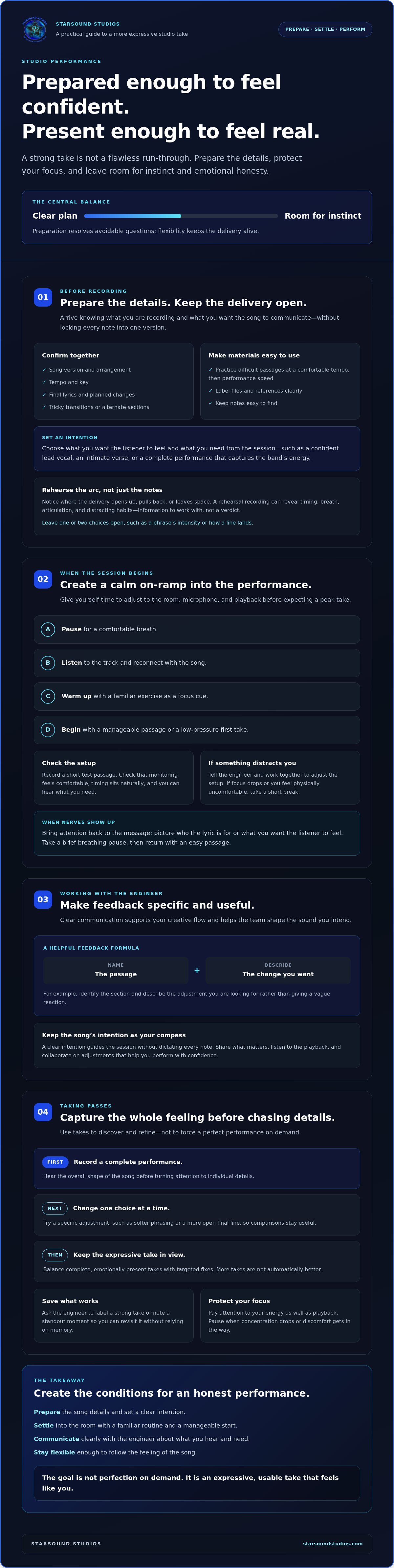
A strong studio performance isn’t a flawless run-through. It’s an expressive, usable delivery that carries the song’s intention and gives the production something real to build around. Preparation helps you reach that moment: you spend less time stopping to resolve avoidable questions and more time listening, responding, and shaping the take.
Before the session, decide what you want the song to make a listener feel and what you need to leave with. Is the priority a confident lead vocal, a more intimate verse, or a complete performance that captures the band’s energy? A clear intention gives you a compass without dictating every note. If you’re curious about the process of capturing and reproducing sound, this overview of the history and technology of sound recording offers useful context for the craft you’re stepping into.
What should you prepare before a studio session?
Confirm the song version, arrangement, tempo, key, lyrics, and planned changes with everyone involved. Mark tricky transitions or alternate sections so they don’t become surprises during a take. Practice difficult passages at a comfortable tempo first, then bring them up to performance speed. If the session calls for files or references, label them clearly and keep your notes easy to find.
This preparation isn’t paperwork for its own sake. It protects your creative focus. Knowing whether the bridge repeats or which lyric is final means you can stay inside the performance instead of pausing to settle details.
How can you rehearse without sounding over-rehearsed?
Practice the emotional arc as well as the notes and words. Notice where the delivery should open up, pull back, or leave space. A rehearsal recording can help you hear timing, breath, articulation, and habits that distract from the song. Treat it as a way to gather information, not a verdict on your voice or playing.
Leave one or two choices open, such as a phrase’s intensity or how a line lands. Rehearsal should make the material familiar, not lock you into a single take.
That balance is central to how to get the best performance in the studio: arrive prepared enough to feel secure, but flexible enough to discover something in the moment. Settle the arrangement and lyrics while leaving the delivery alive. The same preparation can help whether you’re working in a professional studio or recording independently.
Build a Relaxed, Consistent Performance Once the Session Begins
The first minutes in a studio can feel different from rehearsal. There’s a microphone, a playback mix, and the awareness that a take is being captured. Give yourself time to settle before asking for a peak performance. Try a simple sequence: pause for a comfortable breath, listen to the track, warm up with a familiar exercise, then begin with a manageable passage. Treat the warm-up as a focus cue, not a promise of a particular physical result.
Before committing to full takes, record a short test passage. Check that your monitoring feels comfortable, the timing sits naturally, and you can hear what you need to perform with confidence. If something is distracting, tell the engineer and work together to adjust the setup. For more vocalist-specific preparation ideas, SoundGirls offers practical guidance on how to prepare for a vocal recording session.
How do you manage nerves when recording?
Feeling self-conscious is common, especially when the recording light turns on. Bring your attention back to the song’s message: picture who the lyric is for, or what you want the listener to feel. Take a brief breathing pause, then sing or play an easy passage to reconnect with the material. You can also agree with the engineer on a low-pressure first take, such as a verse or a run-through meant simply to get comfortable.
How should you approach multiple takes?
Start by capturing a complete performance so you can hear the song’s overall shape before focusing on details. If you try another take, change one choice at a time, such as softer phrasing or a more open final line. That makes comparisons useful instead of turning each pass into a new set of unknowns.
Keep track of what’s working. Ask the engineer to label a strong take or note a standout moment, so you can revisit it without relying on memory. Pay attention to your energy as well as the playback. If concentration drops or you’re physically uncomfortable, take a short break before continuing. More takes aren’t automatically better; the aim is to protect the focus and feeling that make a performance convincing.
Learning how to get the best performance in the studio includes making the room feel workable, not forcing yourself through discomfort. If you’d like an experienced collaborator to help capture your performance, explore recording at Starsound Studios.
Communicate Clearly With the Engineer Without Losing Your Creative Flow
You know the feeling you want the song to create. The engineer can help translate that vision into a recording, but they can’t read your mind. Clear, specific communication gives the session a shared direction without taking ownership of the performance away from you. You bring the artistic intent; the engineer brings technical perspective and helps capture it.
Before recording, describe the song’s intention, share useful reference tracks, and flag arrangement concerns or performance sensitivities. Explain what matters most in the session: perhaps an intimate vocal that keeps the lyric close, or an energetic band take that feels cohesive and immediate. Agree on practical details, too, such as how you’ll use talkback, listen to playback, and choose takes. A few minutes of alignment can prevent avoidable stops once you’re focused on performing.
What should you tell an engineer before recording?
Lead with the outcome you’re aiming for, not a technical term you’re unsure about. You might say, “I want the verse to feel restrained, then open up on the chorus.” Mention which reference track captures the mood or energy you have in mind, and point out any sections that need special attention. If you’re unsure what a reference demonstrates, describe the specific quality you’re responding to, such as vocal closeness or a spacious arrangement.
How can you give useful feedback between takes?
Make feedback easy to act on: identify the passage, say what worked, then name one adjustment to try. For example, “The second verse felt conversational. Let’s keep that intimacy, but make the last line more urgent.” That gives the next take a clear purpose. By contrast, “Make it bigger” could mean more volume, energy, intensity, or a change in production. Test one direction at a time so you can hear what changes.
Specific feedback also helps protect creative momentum. If a take feels wrong, describe the experience rather than judging yourself: “I lost the connection to the lyric in the bridge” gives you and the engineer something useful to explore. For another perspective on shaping a vocal take, read Sound On Sound’s Capturing A Good Vocal Performance.
That kind of exchange is central to how to get the best performance in the studio. You don’t need to arrive with every technical answer. Bring a clear vision, stay curious about suggestions, and keep the final artistic choice in your hands. Once the recording is captured, the next stage has its own collaborative language. A related read on professional mixing and mastering services in Cleveland can help you understand how recorded material moves toward a finished release.
Use Smart Take Strategies to Keep the Performance Expressive
A take can be technically clean and still miss the point of the song. Before chasing a perfect note or syllable, listen for the full performance: Does the phrasing feel believable? Does the energy carry through the section? Can you hear a coherent emotional arc? Capturing that complete impression gives you a strong reference before you turn to isolated fixes.
A comp is an editorial choice, not an automatic replacement for a compelling full take. Combining the strongest lines from different passes can be useful, but each edit needs to feel natural in timing, tone, and intent. If every phrase is selected in isolation, the result can lose the continuity that made the original performance feel alive. Work with the engineer to decide whether a passage genuinely needs a pickup or whether the full take serves the song better.
When should you record another full take?
Go for another complete pass when the phrasing, energy, or emotional continuity needs a fresh interpretation. Give that pass a distinct intention, such as delivering the verse more intimately or leaning into the chorus with greater urgency. Repeating the same approach can yield the same result. Notice fatigue, too: if focus or delivery starts to decline, a break may be more useful than another take.
How can you preserve the strongest moments?
Mark standout phrases while they’re fresh. Note the section and take, along with what you want to retain, such as “second chorus, take three, keep the softer opening.” When considering an edit, listen to the moments around it as well as the phrase itself. A transition should preserve the musical flow, not simply join two technically strong fragments.
Use a brief session note to track your preferred full take, useful alternate moments, and any passage that still needs attention. Then review your choices with the engineer before moving into edits. For a broader sense of what to consider when choosing a recording environment, consult a guide to recording studios in Cleveland.
Thoughtful take choices are a practical part of how to get the best performance in the studio: protect the feeling first, then refine details that support it. If you’re ready to capture a performance with a collaborative studio team, explore recording at Starsound Studios.
Turn Your Preparation Into a Stronger Studio Session
Preparation pays off when it helps you stay connected to the performance, not when it becomes another standard to meet. Keep a simple recording-day checklist. Confirm the song version, session priorities, required files, and arrival plan. Once recording begins, stay ready to communicate, listen to playback, and consider adjustments while holding onto the artistic intention that brought you to the song.
Protect your energy, too. Speak up if you’re uncomfortable, losing focus, or unsure about the direction of a take. A short pause or quick conversation can help you return with more attention. Collaboration works best when you and the engineer can respond openly as the session unfolds.
What is a simple checklist for recording day?
Use these reminders to keep practical details from crowding out the creative work:
- Material: Confirm lyrics, arrangement, tempo, key, and the version you’re recording.
- Priorities: Know what you most want to capture, such as an intimate vocal or an energetic band performance.
- Files and arrival: Gather any requested files and notes, label them clearly, and confirm your plan for getting to the session.
- During the session: Listen to playback with an open mind, communicate what you need, and take breaks when comfort or concentration starts to slip.
Afterward, note what helped you feel present and which adjustments made a difference. Perhaps listening to a test passage eased you in, or a particular playback setup helped you focus. Record those lessons while they’re fresh. The next session will feel more familiar, and you’ll have a clearer sense of what supports your best work.
How do you choose the right studio support?
Start with your project goals and the kind of collaboration you want. If you need a dedicated place and an engineer to work with while recording, an in-person studio session may suit you. If your tracks are already recorded, remote mixing or mastering could be a better fit, depending on the project. Choose support that matches the work you need done.
For artists in Greater Cleveland, Starsound Studios is a professional recording facility in North Royalton, Ohio, offering recording, mixing, and mastering. Learning how to get the best performance in the studio is ultimately about creating the right conditions for your own expression. If an experienced, collaborative setting would help with your next project, explore recording at Starsound Studios.
Bring Your Best Performance Into the Room
The strongest studio takes grow from preparation that supports expression, not perfection. Know the material and the feeling you want to convey, then arrive ready to adapt. During the session, clear communication with your engineer and thoughtful take choices can help preserve the energy and continuity that make a performance feel true.
That’s the heart of how to get the best performance in the studio: create enough structure to feel confident, and leave space for discovery. A focused, collaborative environment can help you stay connected to the music while experienced support handles the recording process.
Starsound Studios is a professional recording facility in North Royalton, Ohio, serving the Greater Cleveland area. Its offerings include recording, stereo mixing, mastering, and audio engineering education.
Trust the preparation you’ve done, stay open to the moment, and let your performance carry the song’s meaning.
Frequently Asked Questions
How do I stop being nervous when recording in a studio?
Start with a familiar warm-up and let the engineer know what helps you feel comfortable. Ask to begin with an easy section or a low-pressure test take, then focus on the song’s message instead of judging every detail as you perform. If nerves build, pause, take a comfortable breath, and reset your attention. Learning how to get the best performance in the studio doesn’t mean delivering a perfect take immediately. Give yourself room to settle in.
How many takes should I record in the studio?
There’s no ideal number of takes for every performer or song. Record enough to capture a convincing complete performance and explore meaningful alternatives, such as a softer verse or a more energized chorus. Then listen back with a clear goal for what another pass might improve. More takes aren’t automatically better: fatigue can affect your delivery. Ask the engineer to help identify when you have a strong full take and whether a specific section needs another pass.
Should I memorize my lyrics before recording?
Knowing your lyrics well can help you stay present and communicate the song’s meaning, but you don’t have to rely on memory alone. A lyric sheet or notes can be useful if you can refer to them without interrupting your delivery. Rehearse enough to feel comfortable with phrasing and transitions, then decide what best supports a relaxed performance. Tell the engineer what you plan to use so you can keep your attention on the song.
What should I bring to a recording studio session?
Bring the materials your project needs, such as confirmed lyrics, arrangements, reference recordings, and any files agreed on with the studio. Check ahead about file formats, instruments, and other practical requirements rather than assuming every setup is the same. Water and session notes may also be useful. Label files clearly, and confirm that you and the engineer are working from the intended song version. A little organization helps keep your attention on the performance.
How do I communicate what I want to the recording engineer?
Describe the feeling or result you want, then point to the specific section where it matters. You might say, “The verse feels right, but I’d like the final line to sound more urgent.” References can help, but explain which quality you’re responding to rather than asking for an exact copy. Offer one clear direction at a time, listen to playback, and discuss what changed. This keeps the exchange collaborative and gives the engineer useful guidance.
Can I get a good studio performance if I have never recorded before?
Yes. Practice your material, clarify what you want from the session, and share any concerns with the engineer before recording. Your first studio session may feel unfamiliar, so allow yourself time to learn how playback and communication work. Focus on delivering the song rather than mastering every studio routine at once. Asking questions and giving clear feedback can make the experience easier to navigate, even if you’re still discovering how you like to work.
Is a professional recording studio necessary for a strong performance?
No. The right setting depends on your goals, experience, and recording needs. A familiar home setup may suit some projects, while a professional studio can offer a dedicated environment and experienced support. Consider what’s limiting your current process, such as room conditions, monitoring, technical workflow, or feedback. For Cleveland-area artists, Starsound Studios is a professional recording facility in North Royalton, Ohio, offering recording alongside mixing and mastering services.
For your next recording project in the Cleveland area, contact Starsound Studios to explore a studio session.


