

Could a lower hourly rate end up costing more if the session takes longer or leaves mixing and mastering for later? It’s a smart question when comparing recording studio rates Cleveland artists encounter. The hourly figure alone doesn’t tell you what’s included or how close the project gets to a finished release.
It’s easy to be unsure whether a quote covers studio time, an engineer, or both, and how many hours your songs will need. A useful comparison starts with the outcome: focused recording time, a polished mix, a master, or a complete path from performance to finished track. At Starsound Studios in North Royalton, hourly recording includes an on-site engineer and professional recording equipment. Stereo mixing and mastering use per-song pricing.
This guide explains what shapes studio rates, how hourly tracking differs from per-song production, and how preparation can help you plan a realistic project. You’ll also learn when remote mixing and mastering suit artists with recorded tracks, and when Dolby Atmos mixing offers a distinct creative direction. The goal is a clear plan for your sound, not a misleading comparison of unlike services.
Key Takeaways
- Compare recording studio rates Cleveland by the work and deliverable included, not by the hourly figure alone.
- Plan session time around your project’s scope, preparation, performers, and tracking needs.
- Separate studio tracking from mixing and mastering so you can plan each production stage clearly.
- Organize tracks, references, and priorities before recording to keep studio time focused.
- Choose an in-studio or remote path that fits your material and the sound you’re aiming to create.
Recording Studio Rates in Cleveland: What Does the Hourly Rate Usually Cover?
An hourly recording rate covers time spent tracking in a studio. Tracking means capturing performances, such as vocals or instruments, through microphones and recording equipment. It gives an artist a dedicated space and technical support to record. On its own, it doesn’t include a fully produced, mixed, and mastered release. That distinction matters when comparing recording studio rates Cleveland artists may encounter.
A recording environment includes more than a room. The Recording Studio overview describes the spaces and components involved in audio capture. The practical value of a session also depends on how those resources support your performance. At Starsound Studios, hourly recording includes studio time, professional microphones and preamps, and an on-site engineer.
What is included in hourly recording studio time?
The room provides a dedicated setting for capturing a performance. Microphones and preamps shape the signal path, while the engineer supports the recording process. Together, these elements let you focus on the take rather than managing the technical setup. The session is for recording vocals or instruments, not automatically completing every later production stage.
Editing, mixing, and mastering are distinct tasks. Don’t assume they’re included simply because a booking is described as recording time. A session rate is meaningful only when you know which services it covers and what deliverable it produces.
Hourly recording versus per-song production pricing
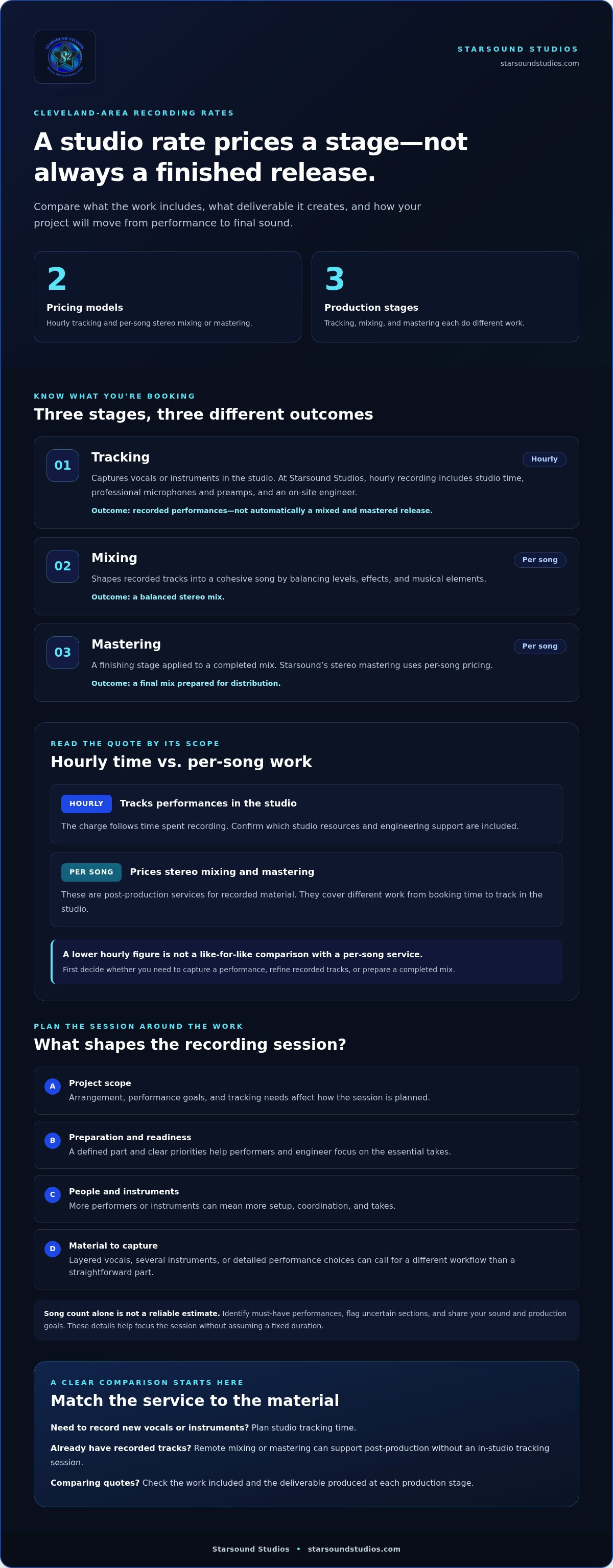
Hourly billing follows the time spent tracking. Starsound’s stereo mixing and mastering, by contrast, use flat-rate per-song pricing. These models cover different work: tracking captures performances, mixing shapes recorded elements into a cohesive song, and mastering prepares the final mix for distribution. Knowing which stage you need makes a quote easier to interpret.
For example, a vocalist might book studio time to record lead vocals and doubles with an engineer. The recordings can then move to mixing, where levels, effects, and musical elements are balanced into a finished stereo song. If you already have recorded tracks, remote mixing or mastering lets you work on post-production without an in-studio tracking session. For more detail on those stages, see the professional mixing and mastering guide.
Before comparing quotes, define the outcome you’re budgeting for. Are you capturing a new performance, refining existing tracks, or preparing a completed mix? Map each task to the right production stage. This prevents a low hourly figure from seeming directly comparable to a per-song service that covers different work.
- Tracking: Time in the studio to record vocals or instruments, with engineering support and equipment clearly understood.
- Mixing: Work on recorded tracks to shape their balance and sound as a complete song.
- Mastering: A finishing stage applied to a completed mix.
When the scope is clear, you can plan studio time around the performance and keep post-production decisions separate. That makes the rate easier to assess and gives your music a deliberate path from the first take to its intended final sound.
What Factors Shape Recording Studio Rates Around Cleveland?
A studio quote reflects more than the length of a song. Project scope, performer preparation, the number of people recording, and the material you need to capture all affect how session time is planned. A focused solo vocal may call for a different setup and workflow than a group tracking several instruments. Understanding those variables makes recording studio rates Cleveland artists compare more meaningful.
Project scope and session readiness influence the time a recording requires. They’re a useful starting point for estimating studio time, but no single measure, including song count, can predict the full scope. Arrangements, performance goals, and tracking needs matter too.
How project scope affects the time you need
A prepared vocalist recording a defined lead part has a different session plan from multiple performers capturing interdependent parts. More people or instruments can mean more setup, coordination, and takes. Before booking, identify the essential performances, flag uncertain sections, and share your sound and production goals so the session can focus on what matters most.
Song count alone isn’t a reliable estimate. One arrangement may be straightforward to capture; another may involve layered vocals, several instruments, or detailed performance choices. Prioritize must-have takes, then use remaining time for alternate ideas if the session allows. Preparation gives the engineer and performers a shared target without promising a fixed duration or saving.
How the studio, engineer, and equipment contribute value
A professional facility provides a dedicated recording environment, while an engineer manages the signal path and session workflow. Selecting and positioning microphones, working with preamps, and keeping takes organized are practical parts of capturing a performance. At Starsound Studios, recording includes professional microphones, preamps, and an on-site engineer, bringing technical support into the room while you focus on the music.
Equipment and engineering are part of the recording experience, but they’re distinct from later production stages such as mixing and mastering. The National Association of Music Merchants (NAMM) covers the music products industry, including recording technology, providing context for the tools studios use. When comparing facilities around Cleveland, focus on how the recording setup and included engineering fit the work you need to do.
To prepare a realistic session plan, write down:
- Who’s recording: List the performers and instruments involved.
- What’s ready: Note which parts are rehearsed and which still need decisions.
- What matters most: Identify essential takes and the sound you’re aiming for.
- What comes next: Separate studio tracking from later mixing or mastering work.
This outline makes it easier to discuss the project’s scope and use booked time intentionally, without assuming every production stage belongs in the same session. Artists planning to record at Starsound can explore Starsound recording details while shaping a session around their music.
How to Compare Cleveland Studio Rates Without Choosing on Price Alone
A useful comparison starts with the task, not the headline rate. An hourly tracking quote and a per-song mixing fee measure different kinds of work, so their numbers can’t be compared as if they buy the same result. When weighing recording studio rates Cleveland artists encounter, look at the scope, engineering, deliverable, and whether the work happens in the studio or remotely.
Which pricing model fits your project: hourly or per song?
Choose hourly tracking when your immediate goal is to record vocals or instruments at a facility. Per-song pricing is suited to post-production on recorded material: mixing shapes the balance and character of the tracks, while mastering is a separate finishing stage. Depending on what’s already complete and what you want to achieve, a project may need tracking, mixing, mastering, or a combination.
Mastering isn’t simply another name for mixing. It works from a completed mix, so comparing its scope with an hourly recording session would be misleading. For a closer explanation of that finishing stage, see the professional audio mastering guide.
| Work type | Scope | Engineering and deliverable | Where it happens |
|---|---|---|---|
| Hourly tracking | Capturing vocal or instrumental performances during booked studio time. | At Starsound, includes an on-site engineer and professional recording equipment. The result is recorded material, not automatically a finished release. | In the studio. |
| Per-song mixing | Balancing and shaping recorded tracks into a cohesive song. | Flat-rate per-song post-production; the deliverable is a mix. | Studio or remote mixing, depending on the project path. |
| Per-song mastering | Finishing a completed mix as a distinct production stage. | Flat-rate per-song post-production; the deliverable is a mastered song. | Remote mastering is available. |
| Remote post-production | Mixing or mastering tracks an artist has already recorded. | Post-production focused on the chosen stage and intended result, rather than studio tracking time. | Remote collaboration. |
A simple checklist for comparing studio quotes
Before deciding, write down the same project brief for each option. That way, you’re comparing equivalent work rather than a partial session against a more complete production stage.
- Task: Is the work tracking, mixing, mastering, or a defined combination?
- Engineering: What engineer support is included, and at which stage?
- Scope: What material and session goals does the quote cover?
- Deliverable: What will you receive, a recording, a mix, or a master?
- Assumptions: Keep editing, production, and other extra tasks separate unless they’re expressly part of the scope.
A lower hourly figure may cover a different setup or fewer services, so it isn’t automatically better value. Match the quote to your actual goal first. Then compare what each path contributes to the sound you want to release.
How to Plan Your Recording Session and Keep the Project on Track
A focused session starts before you enter the studio. A clear plan helps you use booked time intentionally, reduce avoidable pauses, and give performers and engineer a shared creative direction. It can’t predict exactly how long recording will take, because performances and artistic decisions unfold in their own time. Preparation does make it easier to spend the session on work that needs a studio.
Prepare music and session materials before arrival
Gather lyrics, demos, instrument parts, tempos, and reference tracks in one organized place. Mark which songs or sections need the most attention, and make sure performers know their arrangements. If a section is still changing, flag it rather than expecting to resolve every musical decision during the session. Clear preparation helps prevent delays caused by searching for files, recalling parts, or debating basic arrangement choices.
Before the session, handle what you can independently: rehearse, settle the song structure, label materials, and choose references that communicate the sound you’re after. Reserve studio time for tasks that need the room’s equipment or an engineer’s support.
- Define the outcome. Decide whether the session is for lead vocals, instrumental tracking, overdubs, or another specific recording goal.
- Organize the materials. Bring current demos, lyrics, parts, tempo information, and reference tracks, clearly labeled and easy to access.
- Prioritize the work. Identify essential songs, parts, and takes so the session can begin with the highest-value tasks.
- Flag open decisions. Note unresolved arrangement or performance questions, then decide which ones need attention in the studio.
Set goals for a productive studio session
Once your materials are ready, shape a realistic priority list. Tell the engineer what you’re recording, what matters most about the performance, and which references capture the intended feel. A reference can point to vocal presence, energy, or overall mood. Use it to communicate creative direction, not as a demand to reproduce another recording exactly.
Leave breathing room. A rigid minute-by-minute plan can make artists rush through takes or miss a useful creative choice. Instead, set a primary goal and a secondary one, then adjust as the performance develops. This balance between focus and flexibility supports productive booked time without promising a fixed duration or result.
- Before the session: Rehearse, finalize arrangements where possible, and organize the materials you’ll use.
- In the studio: Capture performances, work through essential takes, and make decisions that benefit from listening and engineering support.
Thoughtful preparation gives the music room to breathe while keeping the session anchored to your priorities. For a focused recording environment and engineer-supported session, explore recording at Starsound Studios.
Recording at Starsound Studios: Choose the Right Cleveland-Area Path
For artists seeking a Greater Cleveland recording facility, Starsound Studios in North Royalton offers in-studio recording and separate options for shaping tracks after recording. Choosing the right path starts with one question: what does your project need next? New performances call for recording time; existing tracks may be ready for mixing or mastering. Keeping those stages distinct helps you match the work to your goals and understand what you’re budgeting for.
This matters when weighing recording studio rates Cleveland artists encounter. A studio session and a per-song post-production service aren’t interchangeable: they address different stages of making a record. You can plan for tracking first and consider finishing work separately, or focus on post-production if your recordings are already prepared.
When an in-studio recording session makes sense
Choose facility-based tracking when you want to capture vocals or instruments in a professional recording space. Starsound’s hourly recording includes studio time, professional microphones and preamps, and an on-site engineer. That support lets you focus on the performance while an engineer manages the recording setup and session workflow. It’s a practical fit when you need to create new recorded material rather than refine tracks you already have.
Before settling on a session, identify what you want to capture and which performances matter most. A lead vocal, instrumental part, or set of overdubs each gives the session a different focus. Clear goals help you arrive ready to make creative decisions in the room. They don’t dictate exactly how long the work will take, but they give the session a purposeful starting point.
When to consider mixing, mastering, or immersive audio
Once your tracks are recorded, stereo mixing and mastering can move the project toward a finished release. Mixing shapes the relationship among recorded elements; mastering is a separate finishing stage applied to the mix. At Starsound, stereo mixing and mastering are priced per song, rather than as automatic additions to an hourly recording session. Artists with existing tracks can also choose remote mixing or mastering, making post-production a distinct path from in-studio tracking.
Dolby Atmos mixing is another creative direction for projects suited to immersive audio. It isn’t a default requirement for recording or every release. Starsound is Ohio’s first and only Dolby-certified Atmos mixing studio, offering 9.1.4 immersive audio mixing for projects where that presentation fits the artistic intent.
Use this simple guide to identify your next step:
- Need new performances captured? Start with in-studio recording.
- Have recorded tracks ready to shape? Consider stereo mixing, including remote mixing.
- Have a completed mix to finish? Consider mastering, including remote mastering.
- Want an immersive presentation? Explore Dolby Atmos mixing as its own production path.
Once you know which stage your music needs, you can make a grounded plan around the work itself, not just a rate format. Explore Starsound’s recording and audio services to find the Cleveland-area path that fits your project.
Give Your Next Recording Project a Clear Direction
Your budget can do more than set a limit. Treat it as a creative framework: decide what you want listeners to feel, then identify the choices that will bring that intention forward. A focused artistic brief gives production decisions a center of gravity, from the energy of a vocal to the space and texture of an arrangement. Weighing recording studio rates Cleveland artists encounter can then support creative planning, not just bill management.
Before taking the next step, write a one-sentence vision for the track or release. Add the single element you most want to get right. This can help keep conversations clear and ensure the process serves the music rather than pulling it in too many directions.
When you’re ready to put that vision into motion, explore recording and audio services at Starsound Studios. Your sound has room to grow, and a thoughtful plan is a strong place to begin.
Frequently Asked Questions
How much do recording studio rates in Cleveland cost?
There isn’t one total that fits every Cleveland recording project. Cost depends on whether you need studio tracking, post-production, or both, as well as session time and project scope. Starsound’s recording is billed hourly, while stereo mixing and mastering use per-song pricing. To plan a budget, identify the stage your music needs, then estimate the work involved rather than treating different service types as directly comparable.
Is an engineer included in recording studio time?
At Starsound Studios, hourly recording includes an on-site engineer, professional microphones, and preamps. Engineering support is part of the recording session, not an unrelated add-on to the room. The engineer helps manage the technical capture while you focus on performing. Recording support and later production work are different tasks, so an engineer included during tracking doesn’t automatically mean mixing or mastering is part of that session.
Can I book studio time just to record vocals?
Yes. A vocal-only session can focus on lead vocals, backing parts, doubles, or ad-libs, depending on what your song needs. Before recording, gather the final instrumental or demo, lyrics, and any notes about phrasing or vocal tone. If you’re recording over a track, have the version you plan to use ready so the session can focus on capturing performances rather than sorting through alternate files.
Is hourly studio recording cheaper than a per-song rate?
Not necessarily, because the two models cover different production stages. Hourly recording pays for time spent capturing performances; per-song pricing applies to post-production such as mixing or mastering. A short tracking session may not deliver a finished song, while a per-song service works on recorded material. Compare the scope and intended result first, then consider which combination of stages your project needs.
How can I estimate how much studio time my band needs?
Start with the arrangement and the number of performances you plan to capture, not just the number of songs. List each instrument, vocalist, and any overdubs, then mark which parts are rehearsed and which may need exploration. For example, a band recording a live ensemble take has different coordination needs from one adding parts individually. Treat your estimate as a planning guide, not a guaranteed session duration.
Can I use a Cleveland studio for remote mixing or mastering?
Yes. Starsound Studios provides remote mixing and remote mastering for artists who have already recorded their tracks, including clients beyond the Greater Cleveland area. This can suit you if you’re working from a home setup or have recordings from an earlier session. Remote post-production focuses on the material for the chosen stage, so it doesn’t require booking studio tracking time for new performances.
What should I compare besides the hourly recording rate?
Compare the specific task, included engineering, project scope, and expected deliverable. Consider whether you’ll receive recorded takes, a stereo mix, or a mastered track, and whether the work happens in-studio or remotely. Also distinguish confirmed inclusions from assumptions about editing or other production work. A written project brief helps keep comparisons focused on equivalent work and the result you want.


