

What if the right recording engineer doesn’t reshape your sound, but helps you hear its full potential? A recording engineer Cleveland musicians choose should bring more than technical skill: they should listen closely, understand the feeling you’re after, and make each production decision serve the song. The goal isn’t to sand away what makes your music yours. It’s to capture it with clarity and intention.
It’s normal to wonder whether your project needs recording, mixing, mastering, or a combination of these. A studio session can also feel unfamiliar if you don’t know how the process works or how much creative control you’ll have. A clear plan helps the engineer make technical choices that support your ideas while leaving room for the performance to develop.
At Starsound Studios in North Royalton, lead engineer Steve “The Mix” works with artists from across Greater Cleveland and beyond. This guide explains what an engineer contributes, how recording and post-production fit together, and what to expect in a professional session. You’ll also learn how to assess a collaborative fit, whether you’re recording in person or working remotely on mixing and mastering. Start with your vision, then choose the production steps that support it.
Key Takeaways
- A recording engineer Cleveland artists work with should make technical choices that support the song’s intent and preserve what makes the performance distinct.
- Identify your project’s stage to decide whether recording, stereo mixing, mastering, or immersive mixing best fits your next step.
- Assess an engineer’s fit by discussing your intended sound, communication preferences, and whether you need in-person or remote collaboration.
- Prepare by defining your goals, priorities, and musical references, while leaving room for creativity in the session.
- Starsound Studios provides recording and post-production services for projects from performance capture through final mix.
What a Recording Engineer in Cleveland Actually Does for Your Music
A recording engineer captures and shapes sound in service of the artist’s intent. That means turning a creative direction into practical decisions about microphone placement, input levels, monitoring, and session organization. The aim is to record the song’s clarity, energy, and character without pulling it away from what you meant to make.
A recording engineer turns an artist’s sonic intent into a clear, usable recording.
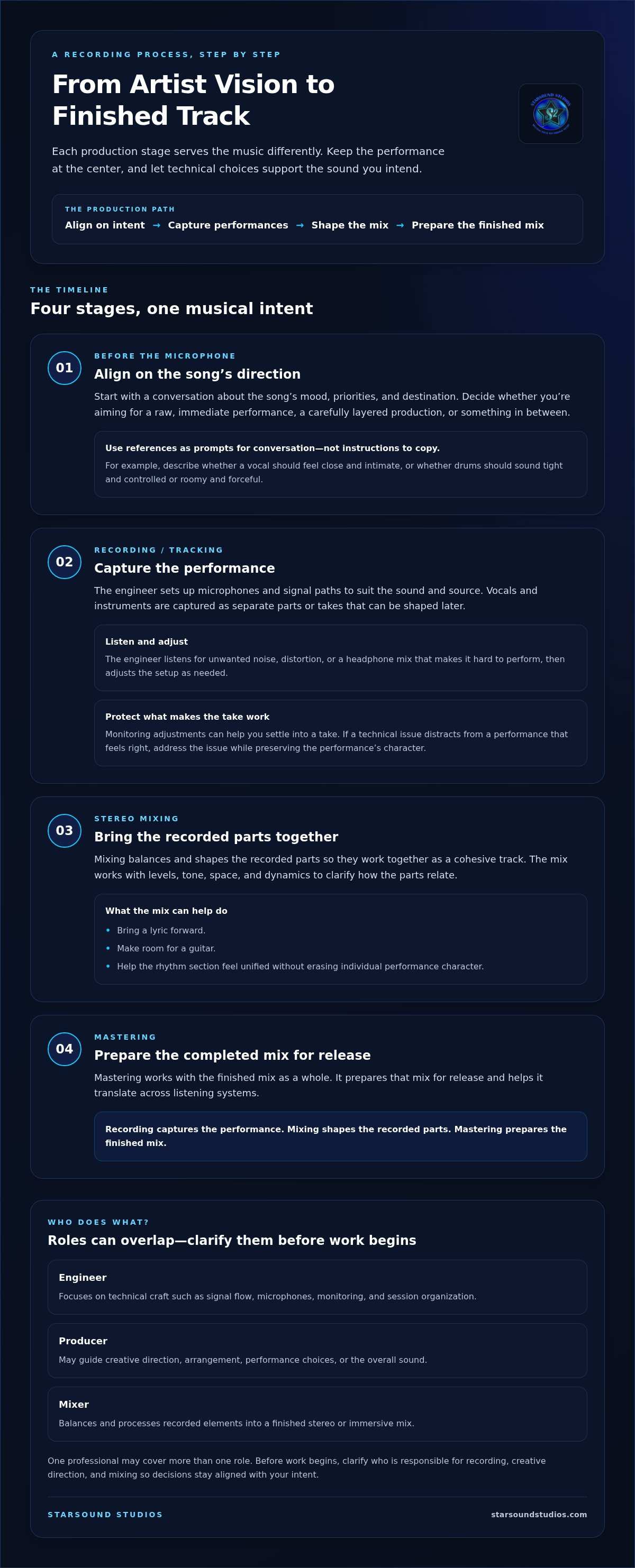
Recording, mixing, and mastering are different stages of a project. Recording captures performances and instruments. Mixing balances and shapes the recorded parts so they work together as a cohesive track. Mastering prepares a finished mix for release and helps it translate across listening systems. Knowing the difference makes it easier to identify the support your project needs now.
Recording engineer, producer, and mixer: where the roles differ
An engineer focuses on the technical craft of capturing and shaping sound, including signal flow, microphones, monitoring, and session organization. A producer may guide creative direction, arrangement, performance choices, or the overall sound. A mixer concentrates on balancing and processing recorded elements into a finished stereo or immersive mix. The Audio engineer overview describes how engineering combines technical responsibilities with decisions that affect how music is heard.
These roles can overlap. One professional might engineer a session, offer production input, and later mix the tracks. Another project might involve a different person at each stage. Before work begins, clarify who is responsible for recording, creative direction, and mixing. That makes it easier to keep decisions aligned with your intent.
How engineering choices shape the recording
Good engineering isn’t about adding complexity for its own sake. Microphone position can help a vocal feel intimate or open. A well-organized session and useful headphone mix can help musicians hear one another and deliver connected performances. Careful input levels can help preserve detail without distracting distortion. The engineer listens, adjusts the setup, and communicates so the technical work supports the performance instead of interrupting it.
Later, mixing can clarify the relationship between instruments, vocals, and space. Mastering works with the completed mix as a whole. Each stage serves the music differently: the performance carries the emotion, while engineering helps it reach the listener with intention.
Why Cleveland artists may choose a local studio engineer
Working face-to-face can make it easier to discuss references, respond to a take, and explain subtle preferences in real time. A studio session also lets the engineer hear the performance directly and adjust the setup as the music develops. Starsound Studios is based in North Royalton and serves artists across Greater Cleveland with recording and post-production in a dedicated local setting.
For a broader look at the profession and its place in the local music community, explore this Cleveland sound engineer craft and career guide. It offers additional context for understanding the skills behind a strong studio collaboration.
How Recording Engineering Turns an Artist's Vision into a Finished Track
A finished track begins with a conversation, not a microphone. You and the engineer can align on the song’s mood, priorities, and destination: a raw, immediate performance, a carefully layered production, or something in between. For an artist working with a recording engineer Cleveland musicians can collaborate with, agreeing on a direction gives technical decisions a purpose from the start.
An engineer connects performance capture with sound quality by translating the artist’s intent into thoughtful choices throughout the recording process. Each stage builds on the one before it, with the performance at the center.
Before and during a recording session
Before recording, identify what matters most in the song. Is the vocal meant to feel close and intimate? Should the drums sound tight and controlled, or roomy and forceful? References can help explain your preferences, but they’re prompts for conversation, not instructions to copy.
During tracking, the engineer sets up microphones and signal paths to suit the source and desired sound. The engineer listens for issues such as unwanted noise, distortion, or a headphone mix that makes it hard to perform, then adjusts the setup as needed. Those changes support the performance; they don’t replace your choices or expression.
Good sessions leave room for creative focus. If you can’t hear an important part clearly, a monitoring adjustment may help you settle into the take. If a technical problem distracts from a performance that feels right, the engineer can address the problem while preserving what made the take work.
From recorded tracks to a release-ready mix
Tracking captures vocals and instruments as separate parts or takes that can be shaped later. Stereo mixing works with those recordings, balancing levels, tone, space, and dynamics so the parts form a cohesive song. A mix can bring a lyric forward, make room for a guitar, or help the rhythm section feel unified without erasing the character of individual performances.
Mastering follows the mix. It focuses on the finished stereo track as a whole, refining its overall presentation and preparing it for release. Mixing shapes the relationships inside the song; mastering considers how the completed mix holds together as a listening experience. Both stages should serve the original intent and help the track feel resolved across listening environments.
The handoff between stages matters. Clear priorities help the engineer make connected decisions rather than treating tracking, mixing, and mastering as isolated tasks. For a closer look at the post-production stages, the professional mixing and mastering services guide explores how they contribute to a finished sound.
If you’re ready to map out the right process for your music, explore recording and audio services at Starsound Studios.
How to Assess a Recording Engineer's Fit for Your Cleveland Music Project
The right fit depends on more than a polished sample. Your project stage, intended sound, communication preferences, and need for in-person or remote collaboration all matter. Technical decisions should support your vision, not impose a generic sound. Describe what you want listeners to feel, then listen for how the engineer explains the choices that could help achieve it.
Start by identifying what your music needs now. This comparison can help clarify the conversation:
| Project need | Best-fit work | Useful starting point |
|---|---|---|
| New performances to capture | Recording or tracking in a studio | Discuss instruments, performance goals, and session priorities |
| Recorded tracks that need shaping | Stereo mixing | Share the session files and describe the balance and feel you want |
| A completed mix that needs final preparation | Mastering | Clarify where and how you plan to release the music |
| An immersive listening presentation | Dolby Atmos mixing | Consider whether a spatial mix suits the project |
Match the engineer's work to the stage your song needs
Recording is the focus when performances still need to be captured. If you already have recorded tracks, stereo mixing may be the next step; mastering works with a completed mix. Dolby Atmos mixing is a distinct immersive post-production option, not a requirement for every release. A recording engineer Cleveland artists choose should help keep the scope focused on what the song needs, rather than treating every service or format as essential.
Listen for communication as well as technical confidence. Can the engineer discuss your references without treating them as instructions to copy? Do they make room for your preferences and explain trade-offs clearly? These conversations can show whether the collaboration will protect the song’s character while addressing practical audio challenges.
Local sessions and remote post-production
Recording at Starsound Studios in North Royalton gives Greater Cleveland artists an in-person setting for capturing performances and communicating in the room. Remote mixing and mastering suit projects with recorded tracks ready for post-production, letting artists work with the studio without traveling to the facility. The format depends on whether you need to record together in a studio or collaborate on existing audio files.
Consider both the work and how you prefer to make decisions. A vocal session may benefit from being in the room, while a mix can be developed remotely through shared files and feedback. The Cleveland recording studios artist guide offers broader context for weighing studio needs. To explore how Starsound supports music projects across Greater Cleveland, identify which stage your song is ready for and begin there.
How to Prepare for a Recording Session with a Cleveland Engineer
A focused session starts with a shared sense of direction, not a rigid plan for every take. Before meeting a recording engineer, Cleveland artists can make the most of studio time by identifying what they hope to accomplish and which parts of the music matter most. Preparation helps reduce time spent sorting out avoidable details, leaving more attention for the performance.
Use this simple sequence to get ready:
- Define the goal. Note whether you’re recording a full song, vocals, instrumental parts, or specific sections, and what you hope the session will move forward.
- Set priorities. Choose the performances or moments you most want to focus on, while staying open to discoveries in the room.
- Gather references. Pick a few tracks and describe what you respond to, such as vocal presence, drum energy, or overall atmosphere. A reference communicates direction; it doesn’t require a copy.
- Organize useful materials. Bring current lyrics, arrangement notes, and clearly named files or demos when they’re relevant to the session.
Set the session's creative priorities
Think beyond a genre label. “Make it more energetic” could mean a stronger vocal delivery, a tighter rhythm, or a different sense of space. Naming the feeling you want helps the engineer understand what to listen for and where to focus. If you’re working on several songs, identify which ones matter most for the session and flag sections that need special attention. A plan can guide the work without limiting experimentation.
References are most useful when paired with a short explanation. You might point to the warmth of a vocal, the way a chorus opens up, or the intimacy of a quieter passage. That detail gives the engineer a clearer creative target than a track title alone. Your own song remains the source material and point of view.
Make collaboration easier before the session
Share the intended outcome and practical session needs ahead of time. Mention who will perform, which instruments or equipment you expect to use, and whether you have an arrangement or demo to reference. Bring the instrument-specific essentials you rely on, along with prepared lyrics or charts if they’ll help you stay focused. These details give the session context while leaving creative choices flexible.
Keep digital materials straightforward. Use clear file names and gather relevant versions together so it’s easy to distinguish a current demo from an older draft. You don’t need to solve technical questions on your own; explain what you have and what you’re trying to accomplish. The engineer can then make session decisions in response to your music and priorities.
A little preparation goes a long way, but the session shouldn’t feel like a test. Bring your ideas, references, and willingness to explore. Plan your recording session with Starsound Studios and bring your next musical idea into a focused creative space.
Work with Starsound Studios for Recording Engineering in Cleveland
Your song’s next step might be capturing a new performance, shaping recorded tracks, or preparing a finished mix. Starsound Studios is a professional recording facility in North Royalton serving artists across Greater Cleveland, with recording and post-production services for different stages of a music project. If you’re searching for a recording engineer Cleveland artists can collaborate with, start by identifying what your music needs now and how you want the process to feel.
Starsound offers recording, stereo mixing, mastering, and Dolby Atmos mixing. These services aren’t a required sequence for every artist. You might come in to track performances, bring existing tracks for a stereo mix, or seek mastering for a completed mix. Dolby Atmos mixing offers a separate immersive format for projects suited to spatial audio. The aim is to match the work to the music and your goals.
A collaborative studio for artists and producers
Owned and operated by lead engineer Steve 'The Mix', Starsound treats engineering as a creative partnership. The artist’s intent leads, and technical decisions support it. The studio has operated since 2014, working with Greater Cleveland musicians and remote clients. Bring a clear direction or an idea still taking shape, and let the project’s needs guide the conversation.
For immersive projects, Starsound offers Dolby Atmos mixing in a 9.1.4 configuration and is Ohio’s first and only Dolby-certified Atmos mixing studio. It’s a distinct capability, not a format every song needs. The right choice depends on the listening experience you’re pursuing and how you want the music to reach its audience.
Choose a natural next step for your project
If performances still need to be captured, recording at the North Royalton facility is a practical starting point. If your tracks are already recorded, stereo mixing can bring their elements together; mastering focuses on the completed mix. Artists who aren’t recording locally can also work with Starsound through remote mixing or mastering. Begin with the project stage you’re at instead of trying to plan every production decision at once.
Bring your priorities into the conversation: the sound you’re after, what’s already complete, and what you hope to accomplish next. That gives the collaboration a clear creative compass while leaving room for the music to evolve. Whether you’re preparing for a studio recording session or have tracks ready for post-production, Starsound’s services meet the project where it is.
Explore recording and audio production at Starsound Studios and take the next step toward bringing your music to life.
Give Your Next Track a Clear Creative Direction
The next step doesn’t have to be a fully mapped production plan. Start with one clear thought: what do you want someone to feel when they hear your music? That intention can guide a productive first conversation and help shape decisions as the project develops. For artists searching “recording engineer Cleveland,” the most valuable creative partner is one who treats that vision as a compass, bringing technical judgment to the work without taking its identity away from you.
Before moving forward, name what’s ready and what still needs attention. Maybe you’re eager to capture a performance, or perhaps you have recorded tracks ready for a new perspective. You don’t need every answer yet. A clear starting point is enough to build momentum.
Bring your idea, your questions, and the sound you’re reaching for. Explore recording and audio production at Starsound Studios and start shaping a process around your music. Your vision leads; the next step brings it closer to listeners.
Frequently Asked Questions
What is the difference between a recording engineer and a music producer?
A recording engineer focuses on capturing and refining audio, while a music producer typically guides broader creative decisions. For example, an engineer may adjust a vocal microphone to reduce room sound, while a producer may suggest changing the arrangement or trying a different vocal delivery. The roles can overlap, especially on independent projects, so it helps to clarify who’s making technical decisions and who’s shaping the creative direction.
Do independent artists need a professional recording engineer?
No. Independent artists can record and release music without hiring an engineer. Professional support can be valuable if you’re dealing with noisy recordings, inconsistent vocal levels, or mixes that don’t translate well between headphones and speakers. An engineer can also help you focus on performing while they handle the technical setup. The right choice depends on your goals, available tools, and which parts of production you want to manage yourself.
Can a recording engineer help improve a home-recorded song?
Yes. An engineer can work with home-recorded tracks through mixing or mastering, depending on what the song needs. A stereo mix can balance vocal and instrumental levels, while mastering works with the completed mix. Organized, separate track files usually give the engineer more flexibility than a single stereo file. Remote mixing and mastering let artists work with a recording engineer Cleveland musicians can access without tracking at the studio.
How much does a recording engineer cost in Cleveland?
The cost depends on the work involved, such as recording time, the number of songs, and whether the project needs mixing or mastering. Recording is billed according to studio time, while post-production fees are flat-rate per song for mixing or mastering. Outline your project stage and goals so the work can be defined clearly before moving ahead.
Can I work with a Cleveland recording engineer if I live elsewhere?
Yes. You can collaborate remotely on post-production if your tracks are already recorded. Starsound Studios provides remote mixing and mastering to artists beyond the Cleveland area, including clients worldwide. You’ll share audio files and project details digitally, then communicate your preferences as the work develops. This format suits artists who want professional post-production while recording closer to home.
What does a Dolby-certified Atmos mixing studio do?
A Dolby-certified Atmos mixing studio creates mixes designed for immersive playback, placing musical elements within a three-dimensional sound field rather than limiting them to a conventional stereo image. Artists may use the format to give selected sounds a more spatial presentation, while retaining stereo as a distinct listening version. Starsound Studios offers Dolby Atmos mixing in a 9.1.4 configuration, a specialized option for projects pursuing immersive audio.


