
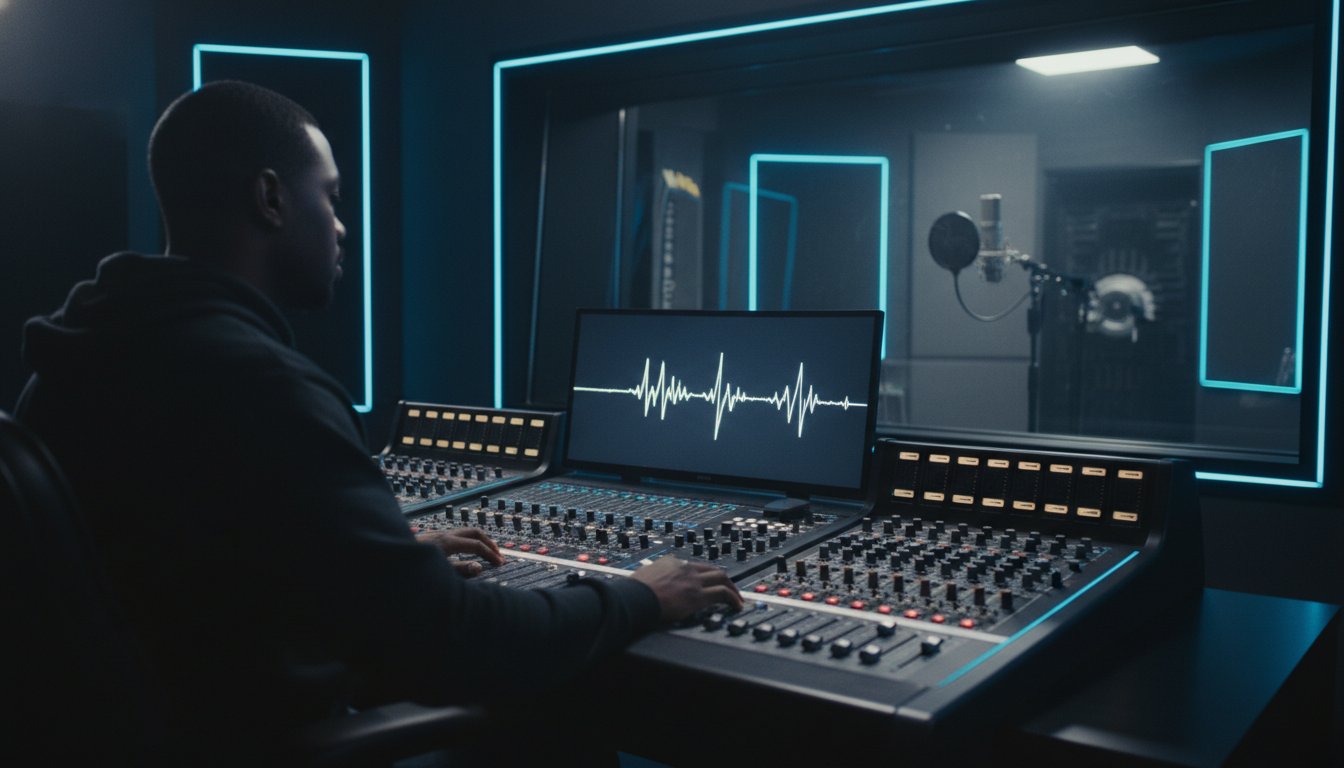
A world-class vocal isn't born in the microphone. It's forged in the atmosphere of the room and the precision of the preparation. While 72% of artists now prefer a professional studio for their vocal tracking, many still struggle to capture that elusive, expensive sound during home sessions. The truth is that even the most advanced gear can't save a track plagued by common vocal recording mistakes to avoid. Whether you're dealing with harsh sibilance or a hollow, "roomy" sound that refuses to sit in the mix, these technical hurdles often stem from overlooked details rather than a lack of talent.
We believe the vocal is the heartbeat of your project. It's the most intimate connection you have with your listener, and it deserves absolute clarity. You don't have to settle for boomy or inconsistent tracks that feel amateur. In this guide, we'll reveal the technical and psychological pitfalls that compromise your audio fidelity. You'll learn how to master your recording chain, manage room reflections, and identify the exact moment a take becomes a keeper. We are here to help you transform your creative vision into a polished, studio-quality reality.
Key Takeaways
- Learn why "clean" audio requires more than silence and how to identify the acoustic standing waves that create muddy, "boxy" vocals.
- Master the industry-standard "Two-Finger Rule" and proximity effect to steer clear of common vocal recording mistakes to avoid during your next session.
- Understand the technical reality of phase cancellation and why surgical EQ can never truly replace a high-fidelity source recording.
- Discover how to eliminate "Red Light Syndrome" by prioritizing artist comfort and creating an atmosphere that translates into pitch-perfect takes.
- Recognize the precise moment your project outgrows home recording and requires the legendary signal path of a Neve or SSL console.
The Foundation: Environmental and Technical Setup Blunders
A professional vocal starts long before the artist steps into the booth. It begins with an environment designed to support, not sabotage, the performance. Many creators mistake "silence" for "cleanliness," but a truly clean recording requires controlled acoustics that allow the voice to breathe without interference. Understanding the fundamental principles of sound recording is the first step toward identifying the common vocal recording mistakes to avoid that plague home sessions. Even the most expensive condenser microphone will capture the hum of an HVAC system or the whir of a computer fan with brutal honesty. These subtle noises might seem negligible during tracking, but they become deafening once you apply compression in the mix.
Ignoring Room Reflections and Standing Waves
Small, untreated rooms are the primary culprit behind the dreaded "boxy" vocal. When sound waves bounce between parallel walls, they create standing waves and comb filtering. This physical phenomenon effectively cancels out certain frequencies while overemphasizing others, making your tracks sound thin or unnaturally resonant. Many artists fall for the "Closet Myth," believing that a cramped space filled with clothes will provide a dead, professional sound. In reality, these tiny spaces often suffer from intense low-mid frequency buildup that no EQ plugin can truly transparently remove. To fix this, prioritize dampening immediate reflections. Use heavy moving blankets, acoustic clouds, or even specialized foam to break up flat surfaces. Your goal is a balanced space where the energy of the performance remains intact without the room "talking back" to the mic.
Improper Gain Staging and Digital Clipping
Digital recording is a game of precision, not power. Unlike the soft, pleasing saturation of analog tape, digital clipping is a harsh, irreversible "crunch" that ruins audio fidelity. One of the most common vocal recording mistakes to avoid is tracking too hot. You don't need to see your meters hitting the red to get a professional sound. Modern digital interfaces are designed with a "sweet spot" usually found between -6dB and -10dB. This provides ample headroom for the mixing process and ensures your preamps aren't straining at their absolute limit.
- Analog Warmth vs. Digital Clipping: Analog gear might forgive a peak, but digital systems treat anything over 0dB as a hard ceiling, resulting in permanent distortion.
- Preamp Limits: Cranking a budget preamp to its maximum often introduces electronic hiss rather than desirable character.
- Monitoring Strategy: If the artist can't hear themselves, turn up the headphone mix, not the input gain. Keep the recording level safe while making the monitoring level inspiring.
By treating your recording environment as a dedicated sanctuary and respecting the technical boundaries of your gear, you set the stage for a world-class result. Precision in the setup phase is what separates a demo from a professional release.
Mic Technique: Proximity, Plosives, and Placement
The microphone is an extension of the vocalist's instrument. It is a sensitive tool that requires a nuanced physical relationship to capture the full spectrum of a performance. Many common vocal recording mistakes to avoid happen within the few inches between the singer’s lips and the mic diaphragm. Recent research on recording mistakes by leading institutions confirms that background noise and poor acoustics are the most frequent barriers to professional audio, yet improper mic usage is just as damaging. Mastering the geometry of your setup is the fastest way to move from a "home demo" feel to a high-fidelity production.
The "Two-Finger Rule" remains the industry standard for starting mic distance. By placing two fingers between the pop filter and the microphone, and another two to four inches between the singer and the filter, you establish a consistent baseline. This prevents the singer from crowding the mic while maintaining enough presence to capture detail. If you are struggling to capture that elusive "radio-ready" sound, our recording services provide the expert guidance and elite environment needed to elevate your performance.
Mastering the Proximity Effect
Proximity effect allows you to manipulate the "weight" of a vocal. A cardioid microphone’s polar pattern naturally increases bass response as the sound source moves closer to the diaphragm. This can add a lush, intimate quality to whispers or low-register verses. However, it easily turns into "mud" if the singer stays too close during powerful, belted sections. Dynamic performers know to lean in for the secrets and back off for the crescendos, using physical movement to manage their own frequency balance.
Taming Plosives and Sibilance at the Source
Plosives, or "P-pops," occur when a blast of air physically moves the microphone diaphragm, creating a low-frequency thump that is nearly impossible to remove later. A pop filter is not optional for professional-grade tracking. To further protect the take, try angling the microphone 15 degrees to the side. This off-axis placement allows the air to bypass the diaphragm while the capsule still captures the full tone of the voice. This technique is also a secret weapon for taming harsh sibilance. Choosing a microphone that complements the singer’s specific timbre acts as the ultimate natural de-esser, ensuring the "S" sounds remain crisp rather than piercing.
Precision at the source is the hallmark of a seasoned producer. By mastering these physical interactions, you ensure that every take is a "keeper" quality track that sits perfectly in the mix without heavy-handed processing.
The "Fix it in the Mix" Fallacy: Why Source Quality is King
There is a dangerous myth in the production world that modern software can resurrect a dead vocal track. It can't. While digital tools have reached staggering levels of sophistication, they remain surgical instruments rather than magic wands. Relying on post-production to salvage a performance is one of the most common vocal recording mistakes to avoid. A professional mix is designed to enhance the beauty of a performance, not to mask the technical failures of the tracking session. When you capture a vocal with professional recording techniques, you give the engineer the freedom to be creative rather than purely corrective.
In the world of immersive audio, this reality is even more stark. Our work in Dolby Atmos Mixing (9.1.4) places the vocal in a dedicated 3D space, removing the "wall of sound" that often hides imperfections in traditional stereo. Without other instruments to mask the vocal's flaws, every bit of room hiss, every phase cancellation, and every digital artifact becomes glaringly obvious. If your source is compromised, the immersion of the track is broken instantly. Similarly, pitch correction software like Autotune requires a clean, resonant signal to track accurately. On a poorly recorded vocal, these tools often sound robotic or "glitchy" because they are struggling to find the fundamental frequency amidst the background noise and room reflections.
The Permanent Nature of Room Tone
You cannot "EQ out" a bad room. Reverb plugins are designed to simulate space, but they cannot hide the boxy, hollow sound of an untreated bedroom. When room tone is captured by the mic, it becomes a baked-in audio characteristic that essentially becomes part of the singer's voice. Many creators fall into the "De-reverb" trap, using AI-driven plugins to strip away room reflections. This often leaves the vocal sounding unnatural and underwater, riddled with digital artifacts that are even harder to manage than the original reverb. A clean, dry source is the only way to achieve a truly "expensive" sound.
How Source Mistakes Compound in Mastering
The mastering process is designed to bring a track to commercial loudness, but this comes with a technical trade-off. Compression and limiting bring the quietest parts of your audio up to the level of the loudest parts. This includes the background noise, computer fans, and the "roomy" character you tried to ignore during tracking. A harsh recording that sounds slightly annoying in the rough mix will become physically painful to listen to once it hits commercial LUFS standards. To ensure your project is ready for the final stage, you should learn How to Prepare Your Tracks For Professional Mixing. Starting with a high-fidelity source ensures that every move made in the mixing and mastering stages adds value rather than just fixing problems.

The Overlooked Gap: Performance Psychology and Comfort
Even with a world-class signal chain, a performance can fall flat if the artist doesn't feel safe. Technical perfection is secondary to emotional truth. One of the most common vocal recording mistakes to avoid is treating the session like a clinical procedure rather than a creative exploration. When a singer is tense, their throat muscles tighten, directly impacting pitch accuracy and tonal resonance. This psychological barrier, often called "Red Light Syndrome," can turn a powerhouse vocalist into a timid performer the moment the record button glows. Precision in the booth starts with a relaxed mind.
Maintaining physical health is equally vital for a successful session. We advocate for the "Apple Juice and Water" rules to keep the instrument primed. Room-temperature water provides essential hydration, while a small amount of apple juice can help cut through vocal phlegm without the heavy coating effect of dairy or the drying nature of caffeine. These small, grounded details ensure the artist can focus entirely on the spirit of the song rather than the mechanics of their throat.
Creating a Creative Sanctuary
Atmosphere dictates energy. Moving from a sterile environment to a creative sanctuary involves more than just soundproofing. Mood lighting, thoughtful decor, and a clear line of sight between the engineer and artist build the necessary trust for a vulnerable performance. Communication via talkback should be constant, warm, and encouraging. Don't let the artist sit in silence between takes; keep the momentum high with constructive feedback. Often, the "vibe take" possesses the most soul. This is that first, unpolished run-through where the artist isn't overthinking the technicalities. Capture everything, because you can't synthesize raw emotion in post-production.
The Technical Comfort: Monitoring and Latency
The headphone mix is the artist’s entire world during a session. It must be inspiring. Even 10ms of latency can subtly throw off a singer’s timing and pitch, creating a jarring disconnect between their physical effort and the audio feedback. Using direct monitoring ensures a zero-latency experience, allowing the performance to feel natural and immediate. A secret weapon for confidence is adding a lush, high-quality reverb to the singer’s monitor mix. It provides a sense of "expensive" space that helps them stay in tune and encourages them to reach for more ambitious vocal runs.
As a producer, your role is that of a collaborative mentor. You handle the technical precision so the artist can remain in a state of pure flow. If you want to master these nuances and learn how to manage professional sessions, our Audio Engineering Classes provide deep-dive training into the art of session management and artist psychology. By prioritizing the human element, you ensure the technical details serve the art, resulting in a take that is both technically flawless and emotionally resonant.
When to Move from the Home Studio to Starsound Studios
Home recording is a gift for the modern artist. It's a place for raw ideation and uninhibited creativity. But every creator eventually hits a technical ceiling. This is the moment where the subtle resonances of a bedroom or the limitations of a budget interface begin to choke the life out of a brilliant performance. If you find yourself constantly battling the common vocal recording mistakes to avoid that we've discussed, it's time to elevate your environment. A world-class vocal track isn't just about the absence of noise; it's about the presence of character. Recording through legendary signal paths like our Neve or SSL consoles provides a harmonic depth and "glue" that software emulations simply can't replicate.
At Starsound Studios, you aren't just paying for studio time. You're gaining a collaborative partner. Steve "The Mix" brings decades of technical expertise to every session in North Royalton, acting as a seasoned mentor to ensure your performance is captured with absolute precision. We don't just hit record. We craft the sound. This level of attention is essential for projects destined for the immersive world of Dolby Atmos Mixing (9.1.4). In a spatial mix, every nuance of the vocal is exposed within a three-dimensional soundstage. By stepping into a high-end technical facility, you bypass the common vocal recording mistakes to avoid and focus entirely on the spirit of your music.
The Cleveland Advantage: Professionalism Close to Home
For local Cleveland artists, Starsound is more than a facility. It's a sanctuary for career-defining tracks. There is a massive difference between a makeshift "record room" and a purpose-built, Dolby-certified suite. Our environment is acoustically tuned to eliminate the standing waves and reflections that ruin home takes. When the stakes are high, you deserve a space that matches your ambition. Book a Session at Our North Royalton Recording Studio to experience the difference that elite acoustics and high-end engineering make for your next release.
Remote Mixing and Mastering: The Best of Both Worlds
You don't have to be in Ohio to access our professional expertise. We work with artists worldwide through our Remote Mixing and Remote Mastering services. If you've tracked your vocals at home but want that "expensive" commercial finish, you can send your stems to us for a professional Stereo or Atmos mix. We maintain a steady, intentional communication rhythm throughout the process, ensuring your unique identity remains the priority from start to finish. Ready for a world-class sound? Contact Starsound Studios today.
Mastering the Art of the Vocal Take
Capturing a professional vocal is a delicate balance of technical precision and artistic vulnerability. By mastering your environment, respecting the physical geometry of your microphone, and prioritizing the comfort of the performer, you eliminate the most common vocal recording mistakes to avoid. These foundations ensure that your source audio is a pristine canvas rather than a technical puzzle for your mixing engineer to solve. Your music deserves more than just a corrective approach. It deserves a high-fidelity start that preserves the raw emotion of your performance.
When you're ready to move beyond the limitations of home recording, Starsound Studios is your creative sanctuary. Directed by Steve "The Mix" with over 10 years of expertise, our facility is Ohio’s first and only Dolby-certified Atmos mixing studio. We provide the elite 9.1.4 immersive audio capabilities and high-end signal chains that transform a great take into a world-class release. Elevate your sound with professional recording and mixing at Starsound Studios. We are just as invested in your final product as you are. Let's create something extraordinary together.
Frequently Asked Questions
Can I fix a distorted vocal recording with a plugin?
Digital distortion caused by clipping is permanent and can't be fully undone. While restoration plugins like de-clippers can sometimes smooth out the harsh edges of a squared-off waveform, they often introduce audible artifacts that sound unnatural. It's always better to adjust your gain staging and re-record the take to ensure the audio fidelity remains intact from the very beginning.
What is the best distance to stand from the microphone for vocals?
A distance of six to twelve inches is generally the sweet spot for a balanced vocal. Standing too close can cause excessive bass buildup, while standing too far away allows too much of the room's character to bleed into the track. Finding this balance is essential for those looking to bypass common vocal recording mistakes to avoid during their tracking sessions.
Do I really need a pop filter if I have a high-end microphone?
Yes, a pop filter is essential regardless of your microphone's price point. High-end condenser microphones are incredibly sensitive. Their diaphragms can be easily overwhelmed by the sudden air blasts of plosive sounds like "P" and "B." Using a filter also protects the delicate capsule from moisture and saliva, extending the life of your equipment while ensuring a much cleaner take.
Why do my vocals sound "thin" or "small" in the mix?
Thin vocals often result from phase cancellation caused by reflections off nearby hard surfaces. When sound waves bounce off a wall and hit the microphone a few milliseconds after the direct sound, certain frequencies are neutralized. This "comb filtering" effect strips the voice of its natural body. Treating your space with acoustic clouds or heavy blankets can help restore that missing weight.
How do I stop my room from echoing in my vocal recordings?
Acoustic treatment is the only effective way to eliminate room echo. You need to break up large, flat surfaces that reflect sound waves back into the microphone. Using specialized acoustic foam or heavy moving blankets can absorb these reflections. Focus on the area directly behind the singer and the walls to their sides to create a controlled, professional environment for every session.
What is the "proximity effect" and how does it affect my voice?
The proximity effect is a natural increase in low-frequency response that occurs as a sound source gets closer to a directional microphone. This is one of the most common vocal recording mistakes to avoid if you aren't careful, as it can lead to a muddy or boomy sound. However, when used intentionally, it adds a sense of intimacy and "expensive" warmth to a performance.
Should I record my vocals with reverb or effects already on them?
You should almost always record your vocals dry to maintain total flexibility during the mixing process. If you "bake" reverb or delay into the file, you can't remove or adjust it later if it doesn't fit the final arrangement. Instead, use your DAW to provide a "comfort reverb" in the artist's headphones that isn't actually printed to the final recording track.
Is it better to record vocals in a closet or a larger room?
A larger, well-treated room is far superior to a small closet. While closets are quiet, their tiny dimensions cause intense low-mid frequency buildup that makes vocals sound "boxy" and unnatural. A larger space allows sound waves more room to dissipate. If the room is properly dampened, it provides a much more open and professional sound that sits effortlessly in a modern mix.


