

A vocal recording studio in Cleveland can shape far more than the sound of a vocal booth. Room acoustics, performance-focused recording, overdubs, production, mixing, and final delivery all influence how naturally your voice sits in the finished track.
A strong vocal recording depends on more than hitting the right notes. You need a comfortable space to perform, clear direction when it helps, and a process that preserves the song’s character while refining its sound. Details matter, from microphone placement to choosing the takes that best capture the song’s emotion.
This guide explains what to expect from a vocal studio session in Cleveland, including how room acoustics affect a take, when overdubs help, and how production, revisions, and delivery fit together. You’ll learn what shapes a session and how recording, mixing, and mastering can take your vocal from its first take to a polished track.
Key Takeaways
- Plan your session around the vocal performance you want to capture, then use recording and production choices to support that sound.
- Listen for room reflections and background noise; the recording space can shape vocal clarity and the feel of a take.
- Use overdubs to strengthen specific moments while keeping the lead vocal expressive and natural.
- Give mix feedback with clear priorities, then agree on the delivery format and files your project needs.
- Choose a studio based on whether its recording and post-production services fit your project, from singing to spoken voice.
Recording, mixing, and producing services
A vocal project can involve three connected stages: capturing the performance, shaping the production, and preparing the finished mix. During recording, the engineer sets microphone position and gain, then captures a test passage. A quiet verse may call for adjustments that preserve breath and detail; a forceful chorus may need peak control without flattening the delivery.
Production decisions guide how the vocal serves the song. The artist and producer can identify the strongest emotional moments, refine phrasing, and decide where harmonies or ad-libs add meaning. A sparse verse may call for an exposed lead, while a dense chorus may benefit from layered backing vocals. These creative choices also give the mix a clear direction.
Mixing begins after the recorded parts are organized. The engineer balances the lead against the instruments, shapes tone with equalization, controls dynamics with compression, and uses effects such as reverb or delay to create depth. A dry, intimate vocal may need less ambience than a wide pop chorus. The reference track, arrangement, performance, and intended listening context all inform those choices.
Recording, mixing, and mastering are related, but each solves a different problem. Recording captures the source. Mixing balances the vocal and instruments into a cohesive track. Mastering prepares the finished mix for release by refining its overall tonal balance and level. Agree on the deliverable before work begins, such as a stereo mix for listening or separate vocal files for continued production.
Remote mixing follows a different path from in-room recording. The artist sends organized audio files, including each vocal take and any instrumental stems, along with tempo, key, and a reference mix when available. The engineer imports those files into a session, checks alignment, and builds the mix without the artist being physically present. Recording and remote mixing can be handled as separate parts of a project, so the scope should identify which work is needed.
- Before recording: Prepare lyrics, mark challenging phrases, and identify the song’s emotional focus.
- Before mixing: Label takes clearly and keep alternate performances separate.
- Before mastering: Approve the mix and specify the intended release format.
A clear sequence keeps creative choices visible from the first take through delivery. A focused production direction helps the engineer make decisions, while organized files streamline mixing and mastering. When choosing a vocal recording studio in Cleveland, ask how the session progresses from performance capture to final mix, and define whether remote mixing is included or handled separately.
Choosing a collaborator can also mean weighing the experience behind the work. Cleveland audio professional Sean Sullivan reports 24yrs of international touring and television mixing experience, while Cleveland mixing engineer Lashon Evans says he has been learning to mix music for about 13 years. Producer Ben Wilkins says he has recorded and produced music for over 20 years.
Producer and mixer Brett Shaw’s projects with Foals, Florence + The Machine, Daughter, and others have accumulated more than 5.B+ streams. Newbury Township mixing and mastering engineer Michael Bishop reports 11 Grammy Awards, and producer and engineer Cary Crichlow has over a decade of experience working with bands in Cleveland. These backgrounds can help inform a conversation about a project’s needs and preferred workflow.
How room acoustics shape a recording
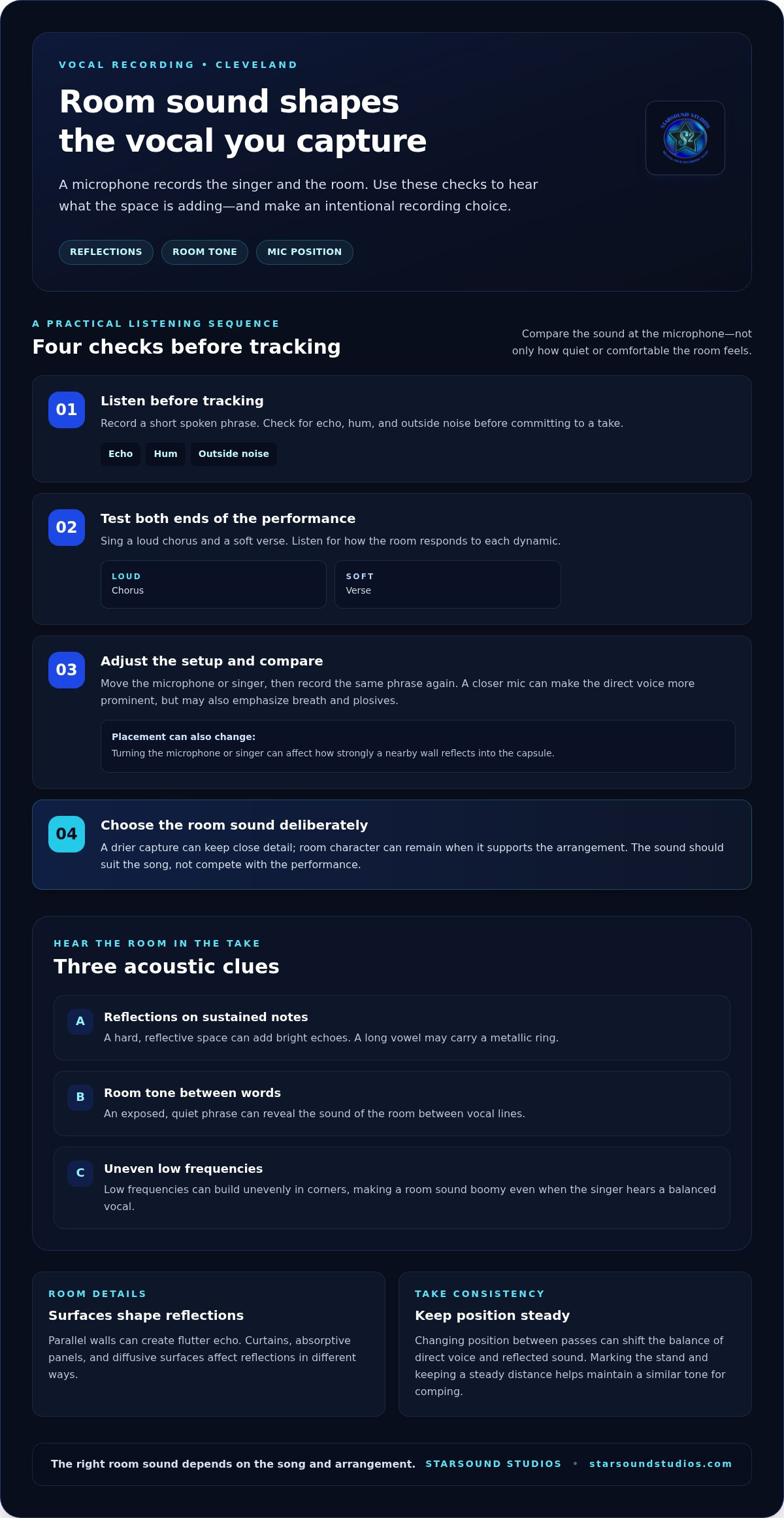
A microphone captures the room as well as the singer. A hard, reflective space can add bright echoes to sustained notes, while a treated recording area can reduce distracting reflections. Exposed vocals make the difference clear: a quiet phrase may reveal room tone between words, and a long vowel may carry a metallic ring. Room sound is not automatically a problem, but it should suit the song rather than compete with the performance.
Room size and surface materials influence what reaches the microphone. Parallel walls can create flutter echo, a rapid series of reflections that colors a handclap or sharp consonant. Low frequencies may build unevenly in corners, making a room sound boomy even when the singer hears a balanced vocal. Curtains, absorptive panels, and diffusive surfaces affect reflections in different ways. The engineer evaluates the sound at the microphone, not just whether the room feels quiet.
Microphone placement is a practical way to manage the room’s influence. Moving the microphone closer can make the direct voice more prominent, but may also emphasize breath and plosives. Turning the microphone or singer can change how strongly a nearby wall reflects into the capsule. If an “s” sounds sharp, the engineer can adjust the angle and listen again before applying processing. Small placement changes can preserve natural tone without relying only on equalization.
- Listen before tracking: Record a short spoken phrase, then check for echo, hum, and outside noise.
- Test the performance: Sing a loud chorus and a soft verse to hear how the room responds to both.
- Adjust the setup: Move the microphone or singer, then compare takes from the same phrase.
- Keep the sound intentional: Choose a drier capture for close detail or retain room character when it supports the arrangement.
Room acoustics also affect consistency between takes. If the singer changes position between passes, the balance of direct voice and reflected sound can shift. Marking the stand and keeping a steady distance helps maintain a similar tone for comping. A lively space may suit a spacious arrangement, while a dense production often benefits from a more controlled recording. The right choice depends on the song’s texture and the performance’s dynamics.
Before recording, ask the engineer to play a test take through studio monitors or headphones. Listen for boxy-sounding vowels, ringing tails after phrases, or background noise during pauses. Then make one adjustment at a time, such as changing the singer’s position or adding absorption near a reflective surface. This makes it easier to hear which change helps, rather than treating room sound as an abstract technical detail.
If you’re ready to put these listening and placement steps into practice, explore the studio recording process as a next step toward a more controlled vocal capture.
Mix revisions and delivery
Useful mix feedback turns a reaction into a clear production note. Instead of saying, “Make it sound better,” identify the moment and the change: “The lead vocal feels buried when the chorus starts.” The engineer can then adjust vocal level, presence, or competing instruments. Naming the timestamp and listening context pinpoints the issue without steering the entire mix away from its strengths.
Before the first mix, share a reference track and describe what you respond to. You might like the reference’s intimate verse but want your chorus to feel wider. Explain the quality you want, rather than asking to copy every sound. The reference gives the engineer context; your recording, arrangement, and performance guide the decisions. Keep notes focused on the song’s priorities.
Organize feedback by importance. A lead-vocal balance issue usually matters more than a subtle effect detail. Send one consolidated set of notes for each review instead of scattered messages that may conflict. Include the song section, the audible problem, and the direction you want.
- Identify the location: Name the verse, chorus, bridge, or lyric where the issue appears.
- Describe the sound: Say whether the vocal feels too dark, sharp, loud, or distant.
- Set a priority: Separate essential changes from optional creative experiments.
- Review the update: Compare the revised mix with the previous version at a consistent listening level.
Keep the original mix and each revision clearly labeled. Names such as “song mix review” and “song mix approved” are more useful than “final final.” A simple version history makes comparisons easier and prevents collaborators from commenting on different files. If a revision changes the vocal level, listen again with the full arrangement: a vocal that sounds clear alone may compete with a guitar or synth in the chorus.
Start delivery planning with the intended use. A finished stereo mix may suit listening and release preparation, while a project requiring later edits may need separate stems. Specify whether you need the full mix, an instrumental, or an isolated vocal, and identify the file format required for your next production step. These decisions affect how the engineer exports and labels the files.
Before approving delivery, play each file from beginning to end. Check that the opening is not cut off, the final phrase has room to resolve, and the vocal remains balanced across verses and choruses. Confirm that filenames distinguish the mix version and its purpose. This final listen can catch practical issues before the files move into distribution, video editing, or another production session.
Overdubs and vocal recording
Overdubs let you add or replace a vocal part without re-recording the whole song. A focused plan helps each new take support the lead performance and arrangement.
Vocal and Voiceover Specialties
Singing sessions focus on pitch, phrasing, dynamics, and emotional delivery; voiceover work prioritizes clear speech and consistent tone. For a sung chorus, the engineer might capture a lead first, then add harmonies or ad-libs where they strengthen the arrangement. Review studio examples for styles and recording contexts that resemble your project.
Reviews and ratings vary by studio and platform, so there is no single Cleveland-wide score. Read comments about communication, session direction, and file delivery, and look for details relevant to your needs, such as support for spoken narration or layered vocals.
Equipment and Vocal Booths
Cleveland studios use different microphones, preamps, monitoring systems, and booth designs. The right setup depends on the source: a sensitive condenser microphone may capture breath detail, while a dynamic microphone may suit a forceful delivery. Booths also differ in isolation and room tone, so listen to a test phrase and consider how its sound fits your production.
Studios in the Cleveland area operate from different locations and schedules. Compare the facility’s address with your route, and consider parking, transit, and setup time when planning your arrival. Available session times depend on the studio’s booking schedule, so include travel time when choosing a slot.
To book a vocal session, share the project type, preferred dates, and whether you need lead vocals, harmonies, or voiceover. Review the studio’s booking terms before confirming so you understand how schedule changes are handled.
Prepare lyrics, instrumental tracks, and a clear version of the arrangement before arriving. Mark difficult phrases, note where breaths or harmonies belong, and bring water to support a steady performance. For voiceover, prepare the final script and mark pronunciations or emphasis, such as a product name that needs consistent delivery.
During an overdub session, record one musical role at a time. Capture the lead phrase, listen back for timing and tone, then add a double or harmony only where it contributes. Keep each layer distinct: a tight double can thicken a chorus, while a contrasting harmony can add movement without masking the lead. Label takes by section and vocal role to make later editing clear.
Which Cleveland studios specialize in vocals, singing, and voiceover recording?
A vocal-focused studio should show how its recording process serves a specific voice project. Look for examples of sung leads, layered harmonies, spoken narration, or commercial voiceover, then compare the sound and workflow with your needs. A studio’s specialty is clearest in its work and process, not simply in its equipment list.
For a singing session, review examples for vocal clarity, expressive dynamics, and how the voice sits beside the instruments. If your song needs stacked harmonies, find out whether the studio can capture and organize separate parts. For voiceover, listen for intelligible words, even volume, and minimal distracting room sound. Narration and melodic performance need different direction, so let your project type guide your choice.
Ask how a session moves from the first take to usable edits. A singer may record a lead, revisit difficult phrases, then add doubles or harmonies. A voiceover session may focus instead on clean script reads, alternate pronunciations, and consistent pacing. Share a sample of your material and explain the intended result to clarify whether the studio’s recording approach fits.
Reviews and ratings add context, but read comments for specific details rather than relying on a score alone. A singer may value supportive performance direction, while a voiceover client may prioritize clean takes and organized files. Look for repeated, relevant observations about communication, session workflow, and delivery. A review about a band recording may not answer questions about a solo vocal session.
- For singing: Find examples with a similar vocal style or arrangement.
- For harmonies: Ask how separate parts and alternate takes are organized.
- For voiceover: Prepare a short script sample and note pronunciation needs.
- For either format: Describe the intended use, such as a song release or narration project.
Location and scheduling matter for an in-person session. Compare the studio address with your route through Cleveland, then plan for setup and a comfortable arrival. Session hours and cancellation terms vary by facility, so review the booking details before committing. Share your preferred dates, project type, and expected deliverables when requesting a session.
Prepare lyrics or a final script, reference files, and performance notes before recording. Mark challenging lines, harmony entrances, or names that need precise pronunciation. A singer might flag a breath-heavy phrase, while a narrator can mark a product name’s preferred emphasis. These details help the engineer focus the session on your project’s sound and performance.
Starsound Studios: Stereo Mixing
Starsound Studios offers stereo mixing to balance your recorded vocals, harmonies, and instrumental parts into a cohesive track. Turn to mixing when your recordings are ready for detailed decisions, or choose mastering when a finished stereo mix needs preparation for release.
For projects designed for immersive listening, Starsound Studios also offers Dolby Atmos Mixing (9.1.4). The studio is Ohio’s first and only Dolby-certified Atmos mixing studio. Recording, stereo mixing, mastering, and immersive mixing each serve a different point in the production process, so choose the step that matches your project’s current needs.
To discuss recording or mixing for your project, contact Starsound Studios.
Shape the Next Stage of Your Vocal Project
Your next decision is about what the song needs now. If the vocal is recorded and ready for its final balance, stereo mixing can bring its parts together. If the mix is approved, mastering prepares it for release. For a project created for immersive listening, Dolby Atmos Mixing (9.1.4) offers another production direction. A vocal recording studio in Cleveland can be part of a larger creative process, but the right next step depends on your project’s current stage and intended sound.
Starsound Studios offers Stereo Mixing, Mastering, and Dolby Atmos Mixing (9.1.4). Share where your track stands and what you want listeners to feel; that gives the conversation a clear creative starting point. Whether you’re refining a new vocal or preparing a finished mix, keep the focus on the sound you want your music to carry.
Contact Starsound Studios to discuss your session, and take the next step toward bringing your vision into focus.
Frequently Asked Questions
What vocal recording studios are in Cleveland, Ohio?
Starsound Studios is located in North Royalton, Cleveland, Ohio, making it a local option for artists seeking in-person recording. The studio also works with remote clients on mixing and mastering. Start with your project format: a singer tracking vocals needs a recording space, while an artist with finished tracks may need post-production instead.
Which Cleveland studios provide an audio engineer with vocal recording sessions?
Starsound Studios includes an on-site engineer with studio recording sessions. The engineer manages the recording signal path, including microphone and preamp setup, while you focus on your performance. For a session with layered vocals, bring a clear track map identifying lead, double, and harmony parts. This gives the engineer useful context for organizing the recording.
Do Cleveland vocal studios offer mixing, mastering, and vocal production?
Yes. Starsound Studios offers Stereo Mixing and Mastering, as well as Dolby Atmos Mixing (9.1.4). Vocal production describes creative choices around a performance, such as shaping phrasing or deciding which harmony parts serve the song. Before your project begins, distinguish those creative goals from technical recording, mixing, and mastering so the work stays aligned with the sound you want.


