

What if the most sophisticated analog gear in the world can't save your project if the creative connection is missing? You've poured your soul into every lyric and melody, so it's natural to feel a flicker of anxiety about handing your vision over to another pair of ears. Knowing the right questions to ask a mixing engineer is the first step toward protecting your art. You want a radio-ready sound, but you're likely worried about losing creative control or getting lost in a sea of technical jargon regarding stems and immersive Atmos configurations. We believe your work deserves a sanctuary where the science of audio fidelity meets the spirit of creation.
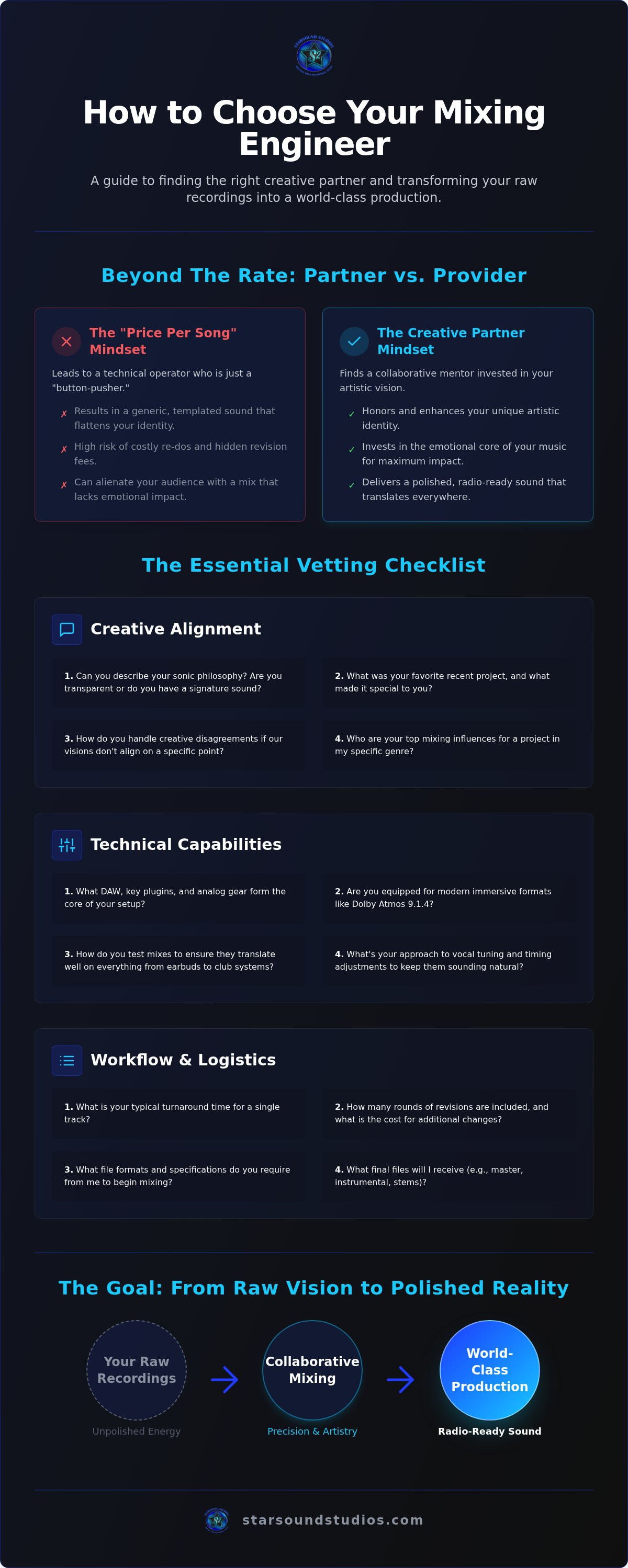
This guide will teach you how to vet an engineer for creative alignment and professional workflow so your music reaches its full potential without the stress of hidden revision costs. We'll walk through fifteen essential inquiries that cover everything from sonic philosophy to technical delivery. By the end, you'll have the tools to build a collaborative partnership that transforms your raw recordings into a world-class production that honors your unique identity and technical standards.
Key Takeaways
- It's vital to move beyond the "price per song" mindset to find a partner who serves as the bridge between your raw emotion and a radio-ready sound.
- Master the strategic questions to ask a mixing engineer to ensure they possess the technical precision required for modern 9.1.4 Dolby Atmos mixing.
- Avoid the "revision trap" by defining clear boundaries for project changes and ensuring all necessary stems are included in your final delivery.
- Transform your artistic vision into a professional masterpiece by vetting for a collaborative mentor who treats your music with the care it deserves.
Beyond the Rate: Why Your Choice of Mixing Engineer Defines Your Sound
The mixing stage is where a collection of individual tracks transforms into a cohesive, emotional experience. It's the bridge between raw, unpolished energy and the commercial shine required for modern streaming platforms. Choosing the right partner for this journey is perhaps the most critical decision an artist makes. While it's tempting to shop by price, a "price per song" filter often leads to lackluster results. You aren't just buying a service; you're investing in a creative stakeholder who understands your sonic identity. Precision matters. Energy is everything.
A mere button-pusher follows a checklist. A collaborative mentor, like Steve "The Mix" at Starsound Studios, invests in your vision. This distinction defines whether your music sounds like a demo or a professional release. Knowing the right questions to ask a mixing engineer helps you identify if they're a technical operator or a true partner in your success. You need someone who treats your stems with the same passion you brought to the recording booth.
What exactly does a mixing engineer do in 2026?
Modern mixing is a multi-dimensional craft. It involves balancing frequency, dynamics, and stereo width to build a specific "sonic world" for the listener. The process of audio mixing has evolved to include complex pitch correction and surgical timing alignment that feels natural rather than robotic. Beyond the creative choices, an engineer ensures your song translates perfectly across every playback system. Whether someone is listening on a high-end hi-fi system, a club stack, or standard iPhone speakers, the mix must maintain its impact and clarity. It's about technical precision meeting artistic intent.
The risk of the 'wrong' mix
A poor mix doesn't just sound unprofessional; it can actively alienate your audience. It buries great performances under muddy frequencies or kills the emotional climax of a chorus with improper dynamics. The financial cost of re-doing a mix at a second studio often far exceeds the initial investment of getting it right the first time. For artists seeking a dedicated sanctuary, recording studios in Cleveland like Starsound provide a distinct advantage. Local access to world-class facilities and Ohio's only Dolby-certified Atmos suite ensures your project isn't just finished, but perfected. Identifying the right questions to ask a mixing engineer before you book prevents these costly setbacks and ensures your art reaches its full potential.
Creative Alignment: Questions to Gauge Sonic Compatibility
Technical proficiency is only half the battle. The other half is artistic resonance. Does the engineer have a specific "sonic signature" they impose on every project, or is their work transparent? Understanding this distinction is essential for your project's success. You want to know if they'll enhance your unique identity or flatten it into a generic template. Vetting for creative alignment is at the top of the list of questions to ask a mixing engineer before you ever send a file.
The best results come from a partnership where the engineer acts as a collaborative mentor. They should be just as invested in the emotional impact of the bridge as you are. If you're looking for a partner who prioritizes your artistic vision, the team at Starsound Studios approaches every session as a unique creative journey rather than a technical chore.
Vibe check: Do they understand your artistic goals?
You need to assess the engineer's emotional intelligence. Start with a simple question: "What was your favorite project recently and why?" Their answer reveals what excites them. If they talk about the "soul" of a vocal rather than just the preamp they used, you're on the right track. Follow up with: "How do you handle creative disagreements during a mix?" A professional doesn't get defensive. They offer solutions that honor the music while providing the grounded assurance that the technical details are handled. This collaborative spirit turns a sterile service into a creative sanctuary.
Genre expertise and reference mapping
Genre matters. A death metal mix requires vastly different transient shaping and frequency carving than a lo-fi hip-hop track. Ask: "Who are your top 3 mixing influences for this specific genre?" Looking for insights from top mix engineers in their influences shows you if they study the masters of your specific craft. Professional mixing and mastering services must be genre-aware to be effective. When presenting your own reference tracks, use them as a North Star for energy and balance rather than a rigid blueprint. Knowing the right questions to ask a mixing engineer allows you to bridge the gap between your influences and your own original sound.
The Technical Deep Dive: Gear, Software, and Immersive Capabilities
Technical specifications aren't just for gear enthusiasts. They determine whether your music sounds dated or future-proof the moment it hits the streaming platforms. In 2026, the baseline for professional audio has shifted significantly. It's no longer enough to just deliver a clean stereo file; you need to know if your engineer can handle the spatial demands of a modern audience. High-end fidelity requires more than just expensive plugins. It demands a calibrated environment where the science of the medium meets the art of creation.
When preparing your list of questions to ask a mixing engineer, focus on their ability to adapt to current industry standards. You need a partner who understands the nuances of technical compatibility, from file formats like WAV and AIFF to the complexities of sample rates. A professional engineer handles these details with absolute precision so you can stay focused on the inspiration. Reliability is the foundation of a great production experience.
Is your music ready for the Immersive Era?
Spatial audio is the new standard for major labels and independent artists alike. Ask: "Are you a certified Dolby Atmos studio?" A true 9.1.4 suite is the gold standard for immersive mixing. It provides the height and depth necessary for a professional, world-class result. You should also verify if they mix "Atmos-first" or if they are simply performing conversions from a stereo bounce. A dedicated immersive mix creates a sonic world that a simple stereo-to-spatial conversion can never replicate. This is where your music reaches its full potential.
Monitoring and signal flow
A great engineer can't mix what they can't hear. The room is the most important piece of gear in the building. Ask: "How is your room tuned, and what monitors do you trust?" High-end DAWs like Pro Tools and Logic Pro are the engines of the professional suite, but the room's acoustics provide the clarity. A deep understanding of signal flow is the hallmark of a pro engineer; it ensures that every piece of analog outboard gear and every digital plugin serves the final sound without introducing noise or phase issues. This technical mastery provides the grounded assurance that your work is in capable hands. When you find an engineer who balances this technical precision with artistic enthusiasm, you've found a collaborative mentor who can truly elevate your sound.
Workflow and Logistics: Revisions, Stems, and Deadlines
Professionalism isn't just about the final sound; it's about the journey to get there. Even the most stunning mix can leave a bitter taste if the logistics are a nightmare. You need a clear roadmap from the first bounce to the final delivery. This is why administrative clarity is a core component of the questions to ask a mixing engineer. A busy studio environment requires steady project management to ensure your deadlines are met without sacrificing the high-energy feel of the creative process. Reliability is the foundation of trust.
A collaborative mentor understands that clear boundaries actually protect the art. When the workflow is structured, the artist can focus entirely on the inspiration rather than worrying about file management or hidden costs. This intentional rhythm moves logically from the emotional appeal of creation to the technical delivery of a polished, world-class result. It ensures that every project reaches its full potential with absolute precision.
Defining the revision process
Ask: "What is your specific process for receiving and implementing feedback?" Clear communication prevents the "Revision Trap" where projects stall in an endless loop of minor tweaks. To give constructive feedback, be specific about time stamps and the emotional impact of certain sections rather than using vague technical jargon. A defined revision limit acts as a tool for project momentum. It pushes both the artist and the engineer to make decisive, impactful choices that keep the energy high and the target in sight.
The Deliverables Checklist
Your final files are your legacy. You must ensure you'll receive full-resolution WAV or AIFF files that are ready for distribution. Beyond the main mix, ask for instrumentals, TV tracks, and both "dry" and "wet" stems. This future-proofs your work for potential sync licensing or future remixes. Ask about their archiving policy too. Knowing your project is safely stored provides the grounded assurance that your music is protected long after the session ends. When you are ready to secure a workflow that respects your time and your art, book your next session with a team that prioritizes professional excellence.
Turnaround times should be realistic and documented. A professional engineer will give you a firm date for the first draft and a clear window for revisions. This prevents the anxiety of the "black hole" where files are sent and never heard from again. By asking these questions to ask a mixing engineer upfront, you establish a partnership built on mutual respect and shared standards. This is the hallmark of a high-end production experience where the artist is always the primary focus.
Finding Your Creative Sanctuary: The Starsound Experience
You've done the research. You have your list of questions to ask a mixing engineer ready. Now you need a space that answers them through action rather than just words. Starsound Studios isn't just another technical facility. It's a creative sanctuary. Led by Steve "The Mix," our studio bridges the gap between absolute technical precision and the raw, artistic soul of your music. We provide the grounded assurance that every frequency and dynamic shift is handled with world-class expertise. Your work is in passionate hands.
Ohio's only Dolby-certified Atmos studio (9.1.4) offers more than just immersive technology. It provides a sonic world where your music reaches its full potential. We've built an environment that centers the artist as the primary focus of the process. Whether you're visiting us in person or utilizing our remote mixing services, the experience is high-attention and collaborative. We are just as invested in the final product as you are. Your unique identity is the priority.
A Cleveland original with a global reach
Local artists choose our North Royalton facility for its unique sanctuary vibe. It's a place where the science of the medium meets the spirit of creation. Unlike sterile corporate environments, we prioritize comfort and inspiration. Our transparency is a foundation of our reliability. We utilize flat-rate mixing and mastering fees so you can focus on the art without the anxiety of hidden costs. This steady, intentional rhythm ensures your project moves logically from the vision to a polished result. Whether you are in Cleveland or across the globe, our remote mastering and mixing capabilities bring that same sophisticated authority to your session.
Your next steps to a world-class sound
Ready to see the difference a collaborative mentor can make? We invite you to book a consultation or a studio tour to see our 9.1.4 suite in action. Preparing your session for the Starsound workflow is a seamless process. We'll help you organize your stems and files to ensure we capture the energy of your performance perfectly. Don't let your music stay "almost" finished. It deserves to be heard at its highest potential. Book your mixing session at Starsound Studios today. Let's build a world-class sound together.
Step Into the Future of Your Music
Your music is your legacy. It deserves a partner who values the spirit of your creation as much as the science of the sound. By mastering the strategic questions to ask a mixing engineer, you've moved past being a mere service seeker to becoming a true creative stakeholder. You now understand that a professional result is built on a foundation of creative alignment, technical precision in a certified environment, and a transparent, reliable workflow. These elements ensure your vision remains the primary focus from the first fader move to the final master.
At Starsound Studios, we bring this vision to life as Ohio's first Dolby-certified 9.1.4 Atmos studio. Led by Steve "The Mix," our facility offers expert stereo and immersive audio services designed to elevate your sound to world-class standards. We provide the grounded assurance that every detail is handled with absolute precision in a welcoming, high-end sanctuary. It's time to transform your raw tracks into a polished, radio-ready experience that honors your unique identity. Elevate your sound with a professional mix from Starsound Studios. Your highest potential is just one session away.
Frequently Asked Questions
How much should I expect to pay for a professional mixing engineer?
Professional rates vary significantly based on the engineer's track record and the studio's technical capabilities. Instead of looking for the lowest price, focus on the value of a collaborative mentor who understands your genre. Serious creators treat this as a career investment. A flat-rate structure often provides the best clarity for project budgeting. This ensures you can focus on the creative sanctuary of the studio rather than the ticking clock.
What is the difference between mixing and mastering?
Mixing involves balancing the individual elements of your song, such as the drums, vocals, and synths, to create a cohesive sonic world. Mastering is the final, surgical pass that prepares your stereo or Atmos file for commercial distribution. While mixing focuses on internal balance and emotion, mastering ensures your music translates perfectly across every playback system. Both stages are essential for reaching your highest potential as an artist.
How many revisions are standard in a professional mixing contract?
Most professional contracts include two to three rounds of revisions to ensure the final product matches your vision. Defining these limits upfront is one of the most important questions to ask a mixing engineer during your initial consultation. It maintains project momentum and prevents the creative process from stalling. Clear, timestamped feedback helps your engineer make precise adjustments that honor the spirit of your work without unnecessary delays.
Do I need to provide stems or the full session file to my engineer?
High-resolution stems are the industry standard for professional mixing. Providing consolidated WAV or AIFF files ensures that your project remains compatible regardless of which DAW the engineer uses. Full session files are typically only required if you need specific production assistance or recording tweaks. Exporting "dry" stems without heavy processing gives your engineer the maximum flexibility to sculpt your sound with absolute precision.
Can a mixing engineer fix a bad vocal recording?
A skilled engineer can utilize surgical EQ, dynamic compression, and advanced pitch correction to significantly improve a vocal. However, technical tools cannot fully replace the raw emotion and energy of a great performance. While we can polish the audio fidelity, the spirit of the song begins with your recording. If a vocal is truly unsalvageable, a collaborative mentor will often suggest a re-tracking session to ensure the final mix reaches its full potential.
Why is Dolby Atmos mixing becoming the industry standard?
Dolby Atmos provides an immersive 9.1.4 experience that places the listener inside the music rather than just in front of it. Major streaming services now prioritize spatial audio in their algorithms and curated playlists. Choosing an Atmos-certified studio ensures your work is future-proof and ready for the modern marketplace. It transforms a traditional stereo bounce into a multi-dimensional journey that captures the full scale of your artistic vision.
How do I prepare my files for a remote mixing session?
Start by consolidating every track so they all begin at the same timestamp. Export your files as 24-bit or 32-bit WAVs to maintain maximum audio fidelity. Label every stem clearly, such as "Kick_In" or "Lead_Vocal," to save time during the setup phase. Providing a "rough mix" helps the engineer understand your creative intent. This preparation allows the remote mixing process to move smoothly from file transfer to professional polish.
What should I include in my initial email to a mixing engineer?
Your first message should include the number of songs, your desired deadline, and links to your reference tracks. Briefly describe the "vibe" you want to achieve. Including specific questions to ask a mixing engineer about their revision policy or Atmos capabilities shows that you are a serious professional. This initial clarity builds trust incrementally and sets the stage for a successful partnership where the artist's unique identity is the primary focus.


