
Audio engineering draws on four core strengths: collaboration, critical listening, creative judgment, and technical skill. The question of what skills audio engineers need has no single software-based answer. Engineers combine these abilities to turn an artist’s vision into clear, compelling sound. You don’t have to start as an expert in every area, but curiosity and a willingness to keep learning matter.
If you’re drawn to the craft but unsure whether it suits you, that hesitation makes sense. The work combines precise signal flow and audio tools with the human skill of hearing what a performance needs.
Explore how communication, attentive listening, creative problem-solving, and technical fluency apply to audio work. Then consider how specializations such as recording, mixing, mastering, and immersive audio might fit the career you want to build.
Key Takeaways
- Strong communication and problem-solving help you translate an artist’s vision into practical recording decisions.
- Critical listening lets you catch balance, timing, noise, and other details that shape a polished sound.
- Audio engineering blends technical fluency with creative judgment, so you can build both sides through practice.
- Explore recording, mixing, mastering, and other specializations to see which best fits the work you want to do.
1. Collaboration, communication, and problem-solving
In a studio, an audio engineer connects an artist’s creative direction with practical recording choices. A request for a vocal to feel “closer,” for example, might lead to adjustments to microphone position, room sound, or the balance between voice and instruments. Clear communication helps the artist describe the desired feeling, while the engineer translates it into workable changes. The goal isn’t to take over the vision, but to help the performance come through as intended.
Music theory can make those conversations more precise. Terms for rhythm, harmony, and chord progressions give musicians and engineers a shared language. If a producer asks for an extra bar of 2/4 before a chorus, understanding the instruction helps the engineer follow the arrangement and anticipate the transition. You don’t need to be a virtuoso, but recognizing musical terms can reduce confusion during a session and keep attention on the performance.
Communication extends beyond the artist. Producers, managers, and other team members may each have a different perspective on a track. An engineer listens carefully, clarifies which change matters most, and communicates the artist’s vision accurately. For example, if a producer requests a brighter guitar while the artist wants the vocal to remain dominant, the engineer can explain how an adjustment might affect both. Respectful discussion helps the team make informed choices.
Problem-solving means responding to what the session actually needs. If a vocal take has distracting room sound, repositioning the microphone or changing the recording setup might help. A signal-flow issue may require tracing the path from microphone to preamp to recording software. Breaking the problem into steps helps an engineer troubleshoot methodically instead of changing several settings at once.
Collaboration also means adapting to different people and working environments. A studio session, rehearsal, and audio work around events each bring different priorities and communication styles. Engineers who ask focused questions, explain technical information plainly, and stay composed when plans change can support the team without adding friction. These habits help you decide whether a role suits you if you enjoy both detailed audio work and shared creative decisions.
2. Listening skills and attention to sound detail
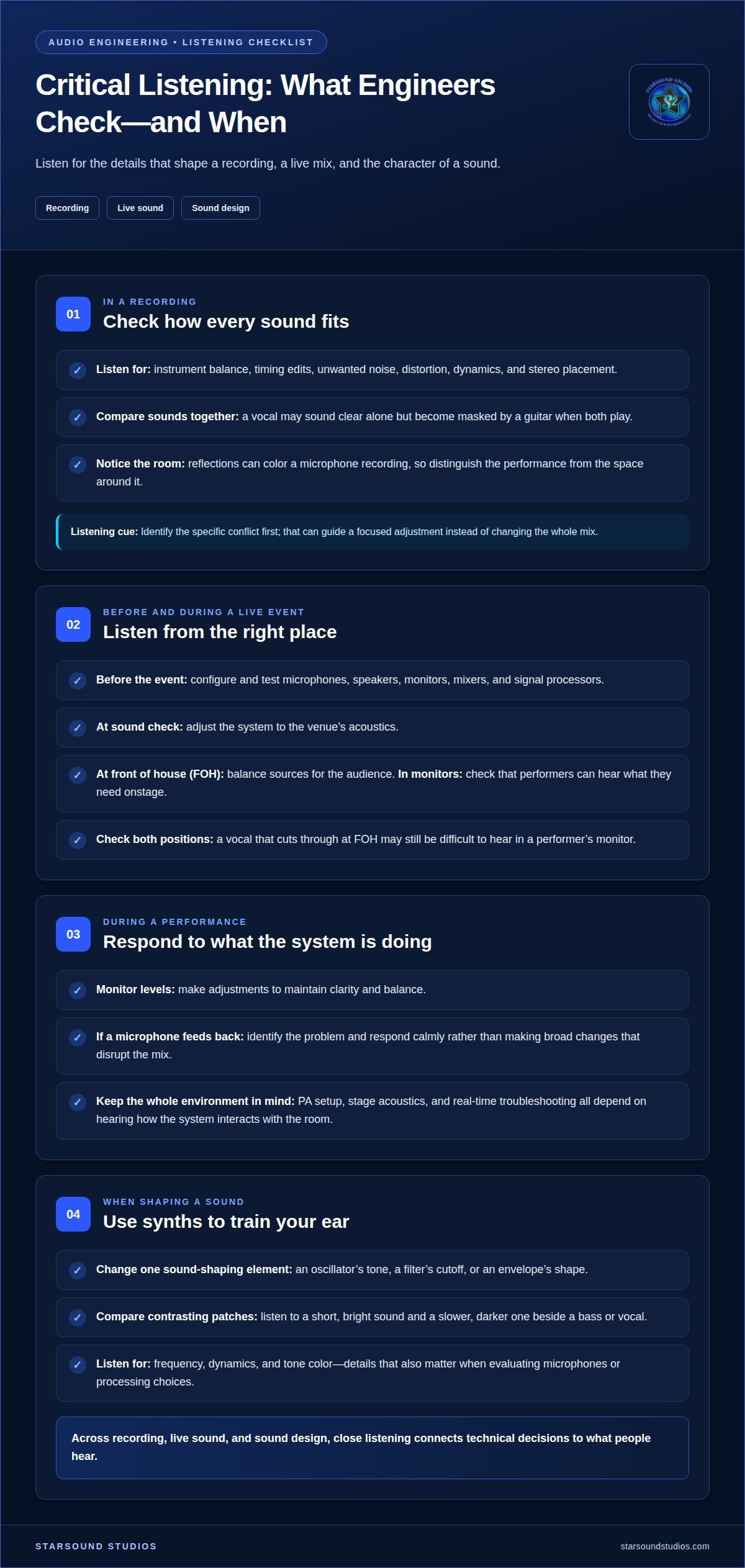
Critical listening means noticing how each sound contributes to the full production. In a recording, an engineer listens for instrument balance, timing edits, unwanted noise, distortion, dynamics, and stereo placement. A vocal may sound clear on its own yet become masked by a guitar when they play together. Identifying that conflict guides a focused adjustment instead of a change to the whole mix. Room sound matters, too: reflections can color a microphone recording, so careful listening helps distinguish the performance from the space around it.
Live sound makes listening decisions immediate. Before an event, engineers configure and test microphones, speakers, monitors, mixers, and signal processors. During sound check, they adjust the system to the venue’s acoustics. At front of house (FOH), they balance sources for the audience; monitor mixes help performers hear what they need onstage. Listening from each position reveals different problems. A vocal that cuts through at FOH may still be difficult to hear in a performer’s monitor.
During a performance, live sound engineers monitor and adjust levels to maintain clarity and balance. If a microphone feeds back, they need to identify the problem and respond calmly rather than make broad changes that disrupt the mix. PA setup, stage acoustics, and real-time troubleshooting all depend on hearing how the system interacts with the room. These responsibilities suit people who enjoy attentive listening and considered decisions under pressure.
Synth programming offers another way to sharpen your ear. Change an oscillator’s tone, a filter’s cutoff, or an envelope’s shape to hear how a sound is built and transformed. Compare a short, bright synth patch with a slower, darker one, then listen to how each sits beside a bass or vocal. This practice builds sensitivity to frequency, dynamics, and tone color. Studio professionals use similar attention when evaluating microphones or processing choices. Whether you’re drawn to recording or live sound, close listening helps connect technical decisions to what people hear.
3. Is audio engineering more technical or creative?
It’s both: technical knowledge gives an engineer control, while creative judgment shapes the sound. Core technical skills include operating a digital audio workstation (DAW), understanding signal flow and microphone technique, and knowing how software connects with hardware. Creative decisions guide how those tools serve a performance.
DAW fluency helps engineers record, edit, and organize multitrack sessions. Learn one major platform well before trying to master several. Practice creating tracks, routing inputs, editing takes, and saving organized sessions. Pro Tools, Logic Pro, and Ableton are common DAWs, but the transferable skill is understanding the workflow: tracks carry audio, routing directs signals, and processing changes what listeners hear.
Digital signal processing (DSP) uses software to shape audio. Equalization adjusts frequency balance; compression controls dynamics; reverb and delay add space or echoes. These tools are more than technical effects. A gentle EQ change might clarify a vocal, while compression can help a bass sit consistently in a mix. Critical listening helps you judge whether a change supports the song or distracts from it.
Understanding signal flow makes troubleshooting systematic. Trace the audio path from microphone to preamp, interface, DAW, and output. If a recorded signal is missing, check each connection and stage in order. If software and hardware aren’t communicating, confirm the selected input and output, then inspect routing before changing unrelated settings. This step-by-step approach turns technical knowledge into practical problem-solving.
Audio work can also involve physical and hearing-health risks: loud monitoring and moving equipment can cause strain. Keep listening levels moderate, take quiet breaks, and use safe lifting practices when setting up or moving gear.
Audio production education can build these fundamentals, but hands-on sessions make them tangible. Try recording a vocal, routing it through a DAW, then applying EQ and compression. Listen before and after each change. This exercise connects technical choices with creative results and helps you discover whether you enjoy both precision and experimentation.
4. Audio engineering career specializations
Audio engineering isn’t one fixed career. The same fundamentals can lead to studio recording, mixing, mastering, live sound, broadcast, post-production, or game audio. Each path emphasizes a different blend of listening, technical ability, and creative judgment. Ask yourself, “What skills do audio engineers need in the role I’m considering?” Your answer can help you focus on the work that interests you most.
Studio engineers capture and shape performances. Recording calls for microphone technique, session organization, and reliable signal flow. Mixing involves balancing tracks and using effects to support the artist’s intent. Mastering focuses on critical listening, audio analysis, equalization, and dynamics processing as the final stage of audio post-production. If refining a finished track appeals to you, consider how its workflow fits your strengths.
Live sound has a different rhythm. Engineers configure microphones, speakers, monitors, and mixing consoles, then adjust audio for the venue and audience. Quick troubleshooting and adaptability matter because the performance continues while decisions are being made. Studio work allows more room for editing and revision; live sound calls for decisions in the moment. Both rely on shared fundamentals, but the environment shapes how you apply them.
Other specializations place sound in different contexts. Post-production and broadcast can involve synchronizing audio with film or television. Game audio professionals create and integrate sounds into interactive environments, where effects support the player’s experience. Audio engineers even contribute to acoustic wellness, designing calming sensory environments for therapeutic and mental health spaces. For entrepreneurs and operators looking to establish dedicated treatment centers, Consult Pros Inc offers expert guidance on launching and running behavioral health facilities. The question “what skills do audio engineers need for this workflow?” has different answers across these fields, from syncing audio to picture to designing responsive sound.
Choose a direction by matching preferred tasks with a specialization: recording performances, shaping mixes, responding to live events, or building sound for media. Learning and training develop the foundation, while hands-on projects reveal which workflow suits you. To build practical studio skills, explore audio engineering classes.
Starsound Studios: Audio Engineering Classes
Starsound Studios offers Audio Engineering Classes for people ready to build their understanding of audio production. If collaboration, careful listening, creative decisions, and technical problem-solving appeal to you, structured learning can help you explore those interests.
For artists and producers, the studio’s work in Recording, Stereo Mixing, Mastering, and Dolby Atmos Mixing (9.1.4) also shows how engineering skills support different stages of music production. These specializations offer distinct paths, from capturing a performance to shaping its final presentation. Consider which part of the process most excites you, then use that direction to guide your next learning step.
Contact Starsound Studios to discuss Audio Engineering Classes and your interest in developing audio skills.
Make Your Next Audio Step Intentional
Choosing a direction doesn’t mean locking yourself into one role. Let curiosity guide a practical next step: develop a piece of work, explore a new production stage, or strengthen the skills that make your creative ideas clearer. Ask yourself, “What skills do audio engineers need to make this kind of work rewarding?” Your answer can help you focus your learning on the parts of audio that hold your attention.
For artists shaping a project, Starsound Studios offers Stereo Mixing, Mastering, and Dolby Atmos Mixing (9.1.4). Each can help bring a recording closer to its intended sound, whether the goal is a refined stereo mix, a finished master, or an immersive presentation.
If you’re ready to discuss your audio goals and the direction you want your project to take, contact Starsound Studios. Your next step can start with a conversation about the sound you’re working toward.
Frequently Asked Questions
How Do You Know If Audio Engineering Is the Right Career for You?
Audio engineering may suit you if you enjoy improving how sound is captured or presented, including the detailed work behind a finished track. Try a small project: record a voice or instrument, edit it, and note which tasks hold your attention. Enjoying both focused technical work and creative decisions is a useful sign. You can explore different specializations before choosing a direction.
Can audio engineers work outside recording studios?
Yes. Audio engineers also work in live sound, broadcast, post-production, game audio, and content creation. A game audio role, for example, may involve creating and integrating sounds into an interactive environment. Film and television work can involve synchronizing audio with picture. Each setting has its own workflow, so your preferred balance of collaboration, editing, and real-time decisions can guide your career choice.
Do You Need Formal Training to Become an Audio Engineer?
No, a degree isn’t required for every audio-engineering career. You can build knowledge through self-study, personal projects, internships, or assistant roles; formal education may also provide mentorship and opportunities to learn with others. For a practical starting point, create a short recording, organize its files, and document your choices. Reviewing the work can show you which skills to develop next.
Do audio engineers need to play an instrument?
No, playing an instrument isn’t required for every audio-engineering role. An engineer can contribute through recording, editing, or technical problem-solving without performing. Musical familiarity can still help you understand how instruments contribute to a track. For example, listening to a drum part alongside a bass line can help you hear how their timing and tone interact, even if you play neither instrument.
Is audio engineering more technical or creative?
Audio engineering combines technical work with creative judgment, and the balance shifts with the task. Preparing a clean session requires consistent organization; choosing how a backing vocal should feel calls for artistic interpretation. To explore the balance, make two versions of a short passage, changing one creative choice while keeping the recording setup consistent. Compare which version better serves the music.
What Skills Should You Start Building?
Begin with critical listening, basic signal flow, audio editing, and confidence using one digital audio workstation. Practice by importing a short recording, trimming unwanted sections, labeling tracks clearly, and exporting an organized session. Then troubleshoot a simple issue, such as a muted track or incorrect input selection, by checking the signal path step by step. Save each exercise so you can track your progress and build a portfolio.


