What if the most critical tool in your 2026 studio isn't a sophisticated AI plugin, but your unique ability to translate raw artistic energy into a world-class immersive experience? You aren't alone if you feel a bit of vertigo looking at the current landscape. Between the high cost of traditional degrees and the rapid evolution of spatial audio, the path forward can feel clouded. It's natural to wonder if you're being replaced by an algorithm or if you can even break into the industry without a massive network. We understand that tension because we live it every day in the studio. This guide is your roadmap for how to become a recording engineer in a way that balances technical precision with creative soul.
You'll discover a clear checklist of essential skills, from mastering Pro Tools 2026.4 to navigating the complexities of 9.1.4 Dolby Atmos environments. We'll compare various education paths, including hands-on alternatives to expensive universities, and reveal a strategy for landing your first internship. Let's turn your passion for sound into a sustainable, high-level career where the science of the medium meets the art of creation.
Key Takeaways
- Understand the role of the modern engineer as a technical architect who translates raw artistic vision into high-fidelity sound.
- Master the essential technical foundations, including complex signal flow and deep proficiency in industry-standard DAWs like Pro Tools and Logic Pro.
- Evaluate the best education paths for your goals and discover how to become a recording engineer through strategic mentorships and trade school training.
- Learn a proven strategy for career progression, from building a foundational home setup to securing a competitive studio internship.
- Gain a future-proof advantage by exploring the rise of immersive audio and the technical requirements of mixing in a 9.1.4 Dolby Atmos environment.
Defining the Modern Recording Engineer: More Than Just a Console Operator
The role of a professional Audio engineer has undergone a radical transformation. Gone are the days when an engineer was simply a "tape op" tasked with hitting record and staying out of the way. In 2026, you are the technical architect of an artist's vision. You're the one who translates a fleeting emotional spark into a tangible, high-fidelity masterpiece. This requires a delicate balance between the cold, hard science of acoustics and the fluid, unpredictable art of a live performance. When you're researching how to become a recording engineer, you must realize that you're training to be a creative collaborator who understands the soul of a song as deeply as the frequency response of a ribbon microphone.
While the lines often blur, clear distinctions exist between the different chairs in the control room. A recording engineer focuses on the "capture" phase, ensuring every transient and harmonic is preserved with absolute precision. A mix engineer takes those raw tracks and sculpts them into a cohesive sonic landscape. A producer often oversees the entire creative direction. However, the modern professional often wears all three hats. You aren't just managing levels; you're curating the atmosphere where art can happen. It's a high-stakes, high-reward position that demands both technical mastery and artistic intuition.
Roles and Responsibilities in the Control Room
Precision is your primary currency. You must master microphone placement and signal chain selection to ensure maximum fidelity before the sound even hits the disk. This involves selecting the right preamp to add warmth or choosing a specific compressor to tame a volatile vocal. Speed is equally vital. You need to manage the Digital Audio Workstation (DAW) with such fluidity that the technology becomes invisible to the artist. When technical glitches occur, you must troubleshoot them instantly; you can't let a routing error kill the creative momentum of a perfect take.
The 'Studio Vibe': Mastering the Soft Skills
Technical brilliance won't keep you employed if you can't manage the energy in the room. Emotional intelligence is just as critical as knowing your EQ frequencies. You'll often find yourself managing artist egos, soothing pre-performance jitters, and keeping a session on a strict schedule without appearing rigid. You are part technician, part psychologist, and part host. Studio bedside manner is the art of creating a safe, inspired sanctuary where the artist feels confident enough to take risks, and it is ultimately the key to securing repeat clients. If you want to know how to become a recording engineer who stays busy, learn to read the room as well as you read your meters.
The Technical Foundation: Skills You Must Master
Mastery in the control room isn't about owning the most expensive plugins. It's about developing a deep, intuitive understanding of how sound moves through space and wire. When aspiring creators ask how to become a recording engineer, they often start with gear lists. However, the real foundation is built on signal flow and rigorous ear training. You need to be able to hear a 3dB boost at 2kHz or a slight phase smear before you ever look at a frequency analyzer. According to the U.S. Bureau of Labor Statistics, Broadcast and Sound Engineering Technicians must possess a robust mix of technical training and hands-on proficiency to thrive in this high-precision field.
You also need to understand the physical environment. Acoustics 101 isn't just for architects; it's for anyone who needs to trust their monitors. A room with poor treatment will lie to you, masking frequencies and creating artificial peaks that ruin your mix's translation. Learning to identify compression artifacts and subtle timing issues is what separates the hobbyist from the professional. It takes time. It takes focus. It takes a dedicated ear that can dissect a soundstage into its individual components.
Signal Flow and Hardware Proficiency
Signal flow is the roadmap of your studio. It begins at the microphone diaphragm, travels through the preamp, and eventually reaches the digital converter. You must understand the role of every component in that chain. Preamps add character. Compressors control dynamics. EQs sculpt tone. In a hybrid studio environment, you'll bridge the gap between analog warmth and digital transparency. We live by the mantra of "getting it right at the source." If the raw capture is flawed, no amount of digital processing can truly save the soul of the performance.
Digital Audio Workstation (DAW) Fluency
Your DAW is your primary instrument. In 2026, Pro Tools remains the industry standard for tracking and surgical editing, serving as the universal language of professional facilities. Logic Pro has simultaneously cemented its place as the creative powerhouse for modern production and MIDI-intensive projects. Speed is your greatest asset here. Shortcuts aren't optional. They are the difference between a fluid, inspired session and a frustrated artist waiting for you to find a menu. Mastering these tools is a core focus of the audio engineering classes we provide, where students learn to navigate complex sessions with professional agility.
When you finally understand how to become a recording engineer, you realize the gear is just an extension of your intent. The science provides the boundaries, but your technical foundation provides the freedom to create without limits.
Education Paths: College Degrees vs. Studio Mentorship
Choosing the right educational path is a pivotal moment when deciding how to become a recording engineer. The traditional university route offers a deep dive into comprehensive theory and a structured environment. It's a space where you can study the physics of sound and the history of music production. However, this path often comes with a steep price tag. For-profit audio schools can exceed $35,000 annually, and even a specialized online bachelor’s degree can cost approximately $60,000. While these programs provide a degree, they don't always guarantee enough hours behind a world-class console to build true session confidence.
In contrast, trade schools and mentorship models prioritize technical training over general education requirements. This is the fast-track path for those who want to get their hands on faders immediately. You learn the "why" of acoustics while simultaneously mastering the "how" of a live session. While self-teaching through YouTube is a low-cost entry point, it lacks the most critical ingredient for professional growth: expert feedback. Without a mentor to point out phase issues or subtle distortion, you're practicing in a vacuum. You need a space where the science of audio meets the reality of a working studio.
The Case for Hands-On Learning
Practical application is everything in this industry. Spending 10 hours in a professional 9.1.4 suite provides insights that 100 hours of video tutorials simply cannot match. You need to feel the low-end response and hear the precise placement of height channels in a calibrated environment. This is why Starsound's Audio Engineering Classes focus on real-world scenarios in a working studio. Learning directly from a seasoned pro like Steve 'The Mix' allows you to absorb decades of industry secrets in real-time. You get immediate corrections on your mic placement or gain staging, ensuring you build high-level habits from day one.
Networking: The 'Invisible' Curriculum
Your career isn't just built on what you know; it's built on who trusts you. Geographic location plays a massive role in building those connections. Being active in the Cleveland and North Royalton scene puts you in the orbit of local artists, producers, and labels. When you're learning in a working studio, you're building an "invisible" resume. You show people you're reliable, punctual, and technically capable before you even graduate. This reputation is what leads to your first real gig. If you're looking for how to become a recording engineer with a sustainable career, remember that your network is your net worth.

Building Your Career: From Intern to Lead Engineer
Transitioning from a student to a professional requires more than just technical knowledge. It demands a strategic ascent through the studio hierarchy. If you're wondering how to become a recording engineer who actually gets paid, you have to start by building a personal sandbox. A modest home setup allows you to practice the fundamentals of tracking and mixing without the pressure of a ticking clock. This is where you make your mistakes, refine your workflow, and develop the "ear" we discussed in earlier chapters. Fail privately so you can succeed publicly.
Once you've mastered the basics, the next move is to land a recording studio internship. This isn't about being the smartest person in the room; it's about being the most dependable. You need to be the person who has the coffee ready, the mic cables wrapped, and the session templates loaded before anyone else arrives. This reliability builds the trust necessary to move into an assistant role. Here, you'll watch seasoned pros navigate high-pressure sessions with grace, absorbing the "studio vibe" that no textbook can teach. Mastering this hierarchy is a vital part of how to become a recording engineer with staying power.
The Art of the Internship
Approaching a professional facility requires tact. Avoid sending a generic blast email to every studio in the city. Instead, show genuine interest in their specific work and the unique energy of their space. The "First In, Last Out" rule remains the gold standard for success. You show up early to prep and stay late to strike the room. In a high-stakes environment, an assistant engineer acts as the invisible backbone of the session, anticipating every technical need before the lead engineer or artist even realizes it exists.
Creating a Professional Portfolio
Your portfolio is your calling card. In 2026, quality beats quantity every time. Professional studios and potential clients don't want to hear thirty mediocre tracks; they want to hear three that are flawlessly executed. Include "before and after" demonstrations to show your impact on the raw audio. Host your work on platforms like DISCO or high-fidelity streaming links that industry pros actually check. This tangible proof of your skill is what eventually allows you to specialize in high-demand niches like Dolby Atmos mixing or mastering. As you record your own projects for free to build this reel, you're not just practicing; you're auditioning for your future.
Ready to take the first step toward the control room? Explore our audio engineering classes and start building your professional foundation today.
Navigating the Future: Immersive Audio and Dolby Atmos
Stereo was the standard for decades. Now, it's just the starting point. If you're learning how to become a recording engineer in 2026, ignoring spatial audio is like a photographer refusing to work in color. The rise of 9.1.4 monitoring has fundamentally changed the technical landscape. You're no longer just panning signals between two speakers. You're sculpting a three-dimensional sphere of sound where every transient has a specific coordinate in the room. This shift represents the most significant change in audio delivery since the move from mono to stereo, and major labels now increasingly demand immersive mixes as a baseline deliverable.
Positioning yourself for the next decade requires a forward-thinking mindset. The industry is rapidly moving toward personalized, environment-tailored audio experiences that go beyond simple EQ presets. Home studios often struggle to keep pace here because they lack the physical volume and acoustic calibration required for a true Atmos array. By mastering these immersive tools now, you set yourself apart from the "bedroom producer" crowd. You become a specialist capable of handling high-end projects that require absolute precision in a 3D soundstage.
Mastering the Atmos Workflow
Understanding the distinction between objects and beds is the first hurdle in a Dolby Atmos mix. Beds provide the traditional channel-based foundation, while objects are sound sources accompanied by metadata that tells the playback system exactly where to place them. This requires a massive shift in how you think about phase and signal flow. You can't effectively learn these nuances through a pair of headphones in a small room. You need a certified environment to hear how the height channels interact with the listener. Learning to navigate this workflow allows you to upsell your services, providing a premium immersive product that most independent engineers simply cannot offer.
The Starsound Advantage in Cleveland
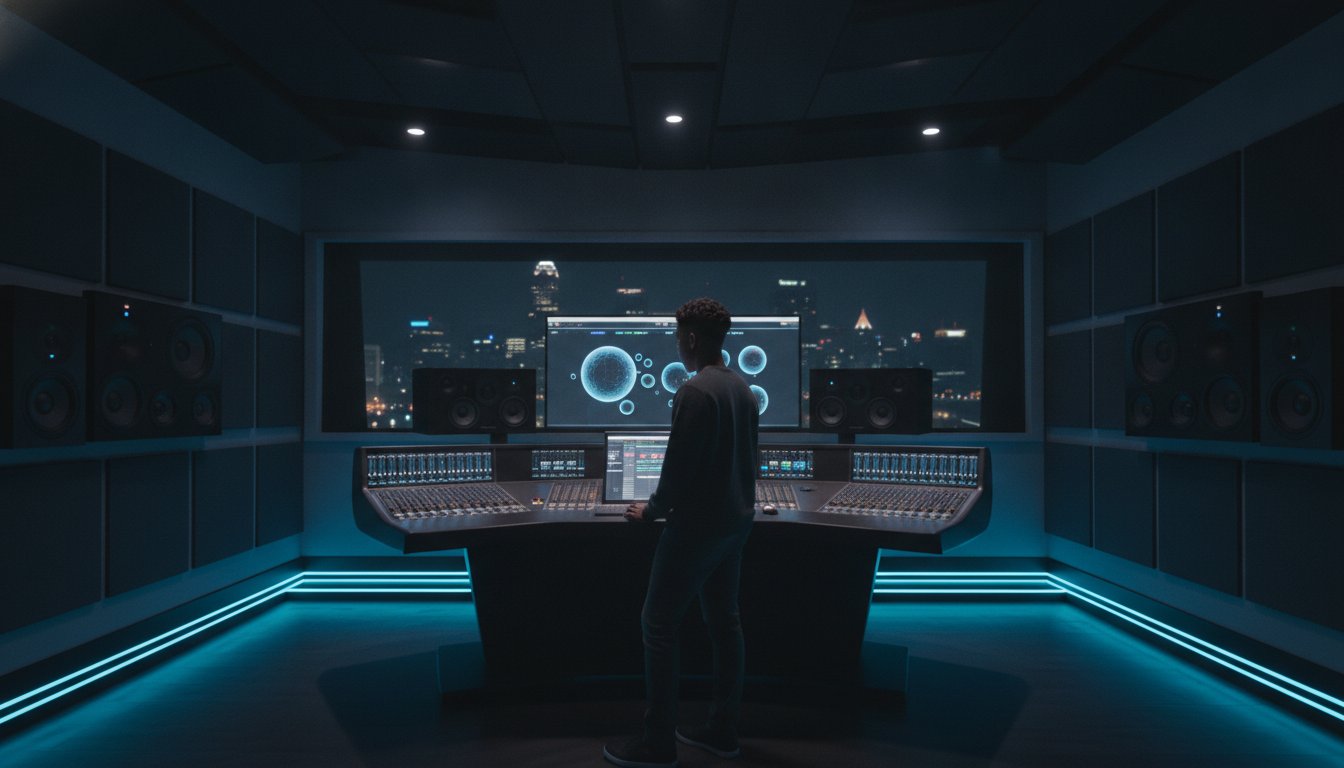
Access is often the greatest barrier to entry for spatial audio. Starsound Studios provides a unique opportunity as Ohio's first Dolby-certified Atmos facility. You aren't just reading about 9.1.4 monitoring; you're sitting in the sweet spot of a professionally calibrated environment. Our hands-on approach ensures you understand the science of object placement and the energy of a three-dimensional mix. It's the difference between theoretical knowledge and the professional confidence required for lead engineering roles. Ready to start? Enroll in our Audio Engineering classes today and master the future of sound.
Step Into the Control Room of the Future
The journey to the head engineer's chair is built on a foundation of technical precision and artistic intuition. You've seen that mastering the how to become a recording engineer path requires more than just watching tutorials; it demands a deep understanding of signal flow, the emotional intelligence to manage a room, and the foresight to embrace immersive 9.1.4 audio. The modern industry rewards those who can bridge the gap between raw creative energy and the sophisticated requirements of Dolby Atmos delivery. By prioritizing hands-on experience and professional mentorship, you transform from a technician into a vital creative collaborator.
Your vision deserves a dedicated space to grow. At Starsound Studios, we provide the ultimate sanctuary for aspiring engineers in Ohio's only Dolby-certified Atmos suite. You'll receive direct, hands-on training on professional gear under the guidance of industry veteran Steve 'The Mix'. Don't leave your career to chance or generic online courses when you can learn in a working, high-end environment. Start Your Journey at Starsound Studios—View Our Classes and take command of your sonic future. The industry is waiting for your unique perspective; let's make sure you have the technical mastery to let it shine.
Frequently Asked Questions
Do I need a college degree to become a recording engineer in 2026?
You don't need a formal college degree to break into the professional audio world. While many engineers hold a bachelor's in audio production, the industry increasingly prioritizes technical proficiency and a robust portfolio over traditional credentials. Hands-on mentorships or specialized trade schools often provide a faster route to the console. Success depends on your ability to deliver world-class results in a high-pressure studio environment.
How much does an entry-level recording engineer make?
An entry-level recording engineer with one to three years of experience earns approximately $55,194 per year. Across the United States, the average salary for the profession is $62,249 annually. These figures can fluctuate based on your location and whether you're a staff engineer or a freelancer. Senior-level engineers with over eight years of experience can see their earnings rise toward $84,920 or higher.
What is the best DAW for a beginner to learn first?
Pro Tools remains the industry standard for tracking and editing, making it the most essential software for any beginner. The current version, Pro Tools 2026.4, is the universal language of professional facilities. Mastering this tool is a core part of how to become a recording engineer with professional agility. If your focus is primarily on MIDI and creative production, Logic Pro is an excellent secondary powerhouse to master.
How do I find recording studio internships near me?
Start by researching professional facilities in your area and studying their specific sonic identity. Visit these studios in person or send a personalized inquiry that highlights your reliability and technical curiosity. Networking at local music events and joining audio communities in cities like Cleveland can also reveal unlisted opportunities. Being the most dependable person in the room is often the fastest way to secure a position.
Is audio engineering a dying career because of AI?
Audio engineering is evolving, not dying. While AI tools are now mainstream for tasks like cleaning up low-quality audio or basic leveling, they can't replace the artistic intuition of a human collaborator. The role has shifted toward being a technical architect of an artist's vision. Engineers who master immersive formats like Dolby Atmos will find themselves in high demand as the industry moves toward three-dimensional soundscapes.
What equipment do I need for a basic home recording setup?
A professional home setup requires a reliable computer, a Digital Audio Workstation, and a quality audio interface. You'll also need a versatile condenser microphone and a pair of transparent studio monitors or high-fidelity headphones. Focus on getting a clean capture at the source. This foundational gear allows you to practice the basics of tracking and mixing as you build the technical foundation necessary for high-end studio environments.
How long does it take to become a professional audio engineer?
The path typically takes three to five years to reach mid-level professional roles. Most engineers begin as assistants, spending their early years mastering session flow and technical troubleshooting. Reaching a senior-level position generally requires seven to ten years of consistent experience and a diverse portfolio. Understanding how to become a recording engineer means committing to a marathon of technical growth and creative refinement.


