
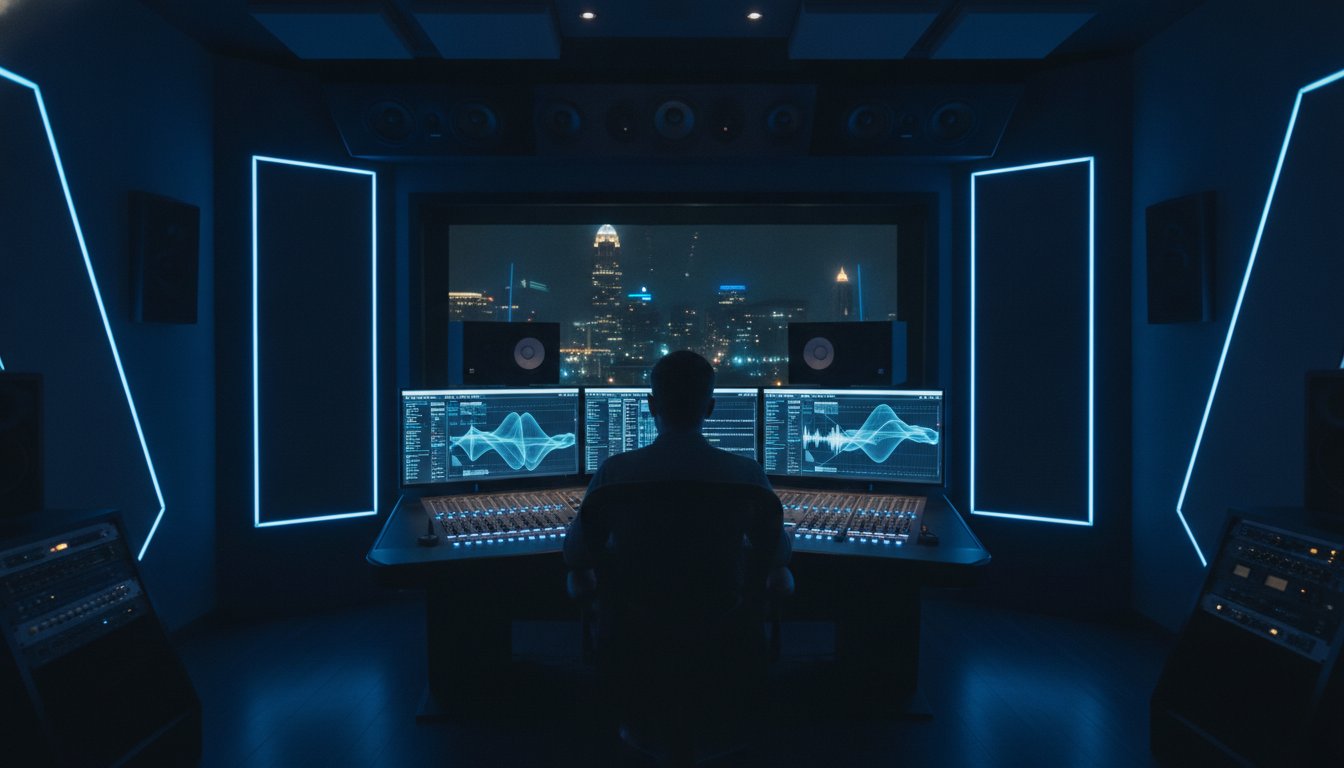
Why does a vocal tracked in a bedroom often feel thin and brittle compared to the lush, three-dimensional energy of a professional session? You have likely spent hours wrestling with plugins only to realize that software cannot fully replicate the physical weight and character of high-end analog hardware. It is a common frustration for creators who know their music deserves more than a "good enough" sound. Understanding exactly what to look for in a recording studio is the critical first step in bridging the gap between a hobbyist demo and a world-class production.
The difference lies in the precision of the signal chain and the acoustic truth of the environment. This guide will show you which equipment is actually worth the hourly rate, from flagship Neumann microphones to the legendary warmth of an AMS Neve 1073DPX preamp. We will explore how 2026 standards like Dolby Atmos 9.1.4 immersive audio and professional room correction create a listening experience that home setups simply cannot match. You will learn how to identify a facility that combines elite technical specs with a collaborative spirit, ensuring your project reaches its highest potential in a dedicated creative sanctuary.
Key Takeaways
- Discover why a professional signal chain, from high-end preamps to elite converters, is the foundation of a radio-ready sound.
- Learn how flagship microphones and analog outboard gear add the essential weight and warmth that define industry-standard vocal tracks.
- Identify the difference between simple soundproofing and professional acoustic treatment to ensure you hear the absolute truth of your mix.
- Understand the technical requirements of a 9.1.4 Dolby Atmos suite and why immersive audio is now the standard for modern streaming.
- Master the specific criteria for what to look for in a recording studio to ensure your project benefits from precision engineering and a creative atmosphere.
The Anatomy of a Professional Audio Signal Chain
Every legendary record begins with a single vibration in the air. The journey that vibration takes to reach your hard drive is known as the Audio Signal Flow. In a professional environment, this path is engineered for absolute transparency and emotional impact. When considering what to look for in a recording studio, you must look beyond the brand names on the rack. You are looking for a cohesive ecosystem where every component is designed to preserve the integrity of your performance. A professional signal chain is a series of high-stakes handoffs. If one link falters, the entire production suffers.
The "weakest link" theory is the golden rule of audio engineering. You can track through a vintage tube microphone worth ten thousand dollars, but if that signal passes through a budget converter or a noisy preamp, the "magic" is lost forever. Professional facilities prioritize the invisible infrastructure that home setups often ignore. This includes:
- Oxygen-Free Copper (OFC) Cabling: Using 99.99% purity standards to ensure minimal signal degradation over distance.
- Power Conditioning: Dedicated circuits and voltage regulators that eliminate electromagnetic interference and hum.
- High-End A/D Converters: Professional units that translate analog voltage into digital data with surgical precision, avoiding the "jitter" and phase issues common in consumer interfaces.
Understanding Input Gain and Headroom
Professional gear is built to handle the extremes. While entry-level equipment often introduces a "hiss" or noise floor as you turn up the volume, elite preamps provide clean, effortless gain. This creates massive headroom. It allows a vocalist to move from a whisper to a scream without the signal clipping or becoming thin. Pro-grade components capture fast transients, the sharp "attack" of a snare or a plucked string, with a speed and accuracy that digital emulation simply cannot replicate. It is the difference between a flat image and a high-definition photograph.
The Role of the Audio Interface in 2026
The modern studio has moved far beyond simple USB connections. Today, professional facilities utilize Thunderbolt 4 or Dante networking to move massive amounts of data with near-zero latency. At Starsound Studios, we prioritize this high-speed architecture because it allows artists to hear themselves with zero delay, which is essential for a confident performance. A critical but often overlooked component here is the "master clock." A dedicated external clock ensures all digital devices are perfectly synchronized, resulting in a wider stereo image and a deeper, more defined low end. This technical rigor ensures that what you hear in the booth is exactly what ends up on the record.
Flagship Microphones and Preamps: The Front End of Sound
The "front end" of a studio is where the physical energy of your performance transforms into an electrical signal. It is the most critical stage of production. When you are evaluating what to look for in a recording studio, the microphone locker and preamp rack act as the primary indicators of quality. These are not just tools; they are the sonic lenses that determine the clarity, depth, and "expensive" feel of your final track. A professional engineer understands that a microphone must be matched to the vocalist's unique frequency response to capture the most flattering version of their performance.
The choice between a large-diaphragm condenser and a ribbon microphone is a matter of artistic intent. Condensers are prized for their sensitivity and high-end detail, making them the go-to choice for modern pop and hip-hop vocals. Ribbon microphones, conversely, offer a darker, more "vintage" character that smooths out the harsh transients of electric guitars or brass. While the microphone captures the direct source, the surrounding Studio Acoustics influence how that microphone perceives space and depth, which is why professional tracking rooms are meticulously tuned.
The Industry Standard Microphones
The Neumann U87 remains a legend in Cleveland recording studios for a reason. Its unique mid-range presence allows a vocal to "sit" perfectly in a mix with minimal processing. For acoustic instruments, small-diaphragm condensers capture the intricate shimmer of strings with surgical precision. When you want to tame a piercing guitar amp, a high-quality ribbon mic provides a natural roll-off that feels warm and organic rather than muffled.
The Power of the Preamp
If the microphone is the lens, the preamp is the film. Professional preamps from Neve or API do more than just turn up the volume; they add "weight" and "musicality" through harmonic distortion. Transistor-based preamps offer punch and aggressive character, while tube-based units provide a soft, saturated glow that is perfect for soulful vocals. High-end consoles also ensure that phantom power (48V) is delivered with absolute stability, preventing the subtle pitch drifts or noise floor increases common in budget interfaces. Impedance matching is the electrical synchronization between a microphone's output and a preamp's input that ensures maximum power transfer and a flat, accurate frequency response.
Choosing the right combination of gear requires a collaborative mentor who understands the science of sound. If you are ready to elevate your next project with a world-class signal chain, the experts at Starsound Studios can help you select the perfect front-end configuration for your unique sound.
Analog Outboard Gear vs. Digital Plugins
The digital revolution has brought world-class processing to every laptop, yet the allure of physical racks remains stronger than ever. When you are determining what to look for in a recording studio, the presence of analog outboard gear is a primary indicator of a facility's commitment to sonic depth. While plugins offer incredible convenience, physical compressors and EQs interact with electrical voltage in a non-linear fashion that digital code still struggles to fully replicate. It is the difference between a high-resolution photograph of a landscape and actually standing in the field. The hardware adds a "soul" and three-dimensional weight that defines a professional record.
A common question persists: can a plugin truly replace a four-thousand-dollar hardware compressor? In 2026, digital emulations are closer than ever, but they often lack the harmonic saturation and tactile response of the original units. Physical gear invites a different kind of engineering. Instead of staring at a screen and clicking a mouse, an engineer uses their ears to find the "sweet spot" by turning physical knobs. This tactile advantage leads to more decisive, artistic choices. It transforms the engineering process from a technical chore into a creative performance, resulting in a mix that feels more alive and urgent.
Dynamic Processing in the Analog Domain
Understanding the flavors of control is essential for a polished sound. VCA compressors provide a fast, aggressive snap that is perfect for drums, while Opto compressors offer a slower, more musical release that flatters soulful vocals. At Starsound Studios, we believe in committing to a great sound early in the process. By tracking through these analog units, we bake the character and control into the file from day one. This proactive approach ensures that the artist hears a "finished" sound during playback, which often inspires a more confident and inspired performance.
The "In-the-Box" Revolution
Digital tools are not just a fallback; they are a necessity for modern precision. Plugins are undeniably superior for surgical tasks, such as removing a specific frequency resonance or executing complex automation that would be impossible with two hands on a console. High-quality Digital Signal Processing (DSP) allows us to maintain massive session counts without technical lag. The hallmark of a top-tier facility is a hybrid workflow. This strategy leverages the recall and surgical accuracy of digital software alongside the undeniable warmth of analog hardware. When searching for what to look for in a recording studio, prioritize those that bridge these two worlds to achieve a world-class result.

Monitoring and Acoustics: Hearing the Truth
Your speakers are only as good as the room they are sitting in. This is a fundamental law of physics that every professional engineer respects. When you are assessing what to look for in a recording studio, the acoustic environment is just as vital as the gear on the desk. In an untreated room, sound waves bounce off hard surfaces, creating a chaotic listening environment where you cannot trust what you hear. A professional studio is a controlled space designed to provide "the truth," allowing for mixing decisions that translate perfectly to every playback system, from car speakers to club stacks.
A common misconception exists between acoustic treatment and soundproofing. Soundproofing is the structural process of keeping sound from entering or leaving a room. Acoustic treatment, however, is the art of managing the sound inside the room. Professional control rooms utilize a strategic blend of bass traps, diffusers, and absorbers. Bass traps sit in corners to prevent low-end energy from gathering and blurring the mix. Absorbers eliminate harsh reflections, while diffusers scatter sound to maintain a sense of space without creating echoes. This balance ensures the room feels alive but remains surgically accurate.
Precision Monitoring Systems
Engineers check for translation using two primary types of speakers. Near-field monitors sit close to the listener to minimize the room's influence, while far-field monitors provide a larger, more physical representation of the music. Professional monitors are designed with a "flat" response. Unlike consumer speakers that boost bass or treble to sound "better," pro monitors are honest. They reveal flaws so they can be fixed. Whether using active monitors with built-in power or passive systems paired with high-end amplifiers, the goal is absolute transparency. In a professionally tuned room, subwoofers are not just for volume; they provide the low-end accuracy needed to manage frequencies that home setups simply cannot reproduce.
The Science of Room Calibration
Even the best rooms have minor anomalies. In 2026, professional facilities use advanced software like Sonarworks SoundID Reference to measure and correct the final percentage of frequency imbalances. This calibration ensures that the listening position is a "sweet spot" of perfect phase and frequency alignment. Standing waves occur when sound reflects between parallel surfaces and reinforces specific frequencies, creating "boomy" or "dead" spots that can ruin a mix in an untreated room. Choosing a dedicated North Royalton studio environment over a bedroom ensures you are not fighting the physics of your space.
If you want to experience a room where you can finally hear every detail of your work with absolute clarity, book a session at Starsound Studios and hear the difference that professional acoustics make.
Immersive Audio: The 9.1.4 Dolby Atmos Standard
Music is no longer confined to a flat plane between two speakers. The industry is currently undergoing its most significant shift since the move from mono to stereo. As you evaluate what to look for in a recording studio, you must consider whether the facility is equipped for the immersive future. Dolby Atmos has become the gold standard for major streaming platforms, offering a three-dimensional soundscape that places the listener inside the music. A 9.1.4 configuration, consisting of nine horizontal speakers, one subwoofer, and four height channels, is the premium standard for creating these expansive environments.
Being "Dolby Certified" is not a mere marketing label. It is a rigorous technical standard. It ensures that the room's dimensions, acoustic treatment, and speaker calibration meet the exact specifications required by Dolby’s engineers. This certification guarantees that your mix will translate accurately across all Atmos-enabled systems. The equipment required is substantial, involving specialized renderers and high-fidelity speaker arrays that can handle the complex metadata of object-based audio. This technology fundamentally changes the engineering process. We no longer just "pan" sounds left or right; we place them in a specific physical space, allowing for unparalleled clarity and emotional depth.
The Future of Music Distribution
The demand for immersive content is being driven by giants like Apple Music and Amazon Music. These platforms prioritize Atmos tracks in their editorial playlists, making it essential for artists who want to stay competitive. While the full 9.1.4 array is used for the mix, the final product is often delivered as a "binaural" master for headphone listeners. This allows fans to experience the 3D effect on standard earbuds, providing a premium listening experience that traditional stereo simply cannot match. Augmenting your traditional stereo gear with an immersive array is the only way to future-proof your discography in 2026.
Booking Your Session at Starsound
Starsound Studios is proud to be the first and only Dolby-certified Atmos mixing studio in Ohio. We offer a 9.1.4 immersive audio suite designed to give your project the world-class polish it deserves. Owned by Steve "The Mix" with over 10 years of expertise, our facility serves as a creative sanctuary where technical precision meets artistic vision. Our high-end signal chains and certified environment ensure that your fans hear your music exactly as you intended. If you are ready to move beyond the limitations of home recording, Book a session at our North Royalton recording studio and step into the future of sound.
Step Into the Future of Sound
Achieving a radio-ready sound is a journey that requires more than just talent; it demands an environment where every technical detail is handled with absolute precision. From the initial capture through a flagship microphone to the final immersive mix in a calibrated suite, the quality of your output depends on the integrity of the facility you choose. Identifying what to look for in a recording studio means prioritizing a disciplined signal chain and the acoustic truth that only a professional space can provide. Your music deserves to be heard in three dimensions, free from the limitations of home-recorded compromises.
At Starsound Studios, we provide the high-end tools and collaborative mentorship needed to realize your highest potential. As Ohio’s first and only Dolby-certified Atmos studio, we offer a state-of-the-art 9.1.4 immersive audio suite and the seasoned expertise of Steve 'The Mix'. We are invested in your vision and dedicated to delivering a polished, world-class result that resonates with your audience. Elevate your sound with Cleveland’s premier recording equipment at Starsound Studios and let your creativity thrive in a sanctuary built for excellence. Your masterpiece is waiting to be captured.
Professional Recording Standards: Your Questions Answered
What is the most important piece of equipment in a professional recording studio?
The most critical "equipment" is actually the acoustic environment and the monitoring system. You cannot fix what you cannot hear. A professionally tuned room allows an engineer to make surgical decisions with confidence, ensuring that the warmth of a preamp or the shimmer of a microphone is captured accurately without the room's reflections interfering with the truth of the signal.
Do I need professional equipment if I only record vocals?
Vocals are the emotional centerpiece of your music, making a high-end signal chain essential for a competitive sound. Professional gear provides the massive headroom and low noise floor needed to capture every breath and whisper with absolute clarity. This level of detail is a primary factor in what to look for in a recording studio when your goal is a radio-ready vocal that sits perfectly in the mix.
Why do professional studios still use analog gear in 2026?
Analog hardware remains a staple because of the unique harmonic saturation and non-linear "weight" it adds to digital files. Physical compressors and EQs interact with electrical voltage in a way that creates three-dimensional depth and character. The tactile workflow also encourages more decisive, artistic choices, moving the production process away from a computer screen and back into the realm of creative performance.
What is the difference between a home audio interface and a professional converter?
The difference lies in the precision of the A/D conversion and the stability of the master clock. Professional converters translate analog voltage into digital data with significantly less jitter and phase distortion than consumer-grade USB interfaces. This results in a wider stereo image, a deeper soundstage, and a more defined low end that is essential for modern high-fidelity distribution.
How does acoustic treatment affect the sound of my gear?
Acoustic treatment ensures that your gear performs at its maximum potential by eliminating standing waves and frequency buildup. Without bass traps and diffusers, even the most expensive monitors will provide an inaccurate representation of your mix, leading to "boomy" or "hollow" sounds that don't translate to other systems. Treatment allows you to hear the gear itself rather than the flaws of the room.
What equipment is needed for a Dolby Atmos mix?
A certified 9.1.4 Dolby Atmos setup requires an array of twelve speakers plus a dedicated subwoofer, all managed by a specialized Atmos renderer. This configuration includes nine horizontal speakers and four height channels to create a true three-dimensional dome of sound. It also requires high-speed networking like Dante to move complex object-based audio metadata with zero latency.
Can I learn to use this professional equipment at Starsound Studios?
You can master the science of the signal chain through our Audio Engineering Classes. We prioritize a collaborative mentor approach, giving gear enthusiasts hands-on experience with the same flagship hardware used in our professional sessions. These classes are designed to bridge the gap between home recording and high-level studio production, guided by the decade of expertise provided by Steve 'The Mix'.
Is a professional recording studio worth the cost for an independent artist?
Investing in a professional facility is an investment in your brand’s authority and the longevity of your music. With streaming platforms now enforcing strict loudness targets and prioritizing immersive formats, the technical precision of a pro studio ensures your work meets global industry standards. It provides a level of polish and impact that home setups simply cannot replicate, giving you a distinct advantage in a crowded market.


