

What if the most useful revision note isn’t a technical instruction, but a clear description of what you hear? A finished master can be hard to assess: you may know something needs attention, but not whether it’s a mastering concern, a mix preference, or simply the excitement of hearing the track polished. Learning how to listen to a master for revisions gives you a steady way to sort through those reactions and share feedback that moves the song forward.
You don’t need to diagnose the processing or prescribe a fix. Listen with a clear focus, notice how the master feels across the song, and describe specific moments that don’t match your artistic intent. Clear, prioritized observations help your mastering engineer understand what matters most and reduce the risk of vague or conflicting notes slowing the revision process.
This guide offers a repeatable approach: how to prepare for a listening pass, what to pay attention to, how to distinguish mastering adjustments from mix issues, and how to turn your observations into concise revision notes. The goal is a more confident collaboration and a final master that stays true to the energy and character of your music.
Key Takeaways
- Begin with an uninterrupted listen and capture your overall impression before judging individual details.
- Use focused listening passes at a comfortable, consistent volume to assess how the master translates across the track.
- Describe what you hear before deciding whether it points to the stereo master or an individual mix element.
- For how to listen to a master for revisions, organize feedback with a timestamp, observation, desired outcome, and priority.
- Send one consolidated set of notes with your approved reference so your engineer can respond to your artistic intent.
Master Revisions: Start with a Clear First Impression
You don’t need advanced engineering vocabulary to give useful feedback. Start by listening attentively. For your first pass, play the entire master without pausing, rewinding, or reaching for the controls. Use a familiar playback setup you trust for focused listening. A phone speaker can show how a track comes across on a small device, but it shouldn’t be your only reference for judging the master.
An uninterrupted listen captures the song’s impact before detailed troubleshooting takes over. Notice whether the performance draws you in, whether the energy feels right, and whether anything distracts you from the music. Write down a few brief impressions, not a list of fixes. This gives you a starting point for how to listen to a master for revisions without treating every first reaction as a technical problem.
What should you notice on the first listen?
Ask whether the vocal, instruments, and overall energy feel aligned with the song’s intention. Does the chorus lift as expected? Does the vocal feel present in the emotional center of the track? Note anything that surprises you or pulls your attention away, but don’t decide yet which processing caused it.
Keep your notes in two layers: the emotional response, such as “the ending feels less powerful than I expected,” and the audible observation, such as “the final chorus seems to lose impact.” Separating the two helps preserve your artistic intent while giving you clearer details to investigate later.
Why familiarity with the song matters
You know the arrangement, balance, and creative choices behind the approved mix. Bring that context into your listening. Consider the references or direction shared before mastering, then compare the master with the approved mix rather than judging it only against an unrelated commercial track. A commercial reference can suggest a sonic direction, but it may have a different arrangement, recording, or artistic goal.
If you’re new to the process, What is audio mastering? offers background on the discipline and its role in preparing audio. That context can help set expectations: mastering works with the finished stereo mix, while your review should focus on whether the result supports the sound you intended.
Keep the first pass simple. Jot down a few words about the song’s overall feel, then save detailed comparisons for a later listen. You’ll have a more reliable sense of the master as a whole before focusing on individual moments.
A Step-by-Step Listening Process for Evaluating a Master
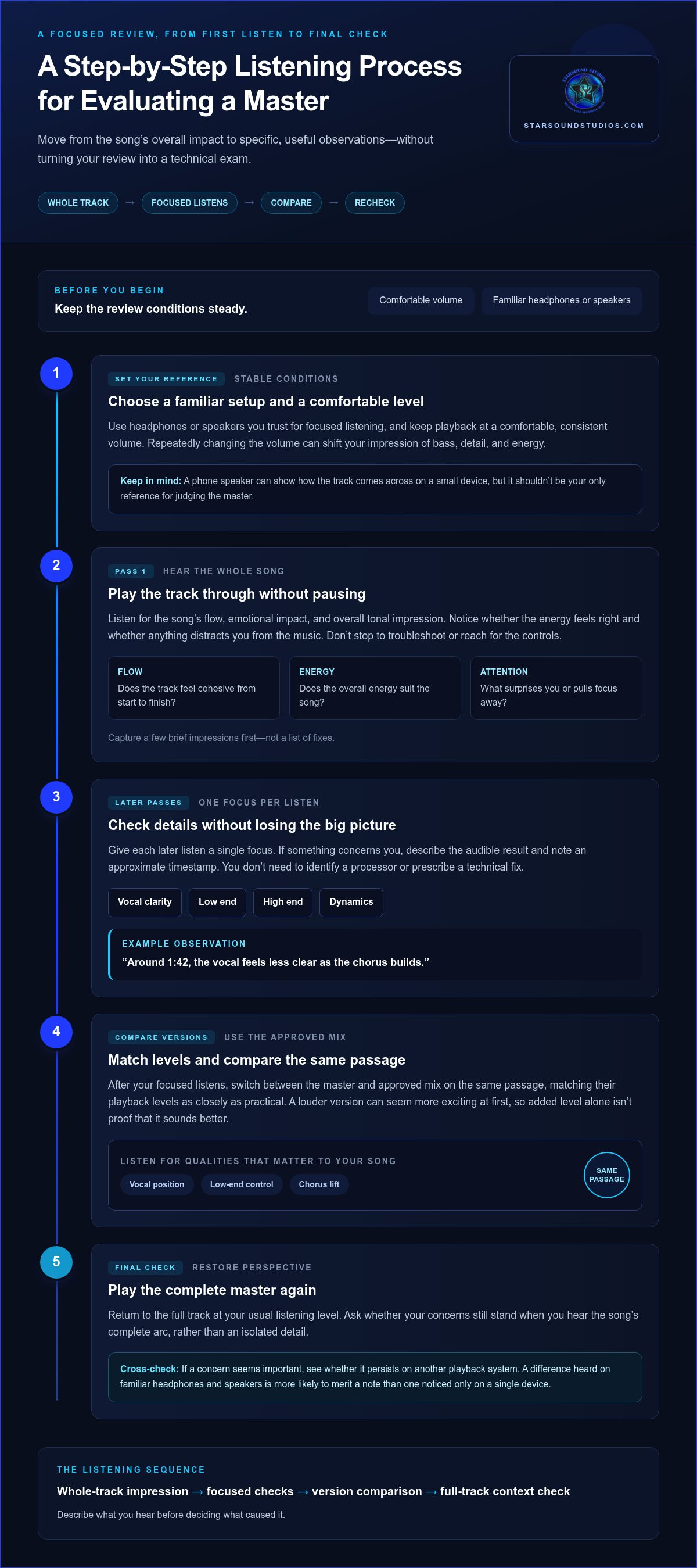
A repeatable sequence keeps a review focused without turning it into a technical exam. Keep playback at a comfortable, consistent level. Turning the volume up and down repeatedly can change your impression of bass, detail, and energy. Start with familiar headphones or speakers you trust, and use the same setup for your main review. A revision note is a concise observation about an audible result you’d like changed or preserved.
Listen once for the whole song, then focus on details
First, play the track through without pausing. Listen for its flow, emotional impact, and overall tonal impression. Don’t stop to troubleshoot. On later passes, give each listen one focus, such as vocal clarity, low end, high end, or dynamics. If a concern belongs to a particular moment, note an approximate timestamp and describe what you hear.
For example: “Around 1:42, the vocal feels less clear as the chorus builds.” That’s more useful than trying to identify a specific processor or prescribe a fix. If the concern seems important, check whether it persists on another playback system. A difference you hear on familiar headphones and speakers is more likely to merit a note than one you notice only on a single device.
Compare versions without letting loudness mislead you
If you have the approved mix available, compare it with the master after your focused listens. Match their playback levels as closely as practical, switching between the same passage rather than relying on memory. A louder version can seem more exciting at first, so don’t treat added level as proof that one version sounds better. Listen for the qualities that matter to your song: perhaps the vocal sits differently, the low end feels more controlled, or the chorus has a different sense of lift.
Finish with a context check. Play the master again as a complete track at your usual listening level. Ask whether your concerns still stand when you hear the song’s full arc, rather than an isolated detail. This sequence makes how to listen to a master for revisions more consistent: whole-track impression, focused checks, version comparison, then a final listen for perspective.
For a remote master, sharing the approved mix and concise listening notes helps keep the exchange centered on your intent. Explore remote mastering collaboration as part of that process.
Mastering Revision or Mix Preference? How to Tell What Needs Feedback
It’s not always obvious whether a concern belongs to mastering or the mix. Start by describing what you hear, not by diagnosing the production stage. A mastering revision generally addresses the finished stereo result, while a mix preference involves the balance or sound of individual instruments. Once you’ve identified the listening outcome you want, the engineer can assess the technical path.
That distinction matters because a stereo master doesn’t provide independent control over every track in the session. Asking for the whole song to feel warmer is different from asking for only the snare to sound softer. Neither request is automatically wrong, but the second may call for a mix adjustment rather than a change to the stereo master.
Which concerns are useful to raise about a master?
Raise concerns you can hear consistently in the finished track. For example, the overall tone may feel persistently too bright for the agreed direction, a peak may distract from a key vocal moment, or the level may not suit your release goal. Describe the moment, the playback context, and the impact on the song. “The vocal feels sharp on headphones during the second chorus” gives the engineer more to work with than “reduce the highs.”
Focus on the desired result rather than prescribing a plugin, EQ move, or other processing choice. Your observation communicates what the music needs; the mastering engineer can evaluate an appropriate response. Distinguish taste from defect, too: “I prefer a darker tone” is a valid artistic preference, but it isn’t an objective flaw. Consider whether the master matches the direction agreed for the project.
When might a concern belong to the mix instead?
Consider whether the issue is tied to one instrument’s relationship with another. If the lead vocal is too quiet only when the guitars enter, or the kick seems to overpower the bass in a particular section, describe that relationship. Don’t assume the mastering engineer can adjust those elements independently from the stereo file. Your note can help clarify whether the concern needs attention in the mix.
Knowing how to listen to a master for revisions includes recognizing what the final stereo file can and can’t reveal about the source mix. For broader context on how these production stages relate, explore the studio’s information about professional mixing and mastering services.
Revision scope depends on the project agreement, so don’t assume every mastering process includes the same number or type of revisions. Review the agreed scope, then prioritize notes that address the intended sound. A clear, collaborative description lets the engineer assess the request and recommend a suitable next step.
How to Write Clear, Actionable Master Revision Notes
Once you’ve listened carefully, turn your observations into a short, organized message. A useful note gives your engineer four things: where to listen, what you hear, what you’d like the listener to experience instead, and how important the change is. This format keeps your artistic intent clear without prescribing a specific EQ move, compressor setting, or other technical fix.
A simple format for timestamped feedback
Put the timestamp first, then identify the section, describe the audible concern in plain language, and state the desired outcome. Be specific enough that someone can find and understand the moment. Avoid notes like “make it better” or “add more polish.” Focus on what you hear and how you want the track to feel.
Example: “2:15, final chorus: the vocal feels less distinct against the instruments; I’d like it to remain easy to follow while keeping the chorus’s full energy.” This note identifies a moment, describes an audible relationship, and states the desired outcome while leaving the technical approach to the mastering engineer.
If a concern affects the whole song rather than one timestamp, say so. For example, describe whether the overall tone feels consistently brighter or darker than the agreed direction. Keep each note focused on one idea so priorities don’t get buried in a long paragraph.
How to organize priorities and group feedback
Mark each comment as essential or optional. Essential notes describe a change that affects whether the master meets the agreed direction. Optional notes capture preferences you’d welcome but don’t need for approval. Group related observations, such as notes about vocal clarity, rather than repeating similar points at different timestamps.
If bandmates or collaborators are reviewing the master, agree on one consolidated set of feedback before sending it. Resolve conflicting preferences together and have one person gather the final notes. This gives the engineer a coherent artistic direction instead of competing instructions.
Give your notes one final read before sending. Check that every essential item explains what you hear and the result you’re aiming for. Remove suggestions that prescribe a technical solution without clarifying the goal. If a future project needs attention earlier in production, prepare those mix materials separately from your notes on the finished master.
Ready to share focused feedback on your master? Work with Starsound Studios on mastering and communicate the sound you’re aiming for.
Share Your Master Feedback and Move Toward the Final Version
Clear feedback is most useful when it arrives with enough context to act on. Send the track title and the master version you reviewed, then include your consolidated, prioritized notes with timestamps. If you’re comparing the master with an approved mix or reference, identify that file too, so the engineer knows what you’re using as a point of comparison.
Keep the exchange collaborative. Your role is to communicate the artistic intent and describe what you hear; the engineer’s role is to evaluate the technical path toward that outcome. You don’t need to prescribe processing. A note such as “the low end feels less defined than the approved mix in the second verse” gives the engineer a clear listening target while leaving room for professional judgment.
What to include when sending revision feedback
Before sending, make sure your message includes the track and version, the approved reference if relevant, and one organized list of notes with priorities and timestamps. Mention the playback context where a concern stood out, such as familiar headphones or speakers. That detail describes your experience, but it doesn’t make one device the only valid test. If an issue matters, explain what you hear and where it occurs.
How to review the updated master
When the revised version arrives, return first to your original notes. Revisit each marked moment and ask whether the requested listening outcome is clearer. Then play the full track, not only the edited sections. A change should address the concern while still serving the song’s overall balance, energy, and intended release direction.
Listen with the same care you used for the first version. If the original issue remains, describe what you hear now and whether it has changed. If the update feels right, check that the complete track still supports the sound you and the engineer agreed to pursue. This keeps your final decision anchored in both specific feedback and the music as a whole.
A thoughtful process makes how to listen to a master for revisions more than a checklist. It turns listening into a focused conversation between artist and engineer, guided by the character of the track. To bring that collaborative approach to your release, explore Starsound Studios mastering services, including remote mastering.
Turn Careful Listening Into a Confident Final Master
A strong revision process starts with hearing the track as a whole, then checking specific moments with a clear purpose. Describe what you notice before deciding whether it points to the master or the mix, and give your engineer concise notes with timestamps, desired outcomes, and priorities. That’s how to listen to a master for revisions while keeping the conversation grounded in your artistic direction.
Each revision is a collaboration: you bring the vision for the music, and the engineer evaluates how best to shape the sound. Review any update against your original notes, then listen through the full song to make sure the changes serve the entire track and its release goals.
Starsound Studios provides professional stereo mixing and mastering from its North Royalton, Ohio studio, serving Cleveland-area artists and offering remote mastering to clients worldwide. Explore professional mastering with Starsound Studios and bring your music closer to the sound you hear in your mind. Trust your ears, share your intent, and let the next listen move the track forward.
Frequently Asked Questions
How many times should I listen to a master before requesting revisions?
There’s no fixed number, but give the master more than one focused listen before sending notes. Start with an uninterrupted playthrough to take in the song as a whole, then revisit specific moments or elements that raised questions. Finish with a full-track listen to check whether those concerns still matter in context. This calm sequence is a practical way to listen to a master for revisions without reacting too quickly to isolated details.
Should I compare a master with the original mix?
Yes, if you have the approved mix available. Comparing the same passage can help you describe what changed, but match playback levels as closely as practical so loudness doesn’t bias your judgment. Use the mix as context, not as a demand that the master sound identical. Consider whether the final version supports the agreed artistic direction, and note specific audible differences that affect the song’s impact or balance.
What should I include in master revision notes?
Include the track and master version, a timestamp when relevant, what you hear, the outcome you want, and whether the note is essential or optional. Keep the wording concrete and focused on listening rather than technical instructions. For example: “1:30, the lead vocal feels less clear as the chorus builds; I’d like it to remain easy to follow.” Send one consolidated list so your engineer has a clear, prioritized reference.
Can I ask for a mastering revision if I only have a subjective preference?
Yes. A preference can be useful feedback even if it isn’t an objective technical defect. Explain the direction you prefer, such as a warmer overall tone or a more restrained sense of brightness, and connect it to the project’s agreed goals. Avoid presenting taste as a fault. Revision scope depends on your project agreement, so keep your request clear and let the engineer assess how it can be addressed in the master.
Should I send separate revision notes from every band member?
It’s usually clearer to gather everyone’s feedback into one agreed, prioritized set of notes. Separate messages can repeat the same observation or give conflicting direction, making it harder to understand the band’s shared intent. Ask members to identify their essential concerns and optional preferences, then resolve differences before sending. One person can consolidate timestamps and observations while ensuring the final notes reflect the group’s artistic direction.
How do I know whether a problem belongs to the mix or the master?
Describe the audible concern first; you don’t need to diagnose its cause. A change affecting the overall stereo result, such as persistent tonal balance, may be suitable to discuss as mastering feedback. A concern about one instrument’s level or its relationship to another may point to the mix. A stereo master doesn’t necessarily provide independent access to each track, so explain the moment and desired result instead of prescribing a fix.
Should I listen to a master on headphones, speakers, or both?
Start with familiar headphones or speakers you trust, and keep the playback level comfortable and consistent. If a concern stands out, check it on another reliable system to see whether it persists. Don’t rely on a phone speaker alone to judge the master’s full tonal balance or low end. Starsound Studios is based in North Royalton, Ohio, serving Cleveland-area artists, and offers remote mastering to clients worldwide.


