

A world-class record is rarely the result of a great performance alone. It's the product of a singular, guided vision. Many artists walk into a studio expecting a simple engineer, but they quickly discover that the real magic happens in the space between the notes. Raw energy. Polished sound. Total creative control. If you've ever caught yourself wondering what does a music producer actually do, you're not alone. It's a role that shifts by the hour, moving from a technical architect to a creative mentor, ensuring every frequency serves the song's soul.
It's easy to feel overwhelmed by the technical demands of 2026 audio while trying to maintain your artistic spark. You want your music to sound professional, yet the path from a raw demo to a world-class master feels like a maze of complex software and high-end gear. This guide promises to demystify the process, revealing how a producer balances technical precision with emotional intuition. We'll explore the roadmap of the production experience, from initial mentorship to the final engineering stages, giving you the clarity needed to elevate your sound to its highest potential.
Key Takeaways
- Differentiate between the beat maker and the project director to understand what does a music producer actually do when managing a song's total sonic identity.
- Learn how pre-production and performance coaching transform raw ideas into professional records by refining song structures and capturing the perfect take.
- Discover why the shift to immersive formats like Dolby Atmos is redefining the technical requirements for producers and engineers in 2026.
- Understand the business side of the booth, from managing studio budgets to scheduling session musicians for a world-class result.
- See why a dedicated creative sanctuary and expert mentorship are vital for any artist aiming to bridge the gap between a home demo and a polished master.
Defining the Music Producer: More Than Just Making Beats
In the high-stakes environment of a professional studio, the lines between roles often blur. You might see someone behind a laptop and assume they're just clicking buttons. However, when we ask what does a music producer actually do, we're looking at the person who holds the entire project together. They aren't just a technician; they're the project lead responsible for the sonic identity and the emotional vibe of every single track. They are the ones who decide if a vocal needs more grit or if a bridge requires a complete structural overhaul to hit the listener's heart with maximum impact.
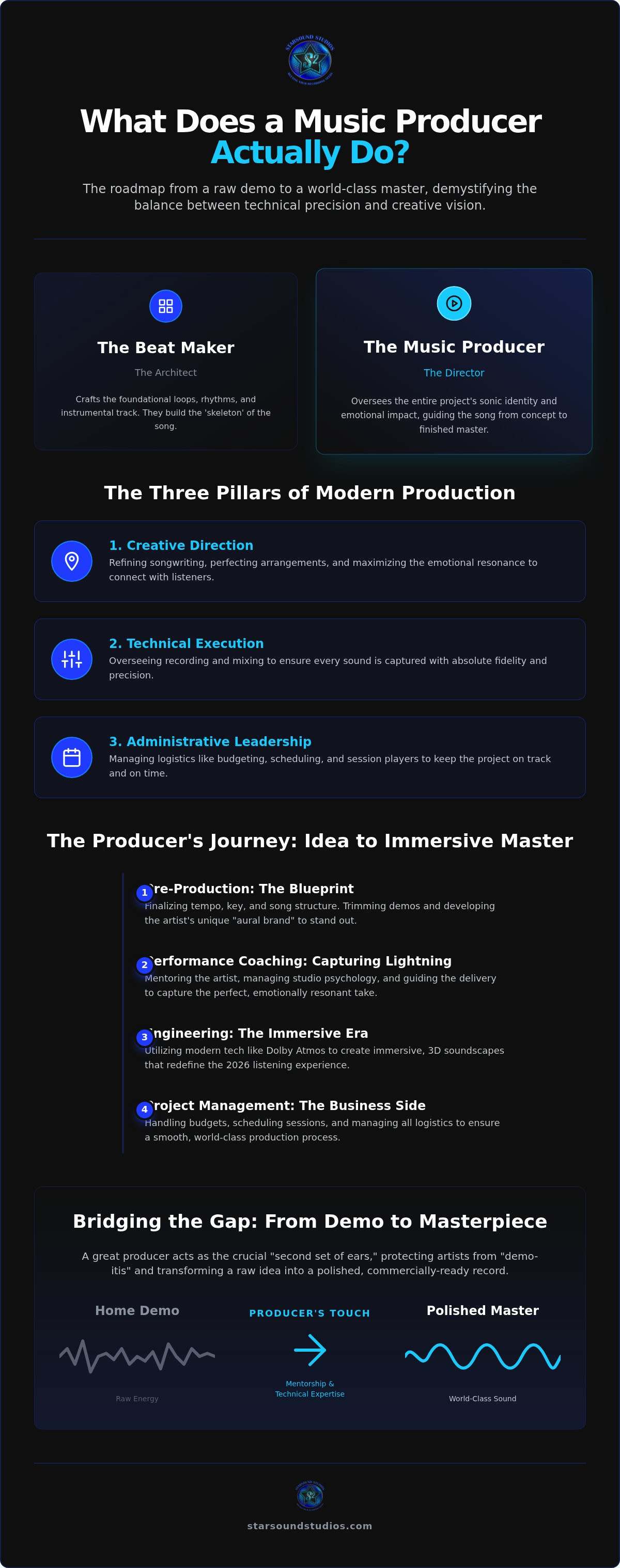
It's vital to distinguish between a beat maker and a producer. While a beat maker acts as the architect of the track, crafting the loops and rhythms, the producer is the director of the song. They see the finish line before the first note is recorded. The music producer serves as the essential bridge between an artist's raw creative vision and a polished, commercial-ready master. This role has evolved significantly from the "man in the suit" of the mid-century era to the modern creative partner we see today. For those interested in the historical evolution, Wikipedia offers a comprehensive overview of a record producer and how the profession has shifted over the decades from a corporate overseer to a hands-on sonic visionary.
The Three Pillars of Modern Production
High-level production rests on three foundational elements that ensure a project's success:
- Creative Direction: This involves refining the songwriting, perfecting the arrangement, and maximizing the emotional resonance of the track to ensure it connects with the audience.
- Technical Execution: The producer oversees the recording and mixing processes, ensuring every sound is captured with absolute fidelity and precision.
- Administrative Leadership: Handling the logistics is crucial. This includes budgeting, scheduling, and managing session players to keep the project moving without stifling the creative energy of the room.
Why Every Artist Needs a "Second Set of Ears"
Artists often fall victim to "demo-itis," a condition where you become so attached to a rough draft that you lose perspective on what the song truly needs. When you ask what does a music producer actually do during a session, the answer is often protecting the artist from their own biases. A producer provides the objective feedback required to push a song to its absolute limit. They aren't there to change your identity; they're there to amplify it. By acting as your most important creative advocate, a producer builds a foundation of trust that allows you to take risks. In a professional creative sanctuary, this collaboration ensures the final product isn't just finished; it's a world-class record that stands up to the highest industry standards.
The Creative Visionary: Shaping the Song’s DNA
Before the red light ever flickers to life, the producer is already deep in the trenches of pre-production. This is the blueprint phase where the song's skeleton is built. Tempo, key, and structure are finalized here because a weak foundation cannot support a world-class record. If you're asking what does a music producer actually do during these early hours, they are essentially acting as an editor. They trim the fat from a sprawling demo and find the three-minute masterpiece hidden inside. This process includes aural branding, where the producer helps the artist develop a unique sonic signature that cuts through the noise of the 2026 streaming landscape.
Coaching the Performance
Recording is a vulnerable act. A great producer acts as a mirror, reflecting the artist's best self back to them. They understand the psychology of the studio. When a vocalist is tired or nervous, the producer doesn't just demand another take. They might change the lighting, share a story, or pivot to a different song entirely to maintain a "flow state." It's about capturing lightning in a bottle. To truly understand what does a music producer actually do, you have to look at these subtle shifts in the room's energy. As Berklee explains in their breakdown of The Creative and Technical Roles, this mentorship is what separates a sterile recording from a performance that feels alive.
Vocal production requires a delicate balance of technical knowledge and emotional intuition. Producers use specific techniques to guide an artist, knowing exactly when to push for a more aggressive delivery and when a softer, more intimate approach is needed. This guidance ensures that the final vocal isn't just pitch-perfect; it's believable.
Arrangement: The Art of Subtraction
Modern production often suffers from too many layers. A producer’s job is often to say "no." They identify the primary hook and ensure every other instrument serves that focal point. They use dynamics to create an emotional arc, building tension and releasing it at the perfect moment to keep the listener engaged. This careful arrangement ensures the final mix has enough headroom and clarity to translate perfectly during professional audio mastering in Cleveland. If you're ready to see how this collaborative mentorship can transform your next project, booking time at a professional sanctuary like Starsound Studios is the natural next step in your creative journey.
The Technical Architect: Engineering and the Immersive Era
While the creative side of production focuses on soul and vibe, the technical side requires absolute precision. A producer acts as the architect of the sonic environment, overseeing the signal flow to ensure every sound is captured with maximum fidelity. It's a role that demands a deep understanding of how gear interacts with acoustics. When you ask what does a music producer actually do during a high-stakes tracking session, they're managing the delicate balance between the science of sound and the art of performance. They ensure that the technical choices, from mic selection to preamp settings, serve the song's emotional core.
Achieving this level of technical perfection often involves a close collaboration with a dedicated sound engineer. While the engineer focuses on the intricacies of routing and capture, the producer maintains the high-level vision. This partnership is one of the core duties of a music producer, allowing them to focus on the sonic "big picture" while the engineer handles the heavy lifting of the signal chain. Together, they dive into advanced sound design, crafting custom textures and unique sonic fingerprints that you won't find in any standard sample pack.
Producing for Dolby Atmos
The industry has moved beyond stereo. In 2026, producers must think in three dimensions. Immersive audio, specifically the 9.1.4 environment, allows sounds to be placed as objects in a 360-degree space. This shift changes everything about how a producer approaches arrangement. You're no longer just stacking tracks; you're placing them in a physical room. To execute this vision properly, you need a world-class facility. Starsound Studios is proud to be the only certified Dolby Atmos studio Cleveland creators can access, providing the high-end technical precision required for the immersive era.
Post-Production Oversight
Beyond the gear and the melodies, a producer is a master of logistics. They ensure the record actually gets finished. When people ask what does a music producer actually do, they often overlook the administrative weight. It's about budgeting for studio time and hiring session musicians. It's about keeping the clock. Without this structure, the most inspired sessions can bleed into endless delays. A producer manages the funds, ensuring that high-priority needs, like mastering or specialized session players, aren't sacrificed for minor details. They provide the grounded assurance that the technical details are handled while you focus on the art.
Networking is another hidden superpower. A producer connects you with the right distributors and engineers. They handle the paperwork that ensures you get paid. This includes managing credits and splits. It's the unglamorous side of the industry that protects your future royalties. They ensure that every contributor is properly documented before the first stream even happens. By acting as a seasoned expert, they navigate the complexities of the industry so your work remains in both capable and passionate hands.
Session Logistics and Flow
Time is the most expensive asset in any professional recording studio North Royalton. A producer manages the clock so you don't have to. They act as the buffer between the business world and your creative sanctuary. If a label rep has notes or a band member is falling behind, the producer handles the friction. They coordinate stakeholders and keep the energy focused on the music. This leadership allows you to stay in the zone while the logistical gears turn behind the scenes. It's a steady and intentional rhythm that moves the project toward a polished, world-class result.
From Session to Streaming
The job doesn't end when the last fader is pushed down. A producer oversees the delivery of high-quality audio format aiff or WAV files. They ensure every file is tagged with accurate metadata for digital distribution. In 2026, this step is critical for royalty tracking. It's a core part of what does a music producer actually do to prepare the artist for the post-production launch and marketing phase. They guide you through the transition from the booth to the marketplace. If you're ready to take your project from a rough demo to a world-class release, booking a session at a professional recording studio North Royalton ensures your business is handled as precisely as your sound.
Elevating Your Sound: Why the Right Producer and Studio Matter
The rise of high-quality laptop recording has democratized music, but it has also created a ceiling for many artists. There is a tangible, audible difference between a "home-made" sketch and a world-class record. While a bedroom setup is perfect for capturing raw ideas, it often lacks the acoustic neutrality and high-end signal chain required for a commercial release. A professional environment acts as a creative sanctuary. It removes the technical distractions that plague home sessions, allowing you to focus entirely on the spirit of the performance. When you understand what does a music producer actually do in this setting, you realize they are the curators of this atmosphere, ensuring that every artistic risk you take is supported by absolute technical precision.
Mentorship is the missing ingredient in most home studios. A laptop can't tell you if a vocal take feels forced or if an arrangement is cluttered. If you're still wondering what does a music producer actually do to justify the investment, look at the results. They bridge the gap between your current sound and your highest potential. By providing objective feedback and leveraging decades of engineering authority, a producer transforms a collection of tracks into a cohesive, professional identity. This collaborative process ensures your music doesn't just sound "good for a demo," but stands up against the biggest releases in the world.
The Starsound Difference in Cleveland
In the heart of Ohio, Starsound Studios provides a level of high-attention experience that a home office simply cannot replicate. We offer more than just a room; we provide a dedicated space where the science of audio meets the art of creation. Our facility features:
- Precision Monitoring: Access to Ohio's only Dolby-certified 9.1.4 Atmos suite for a truly immersive perspective.
- High-End Hardware: A selection of elite microphones and preamps that capture the nuances of your voice and instruments.
- Expert Guidance: The opportunity to work with Steve "The Mix," bringing decades of authority to your project.
Professional recording studios remain the heart of the industry because they provide the focus and fidelity required for sonic excellence. It's about more than the gear; it's about the standard of output that only a dedicated facility can provide.
Start Your Production Journey
Perhaps you don't just want to work with a producer; you want to become one. The path to becoming a seasoned expert requires more than watching tutorials. It demands hands-on training in a professional environment. Starsound Studios offers comprehensive audio engineering classes designed to turn aspiring creators into technical architects. You'll gain mastery over industry-standard tools like Pro Tools and Logic Pro while learning the psychological and technical nuances of leading a session. Ready to lead your own sessions? Enroll in our audio engineering classes today and start building your roadmap for a career in audio.
Transforming Your Sonic Vision into Reality
Understanding what does a music producer actually do is the first step toward reclaiming your creative focus. It's a role that bridges the gap between raw inspiration and a polished, world-class master. By balancing creative mentorship with technical precision, a producer ensures that your unique identity remains the priority throughout the entire process. Whether they're shaping the song's DNA during pre-production or navigating the technical complexities of an immersive mix, their goal is to elevate your sound beyond the limitations of a home recording.
Starsound Studios offers a high-end sanctuary where this collaboration thrives. As Ohio's only Dolby-certified Atmos facility, we provide the 9.1.4 immersive audio capabilities required for the 2026 industry standard. If you're ready to lead the session yourself, our professional audio engineering classes provide the hands-on roadmap you need to master the craft. Don't let your project remain a demo; it's time to realize its full potential. Book a session at Starsound Studios and elevate your sound today. Your best work is just one inspired session away.
Frequently Asked Questions
What is the difference between a music producer and a sound engineer?
A producer focuses on the creative vision and song structure, while a sound engineer handles the technical capture and signal flow. While the engineer ensures the audio is clean and high-fidelity, the producer makes the final decisions on the song's vibe and emotional impact. In a high-end facility like Starsound Studios, these roles often collaborate closely to ensure the technical science serves the artistic spirit.
Do music producers get royalties for the songs they produce?
Most professional producers receive a percentage of the song's earnings, often referred to as points. This usually ranges from 2% to 4% of the retail price or a percentage of the net receipts. These royalties ensure the producer is invested in the long-term commercial success of the record. It's a standard part of the business of finishing a world-class record alongside the initial session fees.
Can I be a music producer if I don't play any instruments?
You can certainly be a producer without being a multi-instrumentalist, as the role is primarily about vision and curation. Many successful producers use their ears to guide session musicians and engineers rather than playing the parts themselves. However, having a foundational understanding of music theory is helpful, and many local artists develop these skills at the Piano Studio of Alita Lake. Aspiring producers in Cleveland often start by taking audio engineering classes to master the technical side of the booth.
How much does it cost to hire a professional music producer in 2026?
Industry data from 2026 shows that beginner producers typically charge between $200 and $1,000 per song. Mid-tier producers often fall in the $1,000 to $5,000 range, while veteran producers with major label credits can command $10,000 or more. These figures represent industry averages and depend heavily on the producer's reputation and the complexity of the project, including whether they are overseeing immersive 9.1.4 mixing sessions.
What software do most professional music producers use?
Professional producers in 2026 rely on a mix of standard-bearing tools. Pro Tools 2026.4 is the primary choice for high-end recording and mixing, while Ableton Live 12.4.5 and Logic Pro are the go-to platforms for creative arrangement. FL Studio 2026 remains a leader in the electronic and hip-hop space. Mastering these tools is a critical step for anyone training in our audio engineering classes in North Royalton.
How do I find a music producer for my specific genre in Cleveland?
Finding the right fit in Cleveland involves researching local studios and reviewing their previous work to see if their sonic signature matches your vision. Look for facilities that offer a collaborative mentorship approach rather than just a room for hire. It's also beneficial to visit the space to ensure it feels like a creative sanctuary where you can reach your highest potential under the guidance of a seasoned expert.
Does a producer help with songwriting or just the recording?
A producer's influence often starts with the song's DNA. They frequently contribute to songwriting by suggesting structural changes or refining melodies during pre-production. This mentorship ensures the track has a clear hook and a compelling emotional journey. Understanding what does a music producer actually do means recognizing that they are as much a creative editor as they are a technical architect, guiding the song from its first draft to the final master.
Is a beat maker considered a music producer?
A beat maker is a type of producer, but the terms aren't always interchangeable. A beat maker typically focuses on the instrumental track, whereas a full music producer oversees the entire lifecycle of the song, including vocal production and final mixing. While the beat maker provides the architectural foundation, the producer acts as the director who ensures every element of the recording works together to create a world-class record.


