
A polished DAW demo doesn’t necessarily make you a more capable producer. If you’re comparing music production classes Cleveland has to offer, ask a more useful question: will the class help you make decisions you can apply to your own sessions? Learning where to find a button is only part of production. You’ll also want to know what skills a course teaches, how much hands-on practice it includes, and whether the instruction fits your genre, experience, and goals. One local option is Starsound Studios in North Royalton, where audio engineering courses teach Pro Tools and Logic Pro through hands-on training in a professional studio environment. Before enrolling anywhere, confirm current course availability, schedule, format, prerequisites, and what you’ll need to bring. This guide explains how to compare learning formats, practical skills, and instructor support so you can choose a Cleveland-area class with confidence and focus your time on moving your music forward.
Key Takeaways
- Compare music production classes Cleveland options by what you’ll practice, how instructors support your learning, and whether the format suits your goals.
- Look beyond software demonstrations for instruction that connects DAW tools with real production tasks, such as organizing tracks, editing, and mixing.
- Before enrolling, ask about prerequisites, course format, location, and the equipment or software you’ll need.
- Choose a skill to work on and ask how the class can support your genre, experience, and current projects.
- Explore Starsound Studios in North Royalton as a Greater Cleveland option. Its audio engineering courses teach Pro Tools and Logic Pro in a professional studio environment.
What to Look for in Music Production Classes Near Cleveland
Choosing a first class can feel like a production decision in itself: should you learn a DAW, focus on recording, or start with the sound you want to make? Music production classes Cleveland learners consider can differ in scope and teaching style. Compare what you’ll practice, how instructors support you, and whether the course matches what you want to do.
Music production classes can cover creating, recording, editing, arranging, and shaping music. They aren’t necessarily the same as instrument lessons, which focus on playing, or a recording session, where you work on a project rather than receive instruction. Some programs emphasize audio engineering, while others focus on making music for personal projects. These areas can overlap, so check the curriculum and ask what you’ll actually learn. For a broader introduction to what a record producer does, consider how creative direction and technical choices work together.
Your best fit depends on more than your experience level. A beatmaker may want to build arrangements and refine drum sounds; a singer-songwriter might prioritize recording vocals and shaping a complete demo. Think about your genre, current skills, preferred pace, and whether you learn best through explanations, demonstrations, or guided practice. A well-matched class should connect technical instruction to the music you want to make.
Are music production classes right for beginners?
Yes. You don’t need to master technical terms before starting. Check the stated prerequisites, the experience level the class assumes, and how you can ask questions or get guidance. Bring a musical goal, even if it’s still taking shape, such as learning to record a clear vocal or arrange a simple track. A specific goal gives you a practical starting point and helps you ask whether the class covers what you need.
What makes a Cleveland-area class useful?
Look for a curriculum that names the skills covered, exercises that let you try them, and time to ask questions. Project-led instruction connects learning to a piece of music or a production goal, rather than relying only on software demonstrations. For example, ask whether you’ll get to organize or edit a session yourself after seeing how a technique works. Practice helps turn a demonstrated technique into a choice you can repeat and adapt.
Also consider the commute. Starsound Studios is in North Royalton and serves Greater Cleveland; other options may be located elsewhere in the area. Think about how travel fits your routine, then confirm the course location and format. Starsound’s audio engineering courses teach Pro Tools and Logic Pro through hands-on training in a professional studio environment. Before enrolling, ask about current availability, prerequisites, instructor support, and what you’ll need to bring.
What You Can Learn in Music Production Classes: From DAW Basics to Finished Tracks
A digital audio workstation, or DAW, is software used to record, arrange, edit, and mix audio. In practical terms, it’s where you shape separate sounds into a cohesive piece of music. In class, learning the tools matters, but so does understanding how technical choices affect a track’s energy and clarity.
Foundational production skills can include following signal flow, organizing tracks, editing audio, and listening critically. Signal flow helps you understand how sound moves from its source through the recording and playback chain. Organized tracks make a session easier to navigate, while careful editing can tighten a performance without losing its feel. Critical listening helps you notice whether a vocal is clear, a rhythm feels balanced, or an arrangement needs more space.
Courses vary in scope and depth, so don’t assume every class covers the same techniques or includes a finished-track project. Ask for the current curriculum and clarify what you’ll practice. For a longer-form academic path, Kent State University describes its Music Technology degree program, another reference point for understanding how music and technology can intersect in education.
What do Pro Tools and Logic Pro classes typically focus on?
Starsound Studios’ audio engineering courses teach Pro Tools and Logic Pro. Both are DAWs, but the right choice for you depends on your goals and the setup you already use. Before enrolling, ask which software the course uses, whether you’ll have access during instruction, and whether you need to bring a computer or project files. Check the current course details rather than assuming it covers particular modules or techniques.
Whichever software you use, useful DAW fluency means being able to navigate a session and make deliberate edits, not just repeat a sequence of clicks. If you’re weighing software options, consider what you want to create and whether you’ll be able to keep practicing with the same program after class.
How does hands-on production practice build skill?
Applying a concept to a project connects technique to creative intent. For example, editing a vocal phrase lets you hear how timing changes affect the performance; adjusting track levels helps you hear how balance shapes an arrangement. Useful feedback is specific and understandable. It should explain not only what to adjust, but how that change serves the sound you’re aiming for.
If your interest extends from making music to working in audio, explore this guide to the sound engineer’s craft and career. To consider local instruction, review Starsound Studios’ audio engineering classes and confirm current course details, requirements, and how the training fits your goals.
How to Compare Music Production Classes in Cleveland Before You Enroll
Use the same criteria for each option so a polished course description doesn’t distract from what you’ll actually learn. The comparison below can help you assess whether instruction is practical, supportive, and suited to your genre, experience, and goals.
| What to compare | Questions to ask |
|---|---|
| Curriculum | Which skills and software does the current course cover? Are topics relevant to the kind of music you make? |
| Instructor access | Can you ask questions during instruction? How do you receive feedback on your work? |
| Practice | Will you apply techniques to production tasks, or mainly watch software demonstrations? |
| Format | Is instruction in person, remote, group-based, or one-to-one? Does that suit how you learn? |
| Prerequisites | What experience is assumed, and is the material appropriate for your current skill level? |
| Location | Where are sessions held, and is the travel manageable for your schedule? |
Pay attention to what happens after an instructor demonstrates a tool. A demo can show how to edit a vocal or balance tracks; guided practice gives you a chance to try a similar task, make decisions, and ask why an adjustment supports your intended sound. For a broader perspective on a producer’s role, Berklee Online describes how a producer assists an artist with their recording project. That collaborative perspective can help you assess whether a class connects technical skills with creative goals.
What questions should you ask an instructor?
Ask which skills and software the current course covers, how students practice, and what feedback or support is available during instruction. Be direct about your experience level and genre. A beginner may need clear explanations of core tools, while an experienced learner may want targeted feedback on a specific workflow. Confirm that the class can meet you at the right level instead of assuming it will.
Should you choose a class, private instruction, or self-study?
Structured classes can provide a learning sequence and scheduled accountability; private instruction may allow more individual focus, while self-study gives you flexibility to move at your own pace. None is best for everyone. Consider how much feedback you need, whether you learn well independently, the time you can commit, and your budget. Verify tuition directly with each provider and ask what it includes, such as software access or materials. For music production classes Cleveland learners are comparing, the right option is the one that fits both the music you want to make and the support you need to keep progressing.
How to Prepare for Your First Music Production Class in Greater Cleveland
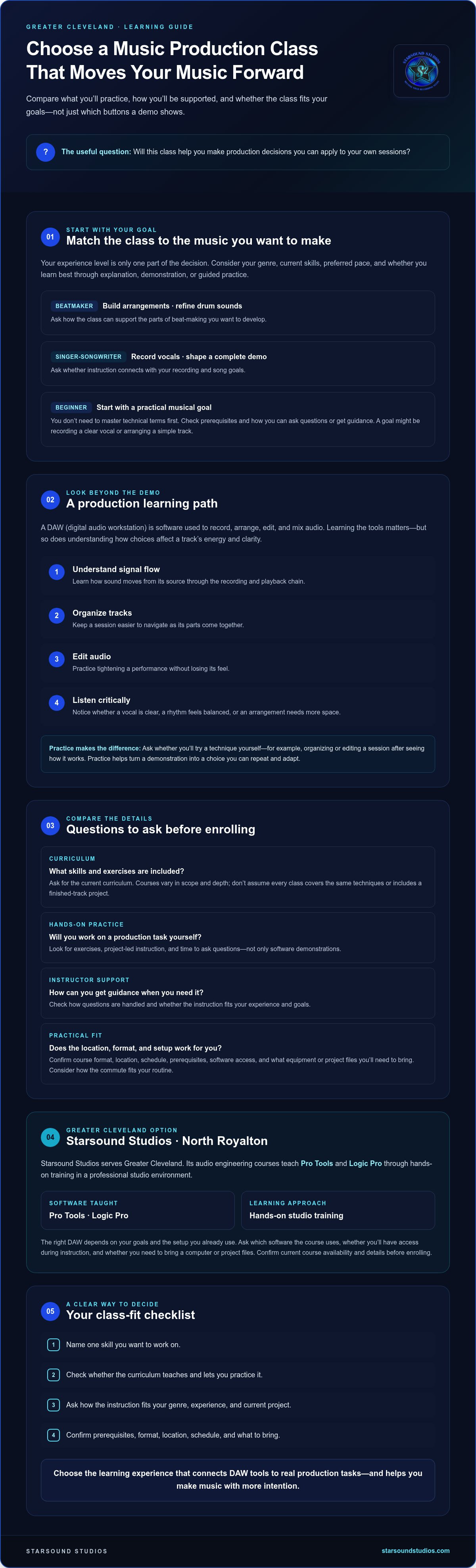
A little preparation can make your first session more productive and help you use instructor time well. Before attending music production classes Cleveland offers, turn a broad interest into a small, practical goal. Then confirm the details that affect what you can do in class.
- 1. Choose a goal: Name one thing you’d like to understand or improve, such as organizing a session or making a vocal sit more clearly in a mix.
- 2. Write down questions: Note what currently slows you down, which software you use, and what kind of sound you’re aiming for.
- 3. Confirm logistics: Check the class location, format, schedule, prerequisites, and enrollment details directly with the provider.
- 4. Check required tools: Ask whether you’ll need a laptop, DAW license, headphones, or project files, and whether software access is provided.
What should you bring to a production class?
Confirm equipment requirements before packing. Don’t assume you need to bring a computer or that the studio will provide one; ask about the specific software and tools used in the course. If the instructor permits it, bring a short project idea or a reference track that helps explain the sound you want to explore. If you plan to bring a project file, check the instructor’s preferred format and preparation steps first. This guide to preparing tracks for professional mixing can help when your questions specifically involve getting audio files ready.
How can you make the most of instructor feedback?
Describe the result you’re after, not only what feels wrong. For instance, explain that you want a vocal to feel more present without overpowering the instruments. That gives the instructor a clearer creative target and makes feedback easier to apply to a specific musical decision.
Take notes on techniques you can repeat and the reason behind each adjustment. If an explanation isn’t clear, ask a focused follow-up, such as which element to listen to or what to compare before and after a change. Those questions can turn a useful demonstration into knowledge you can apply in your own sessions.
If Starsound Studios is one of the Greater Cleveland options you’re considering, contact the studio to discuss your goals and confirm current course details, including what to bring. Ask Starsound Studios about audio engineering classes before you attend.
Explore Hands-On Music Production Classes at Starsound Studios
If you want to connect software skills with the workflow of a professional recording environment, Starsound Studios is one Greater Cleveland option to explore. Located in North Royalton, the professional recording facility offers audio engineering courses that teach Pro Tools and Logic Pro through hands-on training in a studio setting.
This may appeal if you’re looking for more than an overview of DAW features. Learning in a professional audio environment can connect production concepts to the process of shaping a session. The exact course format, curriculum, and level of individual support still matter. Confirm current details directly and ask how the instruction relates to the skills you want to develop.
Who may benefit from studio-based instruction?
Aspiring producers who want structured practice may appreciate learning in a dedicated studio environment, especially if they’re curious about how software skills connect to broader audio workflows. You don’t need to arrive with a fully formed career plan. Be ready to explain your experience, the kind of music you’re interested in, and what you hope to learn. Discuss those goals before choosing a course so you can assess whether its current focus fits your needs.
Studio-based instruction isn’t automatically the right match for every learner. Consider your preferred learning style, the software you want to use, and whether the course suits your starting point. Ask questions before enrolling rather than assuming the class includes a particular schedule, prerequisite, teaching format, or equipment. A clear conversation helps you understand what to expect and what you’ll need to plan for.
What are the next steps for prospective students?
Prepare a few direct questions: Is the course currently available? What topics does it cover? What format does instruction take, and what experience is expected? Ask about enrollment and whether you should bring a computer, software, headphones, or project files. These details can change, so verify them before making plans.
If you’re comparing music production classes Cleveland learners can access, include location and learning environment in your decision. North Royalton may be a practical fit depending on where you’re traveling from and how you prefer to learn. For a wider view of local recording spaces, read this Cleveland recording studios guide.
Ready to explore whether the courses align with your goals? Contact Starsound Studios about audio engineering classes to ask about current course availability, details, format, prerequisites, and enrollment.
Choose a Class That Moves Your Music Forward
The right class is more than a tour of software. Look for clear instruction, practical opportunities to apply what you learn, and feedback that connects to your goals and the sound you’re pursuing. Comparing curriculum, format, instructor support, and prerequisites can help you find music production classes Cleveland creators can put to meaningful use.
Starsound Studios is a Greater Cleveland recording facility in North Royalton. Its audio engineering courses teach Pro Tools and Logic Pro through hands-on instruction in a professional studio environment. Course availability and details can change, so ask about the current format, prerequisites, enrollment, and what you’ll need before deciding if it’s the right fit.
Ask Starsound Studios about current audio engineering classes and share what you hope to learn. A clear goal is a strong first step. Keep experimenting, trust your ears, and let each new skill open another possibility for your music.
Frequently Asked Questions
Are music production classes suitable for complete beginners?
Yes, many classes can suit beginners, but prerequisites and assumed experience vary by provider. Look for clear explanations, guided practice, and opportunities to ask questions. Before enrolling, describe your experience honestly and ask what skills the class expects you to have. You don’t need a finished song to begin; a musical idea or a goal, such as learning to record vocals, can give you a useful starting point.
What do you learn in music production classes?
Course content varies, but music production education may cover using a digital audio workstation, organizing tracks, editing audio, and shaping a production. Ask for the current curriculum rather than assuming every class teaches the same skills or level of detail. Starsound Studios confirms that its audio engineering courses teach Pro Tools and Logic Pro. Contact the studio to verify specific lesson topics and current course details.
Do music production classes teach Pro Tools or Logic Pro?
Some classes focus on one digital audio workstation, while others teach more than one. Starsound Studios’ audio engineering courses teach Pro Tools and Logic Pro. Before enrolling, ask which software the course uses and whether you’ll need your own license or computer. Consider your creative goals and current workflow, too. Learning software you can access and practice with may make it easier to carry new skills into your own sessions.
How do I choose a music production class in Cleveland?
Compare the curriculum, instructor access, practical exercises, prerequisites, format, and location. Ask how you’ll apply concepts and receive feedback, then consider whether the class suits your current skill level, genre, and goals. If you’re researching music production classes Cleveland offers, verify current course availability and details directly with each provider. Starsound Studios, in North Royalton, is one local option to ask about.
Do I need music production equipment before taking a class?
Not necessarily; equipment requirements depend on the provider and course format. Ask whether you need to bring a laptop, DAW software, headphones, or project files, and whether software access is provided. Don’t assume a studio supplies particular tools or that students must bring their own. If you already have production equipment, mention it when you inquire so the provider can clarify whether it’s useful for the class.
Are music production classes the same as audio engineering classes?
They can overlap, but the focus depends on the course. Music production instruction may emphasize shaping music from an idea through recording and editing, while audio engineering classes may focus more on technical audio workflows. Course titles alone don’t tell you exactly what’s taught. Compare the current curriculum, practice opportunities, and instructor feedback to see whether the class aligns with the skills you want to build.
Can I take music production classes at a professional recording studio near Cleveland?
Yes. Starsound Studios is a professional recording facility in North Royalton, Ohio, serving the Greater Cleveland area. Its audio engineering courses teach Pro Tools and Logic Pro through hands-on training in a professional studio environment. Contact the studio to confirm current availability, course format, prerequisites, enrollment details, and what students should bring. Those details can help you decide whether the learning environment and course requirements fit your needs.


