

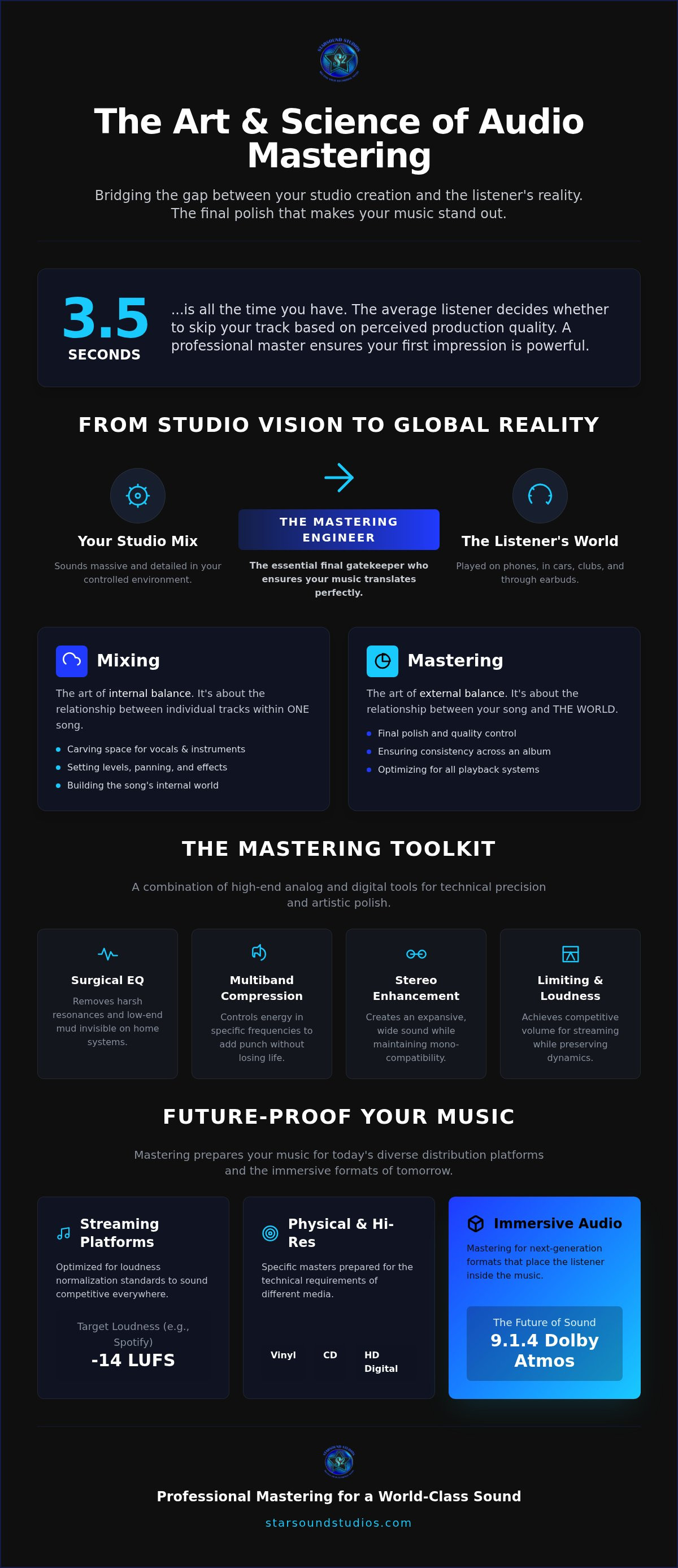
Did you know that the average listener decides whether to skip your track within just 3.5 seconds based purely on perceived production quality? It is a brutal reality of the modern streaming era. You have likely experienced the frustration of a mix that sounds massive in your studio but feels thin and lifeless in a car. This disconnect often leads to the fundamental question: what does a mastering engineer do to bridge that gap? It is the final, critical step where technical science meets artistic intuition to ensure your vision survives the journey to the listener's ears.
We understand the pressure of hitting -14 LUFS for Spotify while maintaining the emotional impact of your performance. You want your music to stand tall alongside global hits without sacrificing its unique character. This guide promises to show you how a professional engineer transforms raw files into polished, radio-ready masters that translate perfectly across every playback system. We will break down the essential mastering process, from frequency balancing and stereo enhancement to the future-proof world of 9.1.4 Dolby Atmos. You will gain the clarity needed to deliver a world-class final product that sounds competitive on every major platform.
Key Takeaways
- Identify the mastering engineer as the essential final gatekeeper who bridges the gap between your creative vision and the listener's reality.
- Discover exactly what does a mastering engineer do to enhance clarity, width, and punch using high-end analog and digital tools.
- Realize the competitive advantage of professional perspective in identifying subtle frequency issues that home monitors often miss.
- Future-proof your releases by mastering for modern standards, including loudness normalization and immersive 9.1.4 Dolby Atmos formats.
- Prepare your music for global distribution with a polished, radio-ready sound that meets the strict technical demands of major streaming platforms.
Defining the Role: The Mastering Engineer as the Final Quality Control
The mastering engineer is the final gatekeeper. They stand between the intimate creative process of the studio and the unpredictable reality of the consumer's listening environment. When you ask, what does a mastering engineer do, you are looking for the bridge between a good mix and a world-class master. It is about objective quality control. They ensure that the emotional impact of your music isn't lost when played on a phone, in a car, or through a massive club system. After weeks of tracking, your ears can lose objectivity; a professional engineer provides the essential second set of ears to ensure your vision translates perfectly.
The Difference Between Mixing and Mastering
To understand what does a mastering engineer do, you must first recognize that mixing and mastering are two distinct disciplines. Mixing is the art of internal balance. It focuses on the intricate relationship between the kick drum, the lead vocal, and the guitars. You're carving out space for every instrument within the stereo field. Mastering, however, focuses on the relationship between your song and the rest of the world. It’s the final polish on the stereo or immersive file. Trying to master while you mix is a common trap that often leads to over-processed results. A dedicated mastering stage provides the perspective needed to see the forest for the trees.
The Evolution of the Mastering Craft
The role has traveled a long way from its origins of cutting vinyl lacquers. Today, it involves optimizing files for 2026 streaming algorithms and immersive formats like Dolby Atmos. While the tools have changed, the core mission remains a blend of art and science. A professional mastering engineer uses a high-end signal flow within a meticulously treated acoustic environment. This setup allows them to hear details that home monitors simply cannot reproduce, transforming a technical task into a creative sanctuary for your sound. For those seeking a comprehensive overview of audio mastering, it’s clear that the craft has shifted from purely technical preparation to a vital creative contribution.
Consistency is the heartbeat of a great project. Whether you're releasing a single or a full album, the engineer ensures a seamless flow from track to track, matching levels and tonal balance so the listener stays immersed. They handle the technical necessity of preparing specific masters for various formats, including:
- High-resolution digital distribution for platforms like Apple Music
- Physical media requirements for vinyl and CD pressings
- Immersive audio masters for 9.1.4 Dolby Atmos systems
This precision creates a professional edge that DIY efforts simply cannot match. It ensures your sonic identity remains intact, regardless of how or where the world chooses to listen.
The Mastering Toolkit: Technical Precision Meets Artistic Vision
Mastering engineers use a sophisticated array of tools to refine a mix into a finished product. When exploring what does a mastering engineer do, you quickly find it is a delicate balance of corrective surgery and final artistic polish. They utilize surgical EQ to pinpoint and remove harsh resonances or low-end mud that might only become apparent on high-fidelity club systems. This is often paired with multiband compression. This tool allows the engineer to control the energy of specific frequency ranges, like a wayward bass guitar, without squashing the overall life and "vibe" of the song.
Stereo enhancement is another vital component of the process. The goal is to make the track feel expansive and wide while maintaining strict mono-compatibility for listeners on smaller speakers. Finally, limiting and loudness processing are applied. This is not just about turning the volume up; it is about achieving a competitive level for 2026 streaming standards while preserving the emotional peaks and valleys of the performance. It requires a deep understanding of the art of mastering audio to ensure the track hits hard without sounding distorted.
Corrective vs. Aesthetic Processing
Mastering is often where technical flaws are finally caught and corrected. Engineers fix phase issues or excessive sibilance that a mixing engineer might have overlooked during a long session. Beyond corrections, they add "glue" and warmth. This often involves passing the signal through high-end analog gear to give digital recordings a more organic, expensive feel. Transient preservation is the process of ensuring the initial sharp attack of a sound, such as a snare hit, remains intact and impactful even when the track is brought up to commercial volume.
The Importance of a Calibrated Listening Environment
Technical precision requires a reference point you can trust. A $50,000 monitoring system in a professionally treated room reveals low-end rumble and high-end harshness that simply don't exist on home studio headphones. This environment is essential for mastering high-resolution audio format aiff or WAV files without the guesswork. When you understand what does a mastering engineer do, you realize the room itself is one of their most valuable tools. At Starsound Studios, we provide that critical perspective through our professional mastering services to ensure your tracks are truly ready for the world.
The Power of Perspective: Why You Can’t Master Your Own Music
You have likely heard your song 500 times before it ever reaches the final stage. This repetitive listening creates a psychological blind spot known as "demoitis," where your ears become accustomed to the specific flaws and imbalances of your mix. You might love the way the bass rumbles in your room, unaware that it will sound like a muddy mess on a standard car stereo. This is where the value of an objective professional becomes undeniable. They haven't spent weeks tracking the vocals or months perfecting the drum edit. They hear your music exactly as the world will hear it: for the first time.
When exploring what does a mastering engineer do, the most vital factor is often this psychological distance. They identify gaps in the frequency spectrum that you have become "deaf" to during the creative process. Perhaps the high-end is too piercing, or the vocal is buried in a cluttered mid-range. An engineer provides a cold, honest assessment of the audio. As the Berklee College of Music defines a mastering engineer, they act as the final link in the creative chain, ensuring the music reaches its full potential before distribution. This perspective is a luxury you simply cannot afford to skip if you want a professional result.
The Human Element vs. AI Mastering
AI algorithms are fast and affordable, but they lack the ability to understand the "soul" or "intent" of a song. A computer cannot sense the emotional weight of a gritty indie rock anthem versus the pristine clarity of a modern pop track. Automated services often produce a cookie-cutter sound that ignores the unique identity of your work. A human engineer adjusts their approach based on your specific vision and the nuances of your genre. They make intentional decisions to enhance the narrative of the music, ensuring that the "vibe" remains intact even as the technical specifications are perfected. When you ask what does a mastering engineer do, the answer includes protecting the emotional core of your art. This commitment to professional quality is vital for any artist's portfolio, and those looking to showcase their acting talent can learn more about Actors Reels to see how expert production elevates a performance.
Improving Your Craft Through Professional Feedback
Working with a seasoned sound engineer is a collaborative mentorship rather than a simple transaction. It is common for an engineer to send a mix back to the artist with specific suggestions to improve the final outcome. This dialogue is invaluable. It teaches you to hear your own music through more disciplined ears, helping you identify technical issues earlier in your next project. Building this long-term partnership allows you to define a "signature sound" that is consistent across your entire discography. It transforms the mastering process from a final chore into a creative sanctuary where your growth as an artist is the priority.
Mastering for the Modern World: From Spotify to Dolby Atmos
The "Loudness Wars" have evolved into a sophisticated era of normalization. In 2026, the question of what does a mastering engineer do involves much more than just making a track loud. It is about meeting specific targets like Spotify’s -14 LUFS or Apple Music’s -16 LUFS while maintaining the dynamic integrity of your performance. If your track is pushed too hard, the platform’s algorithm will simply turn it down. This often results in a limp, squashed sound compared to competitive releases. A professional engineer ensures your music hits the sweet spot where it feels powerful without triggering aggressive normalization.
Beyond volume, the engineer handles the "invisible" side of distribution. This includes embedding high-resolution metadata and ISRC codes to ensure your music is correctly identified and you receive your royalties. They act as the final technical architect. They ensure that your creative vision is translated into a delivery-ready format that meets the rigorous standards of global distribution systems.
Just as a mastering engineer manages these intricate technical workflows, companies like Orchestrate provide specialized end-to-end support for complex industries like mortgage and settlement services, proving that expert coordination is the key to any successful project.
Mastering for Streaming Platforms
Every platform handles audio differently. YouTube, Spotify, and Tidal each have unique playback standards that can alter your sound. A critical part of the process is leaving enough "headroom," typically -1.0 or -2.0 dB True Peak, to prevent distortion during the lossy encoding process. When you prepare your mixing and mastering services request, your engineer will guide you on the best delivery specifications. This precision preserves the highest fidelity possible before the files are compressed for the consumer.
The Immersive Frontier: Dolby Atmos Mastering
Immersive audio is no longer a luxury; it is the new industry standard for major labels and streaming giants. Mastering in a 9.1.4 environment requires a complete shift in thinking. Unlike traditional stereo, which is channel-based, Dolby Atmos is object-based. This allows the engineer to place sounds in a three-dimensional space around the listener. As a premier Dolby Atmos studio Cleveland facility, we focus on how these complex files translate across different systems. When you understand what does a mastering engineer do in the immersive realm, you see they are balancing the -18 LKFS target while ensuring the mix still sounds breathtaking on standard AirPods. It is a meticulous process that future-proofs your music for a global audience. Ready to elevate your sound? Partner with Starsound Studios to ensure your next release is truly world-class.
Elevating Your Music in Cleveland: The Starsound Mastering Experience
Starsound Studios isn't just a technical facility; it's a creative sanctuary designed to push your art to its absolute limit. Led by Steve "The Mix," our studio provides a level of personal dedication that faceless AI services simply cannot replicate. When you ask what does a mastering engineer do at Starsound, the answer is simple: we act as your collaborative mentor. We don't just process files; we invest in your journey. Steve brings decades of seasoned expertise to every session, ensuring that your unique sonic identity remains the primary focus. This artist-centric approach is built on a foundation of reliability and high standards, providing the grounded assurance that every technical detail is handled with absolute precision.
Beyond the technical aspects of the studio, thriving in today's creative economy requires a sharp strategic mind. For artists interested in the competitive side of media production and entrepreneurship, the board game Studio Showdown offers a unique way to simulate the high-stakes world of development and business growth.
Our North Royalton facility houses Ohio’s only Dolby-certified 9.1.4 immersive audio suite. This environment is specifically calibrated to handle the most demanding projects, from traditional stereo to modern immersive formats. It's a space where the science of the medium meets the art of creation. Whether you are a local artist or working with us via our remote mastering services, you receive the same high-attention experience. We bridge the gap between your raw mix and a world-class result, making you feel that your work is in both capable and passionate hands.
Why a Local Cleveland Mastering Engineer Matters
There is a distinct advantage to working with someone who understands the local sound. Steve knows the Cleveland music scene and the specific energy of the venues where your music will be played. For artists in the Northeast Ohio area, the ability to sit in on a session is a game-changer. You can hear your tracks on a world-class monitoring system and witness the transformation in real-time. This local connection fosters a sense of community and support that strengthens the entire Ohio creative landscape. It's about more than just audio; it's about building a legacy together.
Ready for the Final Polish?
Preparing for your session is a straightforward process. We recommend providing high-resolution WAV or AIFF files with enough headroom to allow for optimal processing. Ensure all mix bus processing is disabled unless it is integral to the sound of the track. If you are ready to move beyond the limitations of home setups and generic plugins, we are here to guide you. Our communication rhythm is intentional, moving from your initial vision to a polished, world-class result. Elevate your sound today with Starsound Studios mastering services.
Your Sound, Perfected for the Global Stage
Your music deserves more than a generic algorithm. It needs the nuanced touch of a professional who understands the emotional weight of your art. We've explored the technical precision of the toolkit and the psychological power of the objective ear. Understanding exactly what does a mastering engineer do is the first step in ensuring your tracks translate across every playback system, from earbuds to immersive 9.1.4 Atmos suites. At Starsound Studios, we combine over a decade of Cleveland music excellence with Ohio’s only Dolby-certified Atmos facility. This is your creative sanctuary. Whether you're aiming for Spotify's top playlists or a future-proof immersive master, we provide the grounded assurance that your work is in the most capable hands. It's time to stop guessing and start delivering world-class results. Book Your Mastering Session with Steve "The Mix" at Starsound Studios and let's bring your sonic vision to life. Your highest potential is within reach.
Frequently Asked Questions
Is mastering just making the song louder?
When considering what does a mastering engineer do, it's important to realize it is far more than a volume adjustment. It is the final stage of quality control where an engineer balances frequencies and enhances the stereo image. While achieving a competitive loudness is part of the job, the real goal is translation. This ensures your song sounds consistent whether it's played on a smartphone speaker or a massive festival sound system.
For professionals who want to ensure this same level of technical excellence during live performances or corporate gatherings, you can check out Ambassador Event Production for expert video and audio-visual support.
Can I master my own music using plugins?
You can use plugins at home, but you cannot replicate the calibrated acoustic environment or the professional perspective. Most home studios have acoustic reflections that hide certain frequencies. A professional engineer hears exactly what is happening in your low-end and high-end. This objective feedback is what separates a bedroom demo from a radio-ready hit. Using a dedicated engineer provides the grounded assurance that your technical details are handled with absolute precision.
How much does professional mastering cost in 2026?
Industry rates for professional mastering vary based on the engineer's location and the complexity of the project. Most artists find that professional rates reflect the high-end analog signal chains and the calibrated listening environment required for top-tier results. While automated services are cheaper, they lack the human intuition needed for artistic success. Investing in a seasoned professional ensures your music stands up against major label releases without sounding thin or inconsistent.
What is the difference between stereo mastering and Dolby Atmos mastering?
Stereo mastering focuses on a two-channel file to ensure balance and clarity across a flat plane. Dolby Atmos mastering is object-based, allowing for a three-dimensional immersive experience. In an Atmos environment, sounds are placed in a 9.1.4 space rather than just left and right. This format requires specialized certification and monitoring systems to ensure the metadata translates correctly across immersive-capable devices like AirPods and modern home theaters.
How should I prepare my mix files for a mastering engineer?
Provide high-resolution WAV or AIFF files with at least -3 to -6 dB of headroom. It's vital to remove any limiters or heavy compression from your master bus that might squash the dynamics. This allows the engineer the space they need to apply surgical EQ and enhancement. Clearly label your files and include any specific metadata, like ISRC codes, to ensure a smooth transition from the studio to final distribution.
Do I really need a mastering engineer if I am only releasing on SoundCloud?
Yes, professional mastering is essential even for SoundCloud releases. The platform uses aggressive transcoding that can introduce distortion or audio artifacts if your file isn't properly prepared. A mastering engineer ensures your levels are optimized for these specific streaming algorithms. This prevents your track from sounding thin or muddy compared to other uploads. High-quality production is the best way to stand out in a crowded digital space.
How long does it take to master a single song or an album?
Turnaround times vary, but a single song usually takes one to three business days. For a full album or EP, expect a timeline of one to two weeks. This allows the engineer to ensure sonic consistency across every track so the project feels like a cohesive body of work. Rushing the final stage can lead to missed technical errors, so a steady and intentional pace is always the best approach.
What is the "Objective Ear" and why is it important?
The objective ear refers to the fresh, unbiased perspective a professional brings to your music. After you've spent hundreds of hours mixing, your brain naturally compensates for flaws. When you ask what does a mastering engineer do, one of their primary tasks is providing this psychological distance. They identify frequency imbalances or technical errors that you've become deaf to during the creative process, ensuring the final product is truly ready for the world.


